


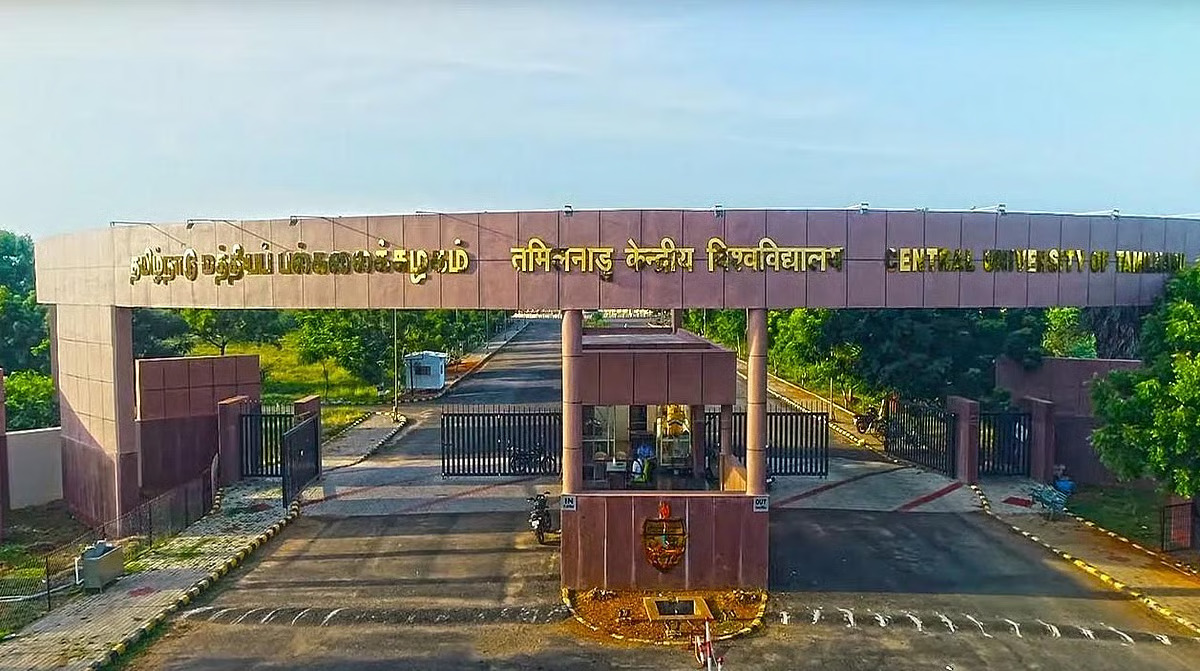
The Central University of Tamil Nadu (CUTN) at Thiruvarur is set to undergo a transformative infrastructure expansion after the Ministry of Education (MoE) approved Rs 385.27 crore through the Higher Education Financing Agency (HEFA). Officials stated that the funding will facilitate construction of new academic blocks, student hostels, faculty residences, and a state-of-the-art Scientific Instrumentation Centre, positioning CUTN as a benchmark for sustainable and modern higher education in the region.
According to senior MoE officials, the investment will significantly enhance the university’s academic and residential facilities. A new academic building alone is allocated Rs 96.40 crore, while Rs 46.63 crore and Rs 46.91 crore are earmarked for 300-bedded girls’ and boys’ hostels respectively. The Scientific Instrumentation Centre, designed for advanced research and innovation, has a budget of Rs 19.95 crore. These developments aim to enrich the university ecosystem while promoting gender-equitable, inclusive, and sustainable living and learning spaces. Experts highlight that the expansion aligns with national objectives of building high-quality research infrastructure and creating environmentally conscious campuses. “Modern laboratories, smart classrooms, and research facilities not only support academic excellence but also encourage sustainable operations and energy-efficient design,” said an official from the MoE overseeing the project.
The project also includes housing for faculty and staff, ensuring integrated campus planning and promoting a safe, equitable environment for all members of the university community. Officials confirmed that the HEFA funding, primarily serviced through MoE grants, will be used to ensure construction meets contemporary standards for green building practices and campus sustainability. CUTN’s administration anticipates that these upgrades will strengthen research output, attract top talent, and provide students and scholars with a holistic academic experience. The initiative will also support regional higher education development, creating an institutional model that balances academic rigor with inclusive residential facilities.
Beyond infrastructure, officials emphasised the need for technological integration across campus operations. Smart laboratories, digital learning platforms, and energy-efficient facilities are expected to enhance the quality of teaching, research, and student life while reducing the university’s carbon footprint. The expansion comes at a time when central universities are being positioned as hubs for advanced learning and innovation, reflecting government efforts to modernise higher education in India. CUTN’s upgraded infrastructure is expected to play a pivotal role in shaping the academic landscape of Tamil Nadu, offering sustainable, gender-neutral, and technologically advanced facilities to its growing student and research community.
Also Read: Kochi Explores Water Metro Link To Airport For Seamless Connectivity
