


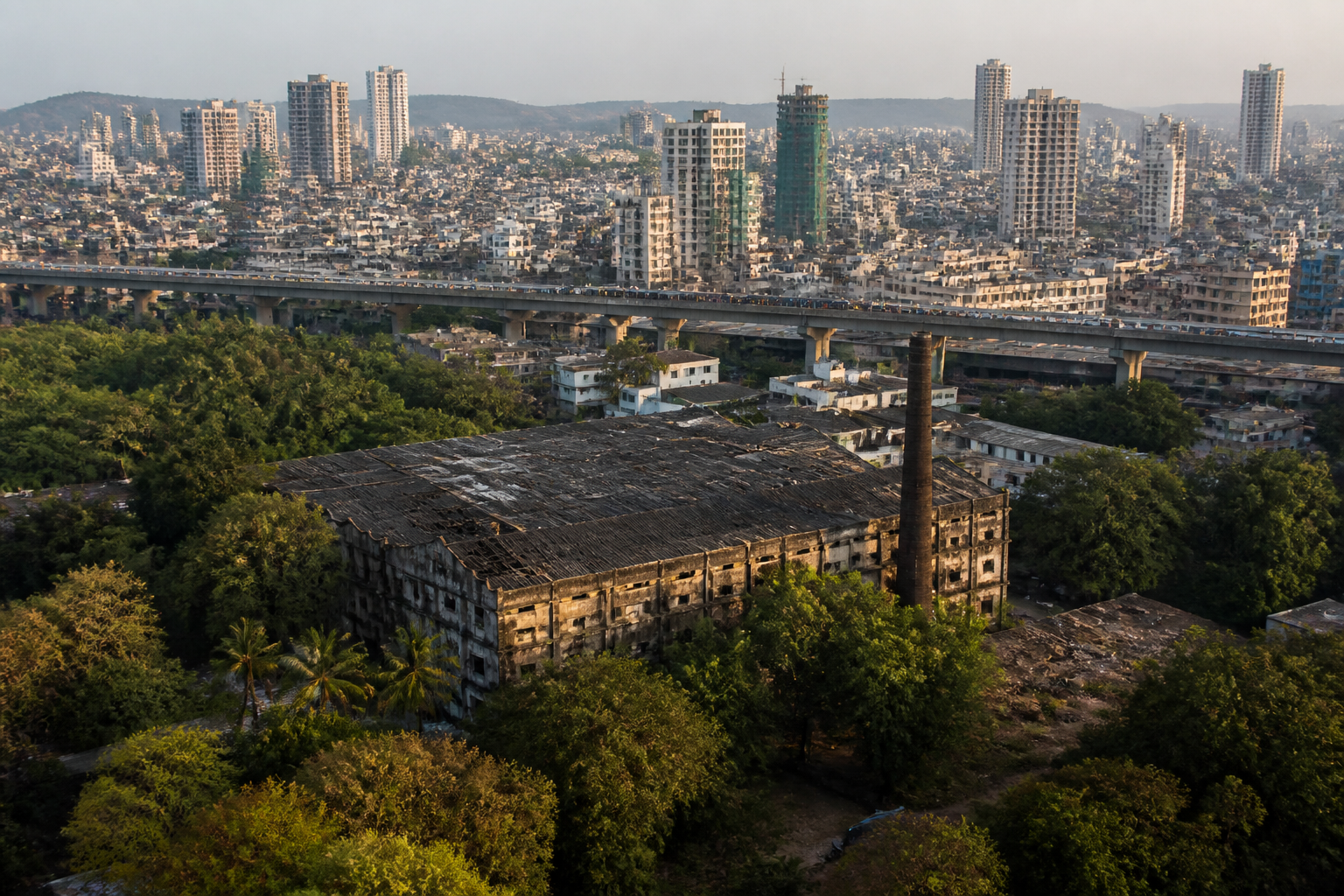
The Bombay High Court has allowed the revival of Swadeshi Mills and cleared the way for the development of its 48-acre property in Chunabhatti, bringing an end to a long-running legal dispute over the future of one of Mumbai’s former major textile mills.
A division bench comprising Justices Ajay Gadkari and Kamal Khata allowed appeals filed by Grand View Estates Private Limited, a Shapoorji Pallonji group company, and the Rashtriya Mill Mazdoor Sangh. The appeals challenged a February 2026 order by a single judge that had rejected the proposal to revive the company and halt the process of selling its assets and closing the mill.
The revival proposal includes settling the dues of the mill workers and developing the company’s land, according to the report. The division bench observed that reviving Swadeshi Mills would serve commercial propriety and the broader public interest rather than harm either. The decision is expected to benefit 2,834 mill workers who have faced losses and hardship for more than two decades.
Swadeshi Mills was established in 1890 by Jamsetji Tata and was once among Mumbai’s prominent textile mills. At the height of its operations, it employed around 3,000 workers and held significant assets, including the 48-acre parcel in Chunabhatti. Financial difficulties eventually led to the closure of the mill, followed by an order to wind it up in September 2005.
The company’s land and other assets then remained caught in prolonged liquidation and redevelopment proceedings. Grand View Estates and Forbes & Company, which together hold a 53.25 per cent stake in Swadeshi Mills, subsequently proposed reviving the company and permanently halting the winding-up process. The proposal also stated that outstanding worker dues would be paid and the company’s land would be developed.
Two minority shareholders opposed the proposal. They argued that the company should instead be closed and its assets sold through a public auction. In February, the single judge had rejected the revival plan, describing it as an indirect attempt to acquire the valuable Chunabhatti land for real-estate development rather than genuinely revive the textile industry.
The division bench, however, held that the opposing minority shareholders did not have the backing of investors for their alternative proposal. It also noted that more than two decades had passed since the mill closed and that the interests of the workers had not received adequate consideration in the earlier order.
According to the court’s observations as reported by Loksatta, the money invested by Grand View Estates and Forbes & Company had remained in bank accounts for more than 21 years, awaiting distribution to workers. The bench also noted that the investors were suffering losses amounting to several crores of rupees each month because the proposal had not been implemented.
The court criticised the opposition to the revival proposal in strong terms, describing it as a form of extortion by the elite. It set aside the single judge’s decision and allowed the appeals filed by Grand View Estates and the workers’ union.
The ruling removes the immediate legal obstacle to the company’s revival plan, worker-dues settlement and development proposal for the Chunabhatti property. Further implementation will depend on the steps required under the court-approved process.
