


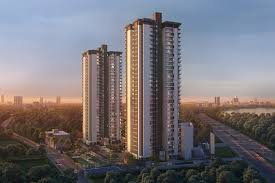
A citywide digital teaser campaign by a mid-sized developer has turned attention toward a growing shift in Bengaluru real estate marketing, where brand-building and sustainability credentials are increasingly intertwined in a competitive housing market.
Over a two-week period, a series of fictional “UFO sighting” clips circulated widely across local social media feeds, generating millions of views and driving traffic to the developer’s website. While the campaign’s creative approach drew public curiosity, industry observers say its larger significance lies in how developers are repositioning themselves amid rising construction scrutiny and maturing buyer expectations. In India’s technology capital, residential demand remains steady, particularly along IT corridors where professionals form the bulk of homebuyers. However, as supply expands, differentiation has become critical. Analysts note that Bengaluru real estate marketing has historically relied on location advantages and price positioning. Today, however, developers are attempting to establish identity and recall well before buyers enter active purchase cycles. Executives involved in the campaign indicated that the objective was awareness rather than immediate sales conversion. Real estate transactions typically involve long decision timelines, and digital engagement is increasingly being used to create early-stage familiarity. Market data suggests that website traffic and engagement rates can influence future enquiries, even if they do not translate into instant bookings.
Beyond the marketing experiment, the developer has sought to anchor its positioning around quality control and environmental benchmarks. Company officials say their internal construction framework includes thousands of quality checkpoints spanning structural design, materials and safety processes. The firm has also highlighted its compliance with Indian Green Building Council (IGBC) standards a certification still relatively uncommon in Bengaluru’s residential stock. Urban planners argue that such certifications are gaining importance as Indian cities confront climate stress, water scarcity and energy inefficiencies. Green-rated housing can lower operational energy demand and improve indoor air quality, though it often increases upfront development costs. The willingness of buyers to pay a premium for sustainable housing remains uneven, but awareness is growing, particularly among younger, dual-income households. Marketing experts caution that viral visibility can be short-lived unless backed by transparent execution. In a sector frequently criticised for delivery delays and quality gaps, credibility ultimately depends on on-site performance rather than online engagement. Still, the episode reflects a broader recalibration within the property industry. As digital-native buyers dominate urban markets, developers are experimenting with narrative-led campaigns to break through advertising fatigue. For Bengaluru a city navigating rapid expansion, infrastructure strain and evolving sustainability norms branding is no longer peripheral to development strategy.
The coming months will reveal whether heightened visibility translates into sustained buyer confidence. What remains clear is that in a crowded marketplace, Bengaluru’s housing sector is entering a phase where storytelling, environmental accountability and construction standards are converging to define long-term trust.
Also Read: Bengaluru premium housing attracts Japanese capital
SUYUG Infra campaign reshapes brand strategy
