


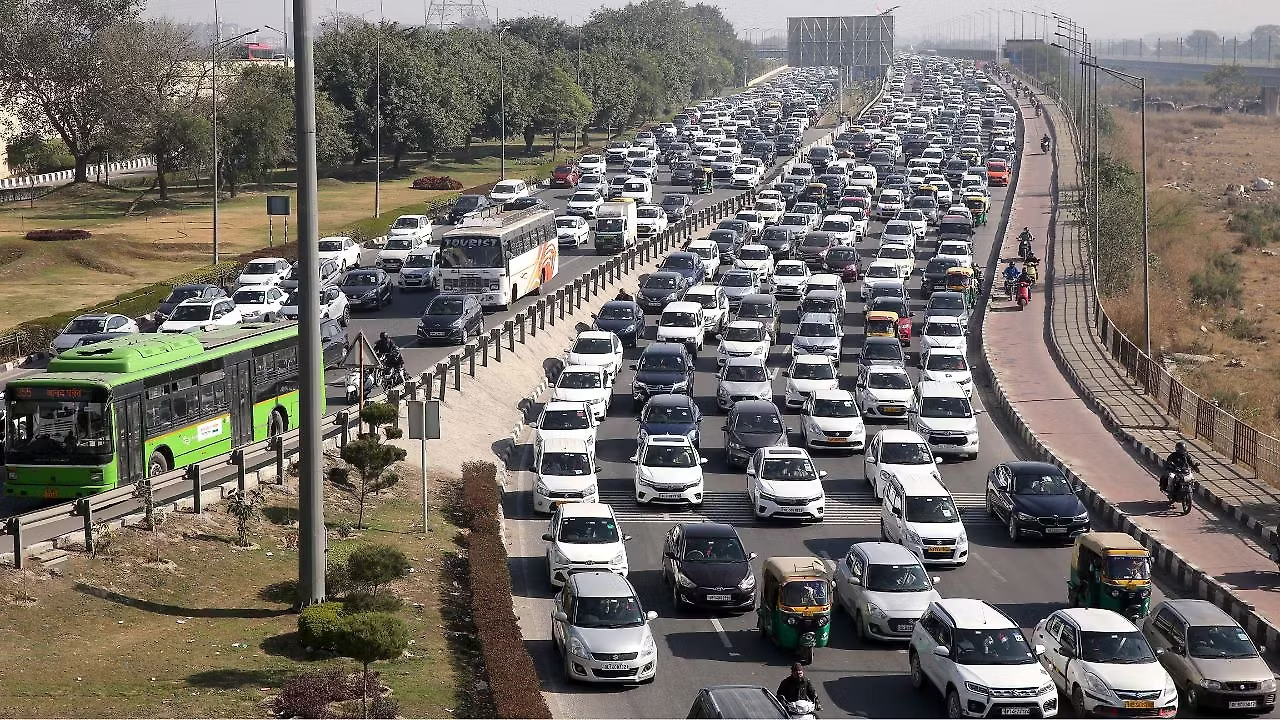
India’s automotive sector, a cornerstone of its economic engine and personal mobility, is undergoing a significant paradigm shift towards sustainability.
The reliance on fossil fuels, long the lifeblood of this industry, presents both an environmental exigency and a long-term economic vulnerability. Recognising this pivotal moment, the Indian automotive ecosystem, from manufacturers to consumers, is embarking on a transformative journey, with early indicators suggesting a promising trajectory towards a greener future for urban centres and beyond. The past few years have witnessed a concerted push across the automotive spectrum, yielding tangible environmental dividends. The burgeoning adoption of electric vehicles (EVs) stands as a testament to this progress. According to data analytics, nearly 2 million EVs were sold across India in the calendar year 2024 alone, marking a substantial 25.4 per cent year-on-year growth. This surge was spearheaded by electric two-wheelers, commanding nearly 60 per cent of total EV sales, and a robust 18 per cent expansion in electric three-wheelers, signalling a profound shift in both personal and commercial mobility preferences within India’s cities and towns. While the electric car segment is still in its nascent stages of mass adoption, it too has demonstrated a steady upward climb with a 12.8 per cent annual increase in sales.
This increasing predilection for electric mobility is already translating into discernible environmental benefits. Industry estimates suggest that the current fleet of EVs operating on Indian roads has collectively helped avert the emission of 10 million tonnes of carbon dioxide between 2020 and 2024. Within urban conurbations, the silent and emission-free operation of EVs directly combats harmful particulate matter, such as PM2.5, a significant contributor to respiratory ailments and reduced air quality, thereby paving the way for healthier and more liveable cities. Leading players within the automotive sector are actively championing this transition. JSW MG Motor India, for instance, has embedded the ethos of ‘EV Sahi hai’ (EVs are the right choice) into its operational strategy, evident in its expanding portfolio of electric vehicles. The MG ZS EV, offering a substantial range of up to 461 kilometres on a single charge, and the MG Comet EV, specifically engineered for urban environments with its compact footprint and zero tailpipe emissions, exemplify this commitment. Beyond merely manufacturing EVs, the company is deeply invested in cultivating a comprehensive sustainable ecosystem. Their manufacturing facility in Halol has achieved a significant environmental milestone, with 65 per cent of its energy requirements now being met through renewable sources, demonstrating a tangible commitment to decarbonising their operational footprint.
Furthermore, JSW MG Motor India’s introduction of India’s first green pretreatment line in its Paint Shop is projected to slash carbon emissions by an estimated 1,800 tonnes annually. This initiative forms part of a broader commitment to sustainable manufacturing practices, which has already resulted in an impressive 47 per cent overall reduction in carbon emissions from their manufacturing processes since 2022. The company is also actively exploring innovative solutions such as the “Project Revive,” focused on the second life of EV batteries, aiming to repurpose used batteries for energy storage applications and contribute to a more circular economy within urban energy systems. Additionally, the prioritisation of sustainable materials, such as vegan leather in models like the MG Gloster, and continuous efforts to minimise waste and conserve resources throughout their operations underscore a holistic approach to environmental responsibility.
Looking ahead, the trajectory of sustainable mobility in India is poised for significant advancements, driven by exciting technological innovations. Wider adoption of more energy-efficient battery technologies, coupled with extended driving ranges and faster charging capabilities, is anticipated, making EVs an increasingly practical and appealing choice for a broader spectrum of Indian consumers, particularly within urban settings. The integration of advanced driver-assistance systems (ADAS) and connected car technologies holds the potential to optimise traffic flow within cities and reduce overall energy consumption. Moreover, the exploration of alternative fuels such as green hydrogen and biofuels presents immense potential for decarbonising segments where full electrification may encounter limitations, contributing to a more diversified and resilient sustainable transportation ecosystem.
However, realising this sustainable future necessitates a concerted and collaborative effort. Sustained and robust policy support from the government, fostering investment in research and development, and providing incentives for both manufacturers and consumers remain paramount. The automotive industry must continue to invest in localising manufacturing, developing a ubiquitous and reliable charging infrastructure across urban and rural areas, and ensuring the responsible recycling and disposal of EV batteries. Equally crucial is consumer awareness and active participation. By making informed purchasing decisions and embracing sustainable mobility options, every individual can contribute to forging a greener and more equitable India, particularly within its rapidly expanding urban centres.
The journey towards a truly sustainable automotive sector in India is an ongoing evolution, but the progress achieved thus far provides a robust foundation and a clear direction of travel. By continuing to innovate, collaborate, and prioritise environmental stewardship, India can collectively steer its mobility sector towards a future where transportation is not only efficient and convenient but also intrinsically clean, green, and in harmony with the planet, fostering healthier and more sustainable cities for all its citizens. The combined efforts of the industry, government, and consumers will be the driving force behind this essential transformation, ensuring a healthier and more sustainable future for India’s urban and rural landscapes alike.
Also Read: Kerala Boosts Solar Power for Urban Transit
