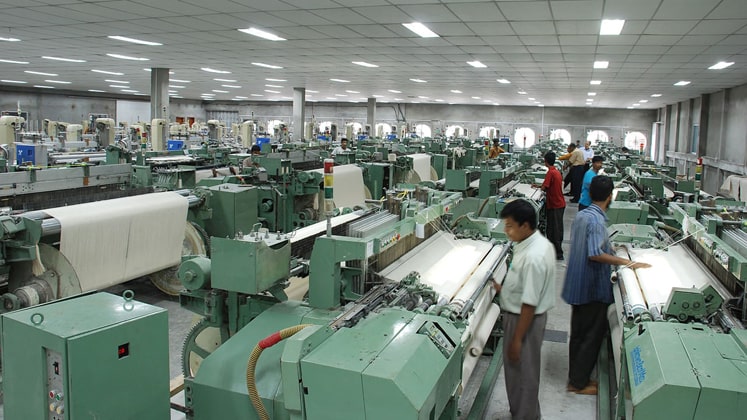
Surat Textile Hub Faces Cost Surge Amid West Asia Crisis
Surat’s textile industry is facing renewed cost pressures as disruptions linked to geopolitical tensions in West Asia push up input prices, affecting production economics in one of India’s largest manufacturing clusters.Manufacturers across the city report a sharp increase in costs of key raw materials, including petrochemical-based yarns and dyes, driven by volatility in global crude-linked supply chains. The impact of the ongoing disruptions has intensified concerns around the resilience of the Surat textile industry, which is heavily dependent on imported inputs and energy-linked pricing structures.
Industry participants indicate that rising costs are already squeezing margins, particularly for small and medium enterprises that operate on tight working capital cycles. While larger units may have some capacity to absorb short-term shocks, smaller manufacturers are finding it difficult to pass on increased costs to buyers in a competitive market environment.The challenges extend beyond raw materials. Logistics disruptions and higher freight costs have further compounded operational pressures, slowing down production cycles and affecting delivery timelines. As Surat’s textile ecosystem is closely integrated with both domestic and export markets, these disruptions are beginning to ripple across supply chains.Experts note that the current situation highlights structural vulnerabilities within the Surat textile industry. Heavy reliance on imported inputs and exposure to global commodity price fluctuations make the sector particularly sensitive to external shocks. In the absence of diversified sourcing strategies or domestic alternatives, such disruptions can have immediate and widespread impacts.
The implications are not limited to industry players. Surat’s textile sector is a major employment generator, supporting thousands of workers across weaving, processing, and trading segments. Prolonged cost pressures could affect job stability and income levels, particularly in informal and semi-skilled segments.From an urban economic perspective, the situation underscores the need for greater supply chain resilience in key industrial clusters. As cities like Surat continue to anchor large-scale manufacturing ecosystems, insulating them from global volatility is becoming increasingly critical.Policy analysts suggest that measures such as promoting domestic production of key inputs, improving energy efficiency, and supporting technological upgrades could help mitigate long-term risks. There is also growing interest in exploring alternative materials and circular production models to reduce dependence on imported petrochemical derivatives.The current disruption also raises broader questions about how industrial clusters adapt to geopolitical uncertainty. As global supply chains become more unpredictable, the ability of cities to sustain economic activity will depend on flexibility, diversification, and innovation.
For Surat, navigating the current cost surge will require balancing immediate operational challenges with longer-term structural adjustments. While the Surat textile industry has demonstrated resilience in the past, the evolving global landscape is likely to test its adaptability in new ways.As the situation unfolds, the focus will remain on how quickly the sector can stabilise input costs and restore production efficiency—factors that will be critical in maintaining Surat’s position as a key textile hub in India and global markets.