


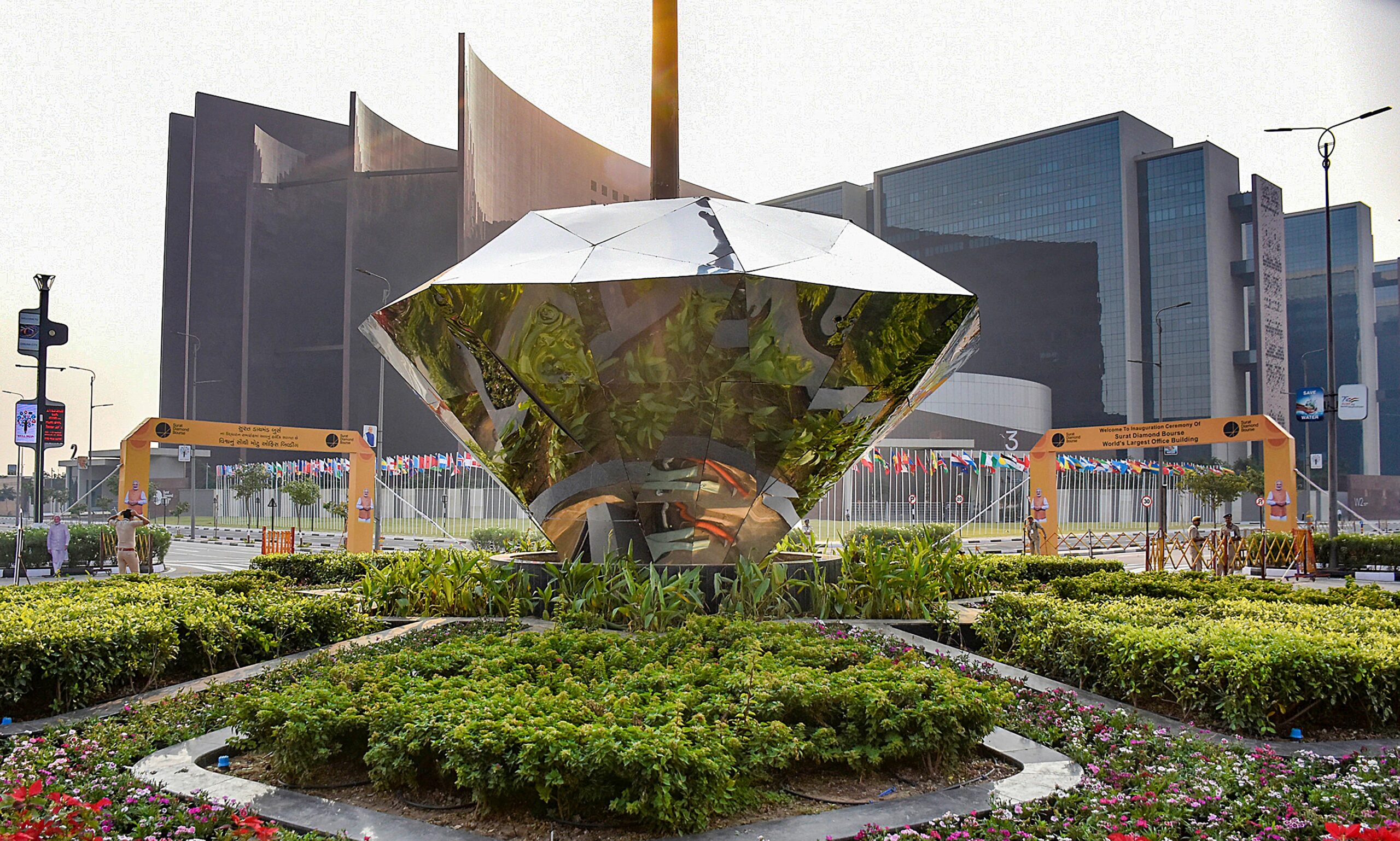
The global rise of laboratory-grown diamonds is beginning to reshape the traditional gemstone trade in Surat, raising concerns among industry stakeholders about the future of natural diamond manufacturing. Market analysts say the shift is contributing to a gradual contraction in the Surat natural diamond sector, particularly among businesses tied to the global supply chain of mined stones. Surat has long been recognised as the world’s largest diamond cutting and polishing hub, processing an estimated majority of the world’s rough diamonds. However, the growing availability and affordability of lab-grown alternatives are influencing demand patterns in international jewellery markets.
Industry representatives say the Surat natural diamond sector is experiencing structural changes as consumer preferences evolve. Lab-grown diamonds, which can be produced in controlled environments using advanced technology, are increasingly gaining acceptance due to their lower cost and environmental marketing appeal. This shift is affecting traditional supply channels linked to natural diamonds, including manufacturers and traders who purchase rough stones through international sightholder systems. As demand patterns change, the number of companies participating in these supply arrangements may decline. The transformation of the Surat natural diamond sector reflects broader changes within the global gemstone market. Jewellery brands and retailers are increasingly offering both natural and lab-grown diamonds, giving consumers more options across different price ranges. Economic analysts note that the rise of laboratory-grown diamonds is creating both challenges and opportunities for Surat’s diamond industry. While natural diamond processing may face pressure, the city has also emerged as a leading centre for manufacturing lab-grown diamonds. Several companies in Surat have invested in advanced diamond-growing technology, positioning the city as a major production hub for both segments of the market. However, the transition between traditional natural diamond processing and lab-grown diamond manufacturing is not without economic implications. Workers and businesses specialised in natural diamond cutting may need to adapt to changing industry dynamics. The Surat natural diamond sector remains deeply embedded in the city’s economy, supporting thousands of polishing units, export businesses, and jewellery manufacturers. Urban economic experts say industries built around specialised craftsmanship often evolve gradually as technology changes. The diamond sector in Surat has historically demonstrated adaptability in response to shifts in global demand. Infrastructure and policy support could play an important role in helping the Surat natural diamond sector navigate this transition. Training programmes, technology investments, and market diversification strategies may help businesses adjust to changing conditions. Industry observers also emphasise that natural diamonds continue to hold strong brand value in luxury markets, suggesting that both natural and lab-grown segments may coexist in the future.
For Surat, the evolving dynamics of the diamond trade highlight the importance of innovation and flexibility within globally integrated industries. As consumer preferences and production technologies continue to evolve, the Surat natural diamond sector will likely face both disruption and reinvention while maintaining its position at the centre of the global gemstone manufacturing ecosystem.
ALSO READ – Surat Textile Workforce Returns As Energy Supply Stabilises
Surat Natural Diamond Sector Faces Structural Shift
