


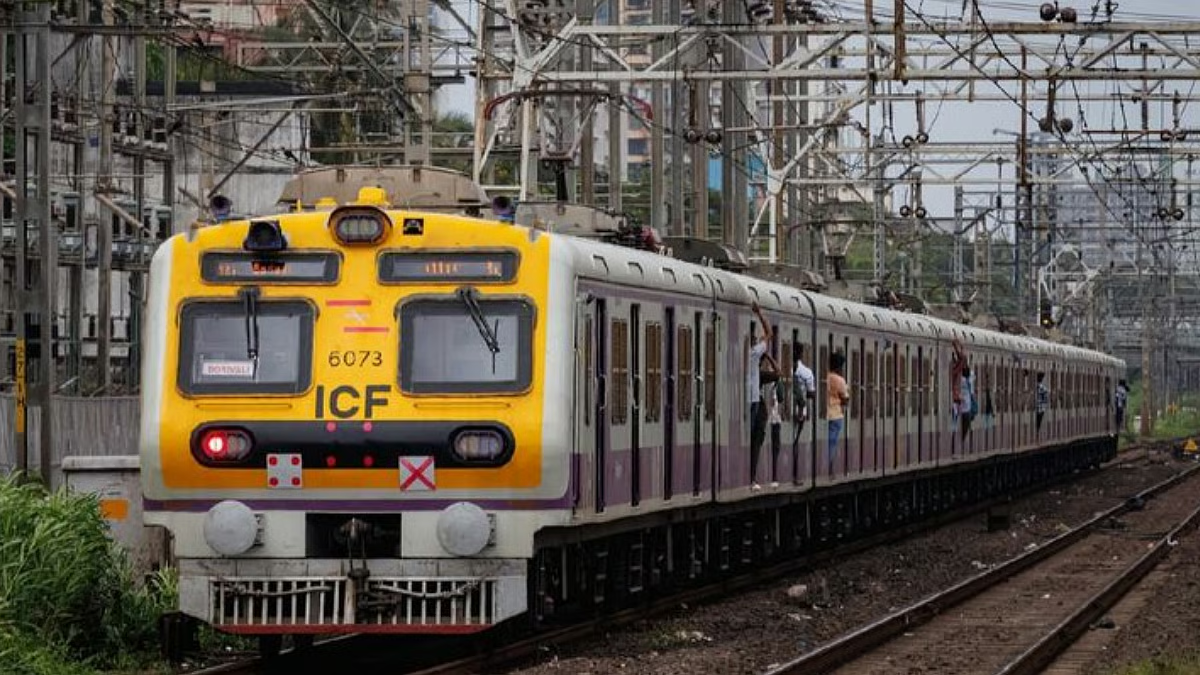
Surat is set to play a central role in a proposed transformation of regional rail travel, with plans underway to introduce suburban-style train services connecting the city to Mumbai—featuring onboard toilets for longer-distance comfort. The proposal reflects a shift in how intercity mobility is being reimagined along one of India’s busiest economic corridors. Railway authorities are exploring the feasibility of operating “local train-like” services between Mumbai and Surat, a route that currently depends on a mix of long-distance trains and limited MEMU services. The new model aims to bridge the gap between short-distance suburban travel and intercity connectivity, addressing growing commuter demand across Gujarat and Maharashtra.
A key differentiator in the proposed system is the inclusion of onboard toilet facilities—something absent in traditional Mumbai suburban trains. Existing electric multiple unit (EMU) locals are designed for short commutes and frequent stops, making them unsuitable for journeys extending beyond a few hours. Upgraded trains, including MEMU variants and potential Vande Metro systems, are being considered to enable longer, more comfortable travel. The proposal is closely tied to infrastructure upgrades at Surat railway station, where additional platforms are being planned as part of a large-scale redevelopment project. These upgrades are expected to support higher train frequency and enable suburban-style operations in the future, potentially by 2027. From an urban mobility perspective, the initiative signals a significant evolution in regional transport planning. Surat, one of India’s fastest-growing industrial cities, has a large workforce with strong economic and social linkages to Mumbai. Improved rail connectivity could reduce travel time, ease congestion on highways, and provide a more sustainable alternative to road-based commuting. Transport planners highlight that such services could operate as high-frequency, high-capacity systems—similar to suburban networks but adapted for longer distances. Proposed train configurations may include a mix of seating and standing capacity, allowing them to cater to both daily commuters and intercity travellers. The plan also aligns with broader infrastructure developments in Surat, including metro rail construction and its role in the Mumbai–Ahmedabad high-speed rail corridor. As the city evolves into a multi-modal transport hub, integrating suburban rail services could enhance connectivity across different layers of the transport network. However, challenges remain. Operating high-frequency services over long distances requires significant coordination in scheduling, track capacity, and rolling stock availability. Ensuring affordability while maintaining service quality will also be critical, particularly for daily commuters.
Experts note that if implemented effectively, the Surat–Mumbai suburban model could serve as a template for other high-demand corridors across India. By blending metro-like efficiency with intercity reach, such systems can support decentralised urban growth and reduce pressure on megacities. For Surat, the proposed services represent more than a connectivity upgrade—they signal a shift towards integrated, commuter-centric transport planning. As urban regions expand beyond city boundaries, the future of mobility may increasingly lie in such hybrid systems that connect people, economies, and cities more seamlessly.
ALSO READ – Surat Mango Yield Falls Amid Weather And Pest Impact
Surat Mumbai Local Train Plan With Toilets Gains Ground
