


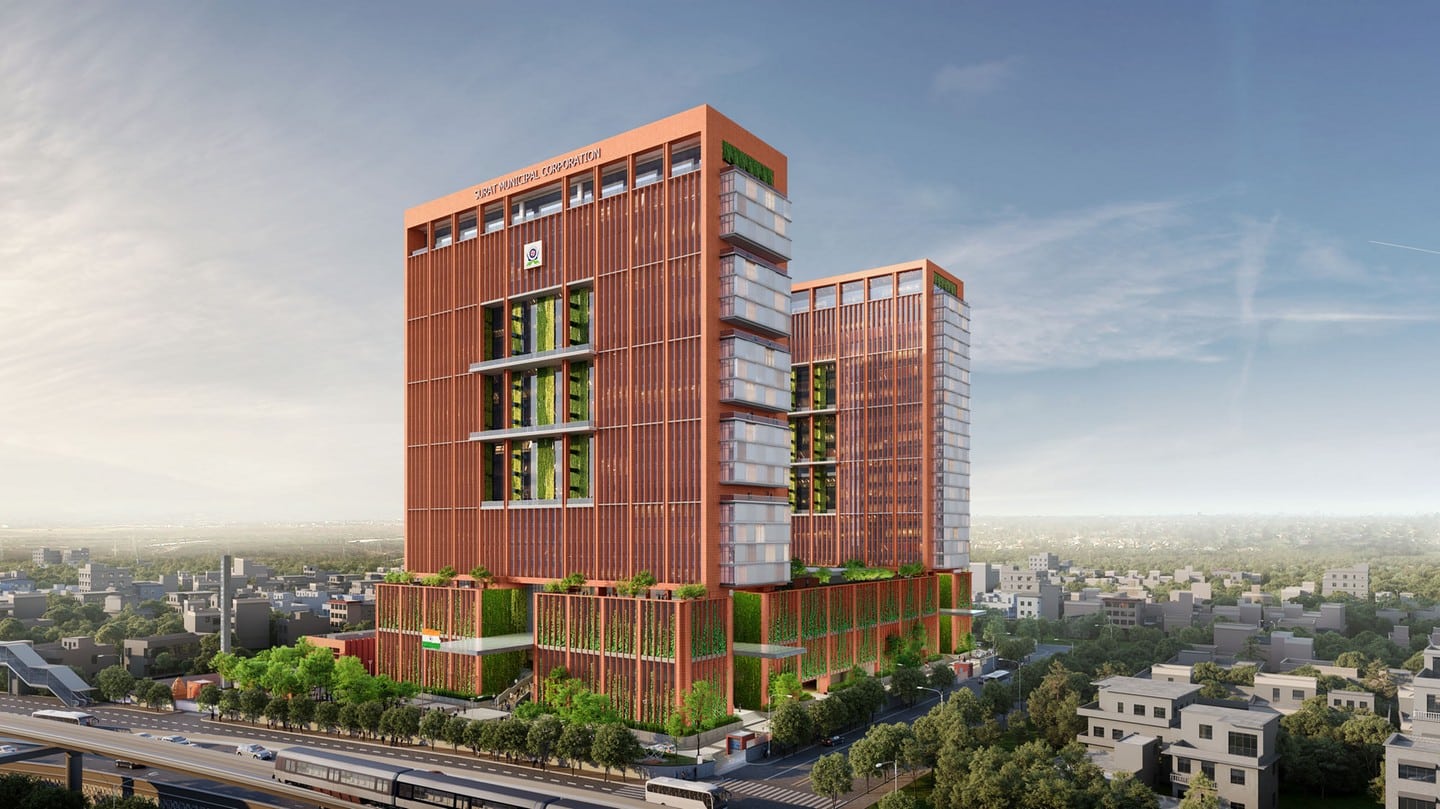
Surat’s emergence as a serious contender in India’s evolving real estate landscape received national validation this week, as a large mixed-use development from the city was recognised at a leading industry awards platform. The recognition places Surat alongside metropolitan markets in a sector increasingly shaped by sustainability, integrated planning, and end-user functionality rather than scale alone.
The award, conferred under the mixed-use development category for Tier-II cities, reflects a broader shift underway in India’s urban growth narrative. With housing demand expanding beyond metros and infrastructure investment reaching secondary cities, developers in markets like Surat are increasingly expected to meet national benchmarks for design quality, environmental performance, and urban integration. Industry observers note that mixed-use projects have gained renewed relevance as cities attempt to reduce commute distances, encourage walkable neighbourhoods, and optimise land use. In cities such as Surat where manufacturing, trade, and services coexist within compact urban limits this format offers an alternative to fragmented zoning models that strain transport and civic infrastructure. According to professionals familiar with the evaluation process, projects shortlisted at national forums are assessed not only on construction quality, but also on planning efficiency, energy performance, and long-term usability. Independent rating agencies are typically engaged to assess parameters such as compliance, execution capability, and sustainability measures, helping distinguish substantive developments from purely marketing-led projects.
Urban planners point out that the recognition of a Surat-based project signals growing institutional confidence in Tier-II city developments. Over the past decade, Surat has seen steady population growth, rising formal employment, and infrastructure upgrades that support higher-density, mixed-use formats. This has implications for housing affordability, commercial decentralisation, and reduced pressure on mega-city real estate markets. From an environmental standpoint, integrated developments are increasingly evaluated on climate responsiveness. Passive design, daylight optimisation, renewable energy integration, and pedestrian-first circulation are no longer considered add-ons, but core criteria in contemporary real estate assessment. Experts argue that such approaches are particularly important in fast-growing cities vulnerable to heat stress and infrastructure overload. The national spotlight on a Surat project also reflects changing buyer expectations. End-users and occupiers now place greater emphasis on operational efficiency, wellness, and long-term asset value rather than purely aesthetic features. This shift has pushed developers to adopt smarter building systems, clearer separation of land uses within mixed developments, and improved governance mechanisms.
Looking ahead, analysts believe that recognition of Tier-II city projects at national platforms could accelerate capital flows and policy attention toward secondary urban centres. For cities like Surat, the challenge will be to ensure that growth remains inclusive, environmentally balanced, and aligned with local infrastructure capacity turning recognition into a catalyst for responsible urban expansion rather than speculative excess.
Also Read:
Surat Mixed Use Project Gains National Real Estate Recognition
