


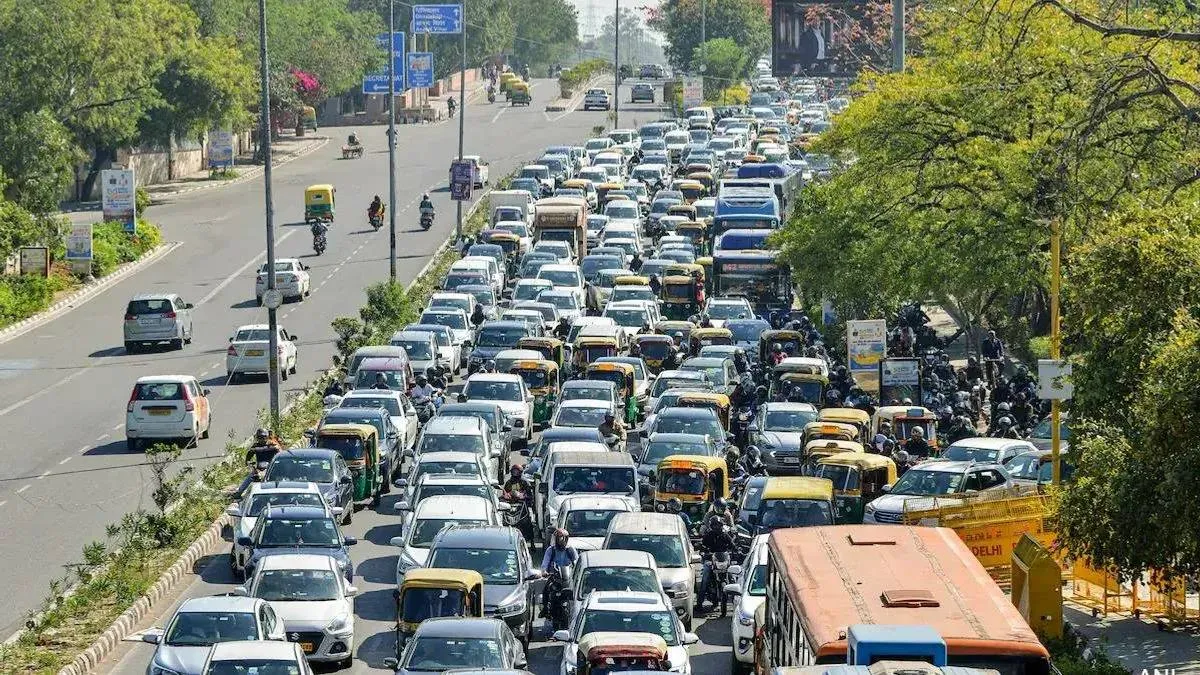
Surat will experience significant traffic diversions over the next several weeks as civic authorities implement temporary road closures to facilitate a major drainage infrastructure project in the city’s expanding northern zones. The restrictions, scheduled to remain in place for roughly forty days, underline how rapidly growing cities must periodically disrupt mobility in order to upgrade essential urban infrastructure. According to a notification issued by the city administration, a key stretch of T.P. Road connecting the Outer Ring Road near the Gopin Circle junction will remain closed to vehicular and pedestrian movement between 5 April and 15 May 2026. The closure affects areas within the New East (Sarthana) Zone and has been imposed to enable drainage construction under Town Planning Scheme No. 84, covering the Kosad-Bharthana, Kosad-Mota Varacha and Abharama areas.
Municipal engineers say the project is part of a broader stormwater network upgrade designed to improve flood resilience in rapidly urbanising neighbourhoods on Surat’s eastern fringe. As residential and commercial development expands toward these peri-urban zones, existing drainage systems must be expanded to manage higher volumes of stormwater runoff during monsoon seasons. To minimise disruption, the civic administration has mapped out alternative travel routes for commuters using the affected corridor. Vehicles travelling from Nand Chowk in Mota Varacha toward the Ring Road have been advised to take a diversion through the Abharama Check Post junction before reconnecting near Kumbhanjan Chowk. Meanwhile, commuters moving between Abharama village and the Ring Road can use alternate routes through the Mukh Exotica junction. Authorities have also encouraged motorists to rely on internal roads within nearby residential areas during the construction period. While such temporary diversions may increase travel time for some commuters, city planners emphasise that the infrastructure upgrade is necessary to prevent waterlogging and drainage failures during heavy rainfall events. Urban infrastructure specialists note that drainage upgrades are among the most critical yet least visible components of city development. As urban populations grow and impermeable surfaces such as roads and buildings expand, stormwater systems must be redesigned to manage higher runoff volumes and prevent flooding. Surat’s eastern districts have seen rapid population growth over the past decade, driven by residential expansion and the city’s strong industrial economy. This growth has placed increasing pressure on civic infrastructure, requiring large-scale investments in drainage networks, road systems and utility services. Infrastructure interventions such as the current project often require temporary traffic restrictions, especially when pipelines or underground utilities must be installed beneath major roads. However, city planners say these disruptions are a necessary trade-off to ensure long-term urban resilience.
For Surat, which is widely regarded as one of India’s fastest-growing commercial centres, strengthening drainage capacity is increasingly important as climate variability intensifies rainfall patterns across western India. Once construction is completed in mid-May, the closed road section is expected to reopen to normal traffic movement. Municipal officials say the upgraded drainage infrastructure should help reduce flood risks in surrounding neighbourhoods while supporting the city’s continued expansion.
ALSO READ – Surat Cooperative Bank Expands Business Past Rs13300 Crore
Surat Infrastructure Work Brings Temporary Traffic Restrictions
