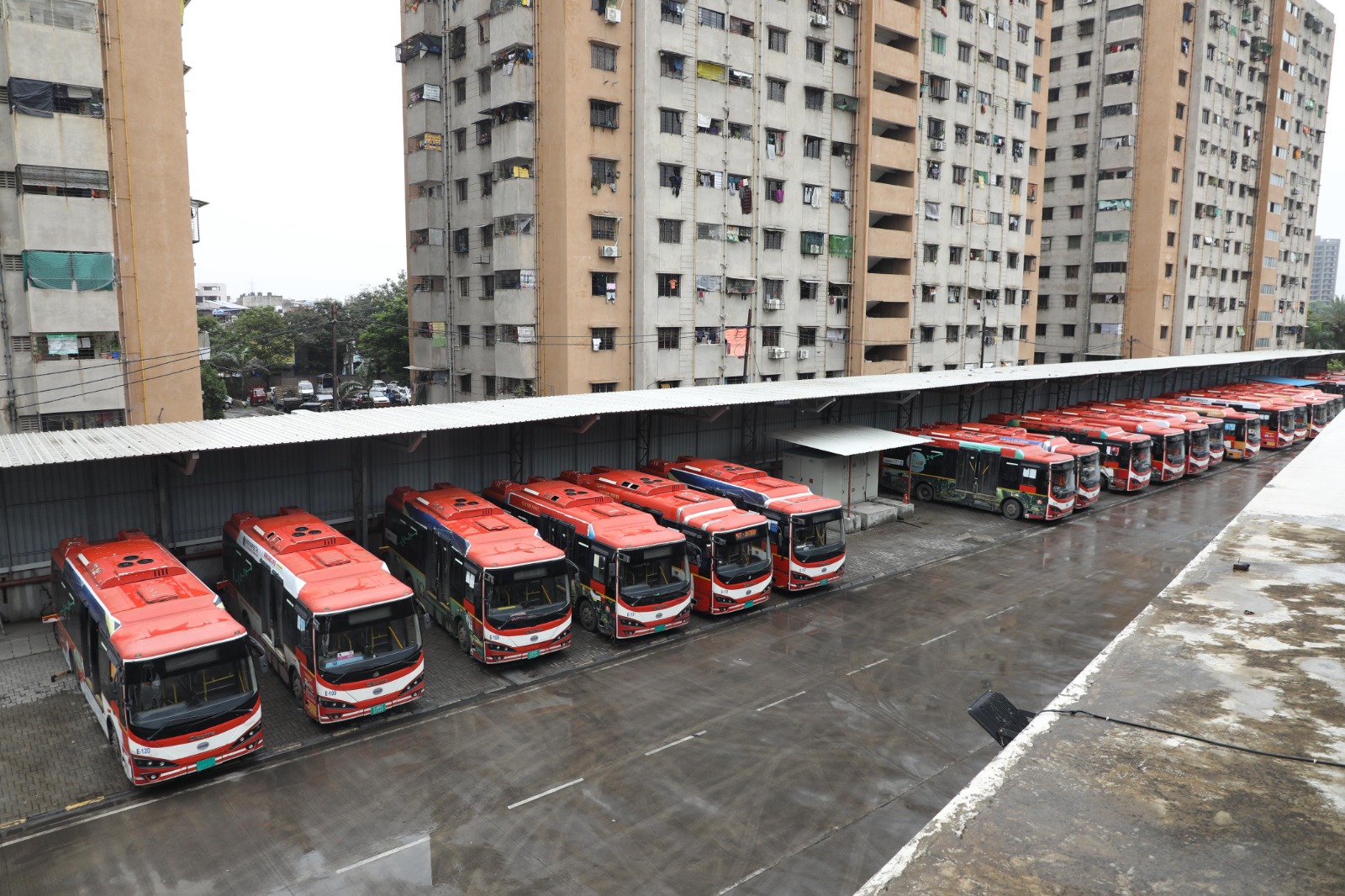
Surat Gujarat Launches Indias First Solar Powered Smart Bus Depot Marking a New Era in Green Mobility
Surat has unveiled India’s first solar-powered smart bus depot in the Althan area,has cemented its position at the forefront of green mobility and sustainable public infrastructure. Developed by the Surat Municipal Corporation (SMC) in the Althan area at a cost of ₹1.60 crore, this state-of-the-art facility is a proud product of the city’s Solar City initiative and a beacon for India’s clean-energy ambitions.
Strategically located and powered by a 100-kilowatt rooftop solar plant, the depot boasts 24×7 green charging capabilities for electric buses, supported by a second-life battery energy storage system. These second-life batteries, repurposed after their initial use in electric vehicles, are refurbished for stationary storage, extending their usability while reducing environmental waste. The depot generates approximately 1 lakh electricity units per year, resulting in energy cost savings of around ₹6.56 lakh annually. During daylight hours, the system harnesses solar energy, which is stored and used to charge buses overnight—ensuring non-stop service while easing pressure on the main power grid.
The depot’s infrastructure includes amenities typically missing from public bus stations in India: Wi-Fi access, mobile charging stations, LED lighting, fans, and a comprehensive CCTV surveillance setup. These features are not just cosmetic upgrades but essential components of a smarter, safer, and more commuter-friendly public transport experience. The Battery Energy Storage System (BESS) installed here has a storage capacity of 224 kilowatt-hours, allowing it to maintain consistent charging cycles and balance load distribution effectively.
The innovation lies not only in the depot’s technology stack but in the city’s vision to integrate sustainability into everyday mobility. According to Prakash Pandya, Executive Engineer of the Light and Energy Efficiency Cell at SMC, this is more than an infrastructure project—it’s a paradigm shift in how cities can power public transport sustainably. “This is not just about buses or solar panels. It is a model that reflects the kind of urban future India needs to build—green, scalable, people-focused, and technologically sound,” Pandya said. His statement underscores Surat’s larger commitment to the Net Zero Energy goal and the growing national consensus around environmentally responsible infrastructure.
The project’s significance goes beyond city limits. Developed in partnership with the German development agency GIZ, the smart depot illustrates how international collaboration can accelerate India’s progress toward its climate targets. With India pledging to achieve net zero emissions by 2070, urban infrastructure like Surat’s depot could play a pivotal role in shaping national mobility policy and municipal planning.
Public transport in India has long been plagued by underinvestment, pollution, and inefficiency. Electric buses have started to appear in city fleets across the country, but without the infrastructure to support them at scale, adoption has been slow. What Surat has done is leapfrog the conventional barriers—namely dependence on fossil fuel power for charging and limited last-mile electric support. By addressing both with a clean-energy depot designed from the ground up, the city has not only optimized operational costs but also made a strong case for replicability.
Even more impressive is how the depot integrates environmental innovation with social impact. The reuse of EV batteries contributes to a circular economy by reducing electronic waste, a growing concern as India’s EV sector expands. Additionally, the depot provides local employment and serves as a skills development platform for green tech maintenance and operations—something often missing in pure infrastructure investments. For a city already known for its cleanliness, textile exports, and diamond polishing, this marks a diversification into high-impact urban innovation.
Cities like Delhi, Bengaluru, and Pune may have larger budgets, but Surat’s smart depot stands out for its clarity of vision and real-world execution. It’s not just a pilot program with limited application. It’s a fully functional, financially viable facility that could be scaled up or adapted to fit other Tier-1 and Tier-2 cities with similar solar exposure and EV ambitions. Early feedback from transportation experts suggests that Surat’s model may set a new benchmark for EV depot design and sustainable transit management.
Already, other municipal corporations from across India have taken note. Delegations from Jaipur, Indore, Bhubaneswar, and even metropolitan regions like Mumbai are expected to visit Surat in the coming months to study the project. For India’s policymakers, who have long struggled to turn green rhetoric into green infrastructure, Surat’s initiative is a welcome, tangible example of how ambition and execution can meet.
With the increasing electrification of public buses, supported by subsidies and FAME (Faster Adoption and Manufacturing of Electric Vehicles) schemes, the timing of this launch is strategic. The depot ensures that electric buses will not be dependent on expensive or unreliable grid supply, especially in peak hours when pressure is highest. And by using second-life batteries, Surat has addressed one of the EV sector’s most persistent headaches—battery disposal and lifecycle efficiency.
Surat may not be the capital of Gujarat, but it is quickly becoming the capital of clean public transport innovation in India. While other cities announce intent, Surat is delivering action. With this smart bus depot, it has moved the conversation beyond future plans into operational reality, and in doing so, it has made a statement that resonates nationally: clean cities begin with clean transport—and clean transport begins with smart infrastructure.