


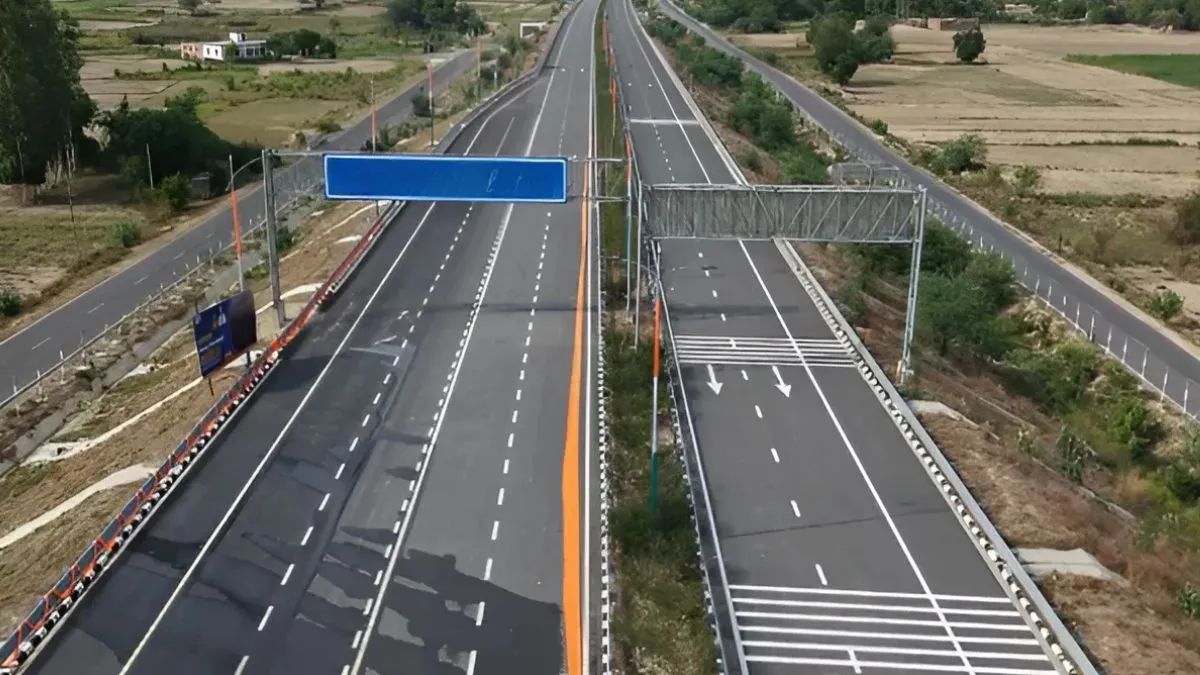
India’s national highway network could soon witness a major connectivity upgrade with plans advancing for a new Surat green express highway designed to improve long-distance travel across western and southern India. The proposed corridor is expected to significantly shorten travel distances between major metropolitan regions, including the route linking Delhi and Chennai. Transport authorities indicate that the Surat green express highway will form part of a broader effort to modernise India’s freight and passenger mobility infrastructure. The express corridor is expected to reduce travel distance between the national capital and Chennai by roughly 320 kilometres, potentially improving freight efficiency along one of the country’s busiest north–south economic routes. The project is being planned as a high-speed greenfield expressway, meaning it will be constructed along a new alignment rather than expanding existing highways. Greenfield corridors typically allow planners to design straighter routes with controlled access, enabling faster travel speeds and improved safety standards. Infrastructure specialists say such projects are increasingly important for managing India’s rising logistics demand. Freight movement between northern manufacturing hubs and southern industrial clusters has grown rapidly in recent years, placing pressure on existing highway networks.
By providing a faster route through western India, the Surat green express highway could strengthen connections between industrial centres in Gujarat, Maharashtra and southern states. Surat itself has developed into a key economic node, with strong textile, diamond processing and manufacturing sectors supported by growing logistics infrastructure. Transport economists note that improved connectivity along long-distance corridors can reduce transportation costs for industries dependent on nationwide supply chains. Lower logistics costs often translate into improved competitiveness for manufacturing and export-oriented sectors. Urban planners also highlight the influence of large expressway projects on regional development. High-capacity transport corridors tend to stimulate the emergence of logistics hubs, industrial parks and new residential townships along their routes. While such growth can drive economic expansion, it also requires coordinated land-use planning to prevent unplanned development. Environmental considerations are also central to modern expressway planning. Infrastructure agencies are increasingly incorporating measures such as wildlife crossings, roadside plantations and improved drainage systems to mitigate environmental impact. Integrating climate-resilient design features has become particularly important as extreme weather events affect transport infrastructure across India.
The Surat green express highway could also play a role in strengthening the country’s broader logistics strategy, which aims to improve connectivity between ports, industrial zones and urban markets. Faster and more efficient transport corridors are viewed as essential for supporting economic growth while reducing supply chain delays. As planning progresses, the proposed expressway highlights the continuing transformation of India’s transport infrastructure. For cities like Surat, improved long-distance connectivity could reinforce their position within national trade networks while reshaping mobility patterns across multiple states.
ALSO READ – Surat Economic Region Road Upgrade Gets Approval
Surat Green Express Highway To Transform Long Distance Travel
