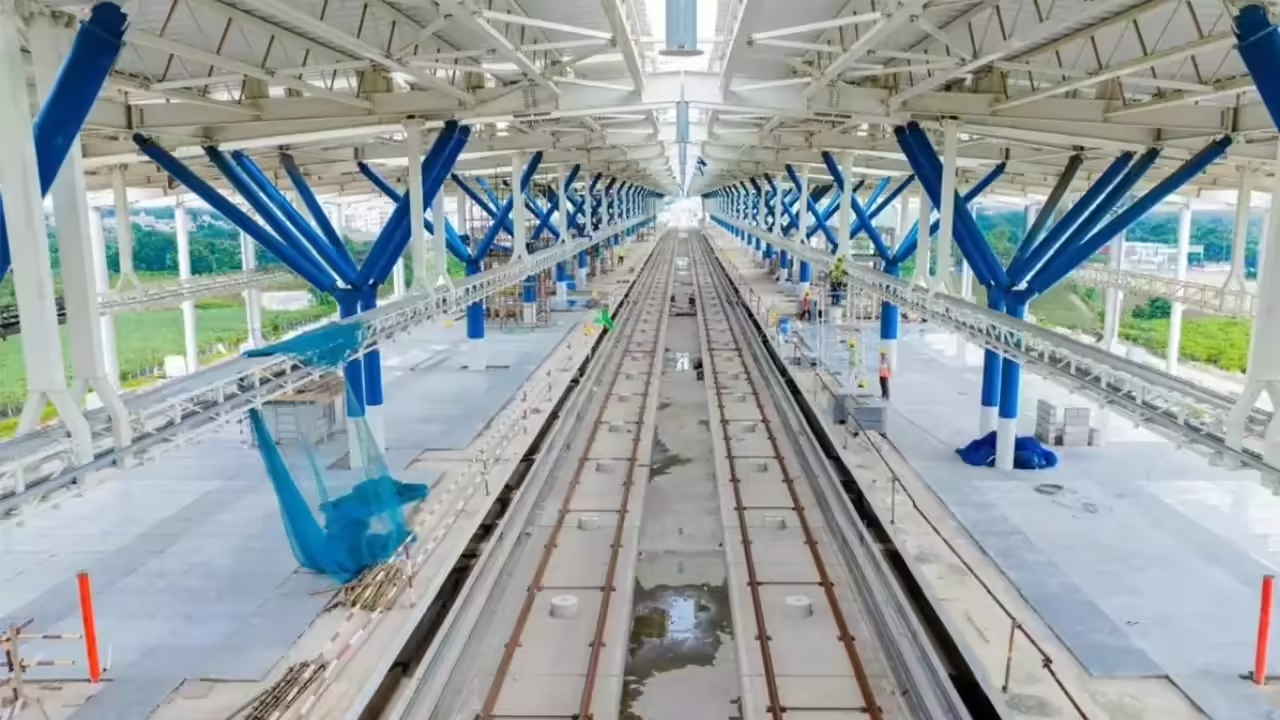
Surat Bullet Train Hub Strengthens High Speed Rail Network
Surat is set to play a critical role in India’s high-speed rail ambitions, with plans to establish a dedicated maintenance hub for the Mumbai–Ahmedabad bullet train corridor, positioning the city as a key operational node in the country’s first such network.The facility, proposed as part of the under-construction high-speed rail project, will support routine inspection, servicing, and long-term upkeep of bullet train rolling stock. Its location in Surat reflects both geographic centrality along the corridor and the city’s growing importance within western India’s economic and infrastructure landscape.
The development of the Surat bullet train hub is expected to go beyond operational utility. Maintenance depots in high-speed rail systems typically function as specialised infrastructure zones, incorporating advanced engineering systems, precision diagnostics, and workforce training facilities. This positions the hub as a potential centre for skill development and technology transfer within India’s rail ecosystem.Urban and infrastructure experts suggest that such facilities often act as catalysts for regional economic growth. The establishment of the Surat bullet train hub could attract ancillary industries, including component manufacturing, logistics, and engineering services, thereby strengthening the city’s industrial base.From a planning perspective, the project aligns with Surat’s broader evolution as a high-growth urban centre. Already a major hub for diamonds and textiles, the city is increasingly integrating large-scale infrastructure investments into its development trajectory. The bullet train corridor, which links Mumbai and Ahmedabad, is expected to significantly reduce travel time and reshape inter-city connectivity across the region.
The maintenance hub also underscores the importance of lifecycle infrastructure in large transport projects. While much of the public focus remains on stations and train operations, long-term reliability depends heavily on robust maintenance ecosystems. By embedding such facilities within the corridor, planners aim to ensure operational efficiency and safety standards comparable to global benchmarks.However, the project’s success will depend on timely execution and integration with surrounding infrastructure. Land use planning, connectivity to existing rail and road networks, and availability of skilled labour will be key factors influencing the hub’s effectiveness.The environmental dimension is also relevant. High-speed rail is often positioned as a lower-emission alternative to road and air travel, particularly for inter-city journeys. Supporting infrastructure like the Surat bullet train hub will play a role in sustaining these benefits by ensuring efficient operations and reducing system downtime.
For Surat, the development represents an opportunity to deepen its role in national infrastructure networks. Beyond immediate economic gains, the presence of such a facility could enhance the city’s attractiveness for future investments in advanced manufacturing and transport technologies.As India progresses with its first high-speed rail project, the emergence of the Surat bullet train hub highlights how supporting infrastructure is integral to building a resilient and scalable transport system—one that can anchor both mobility transformation and regional economic growth.