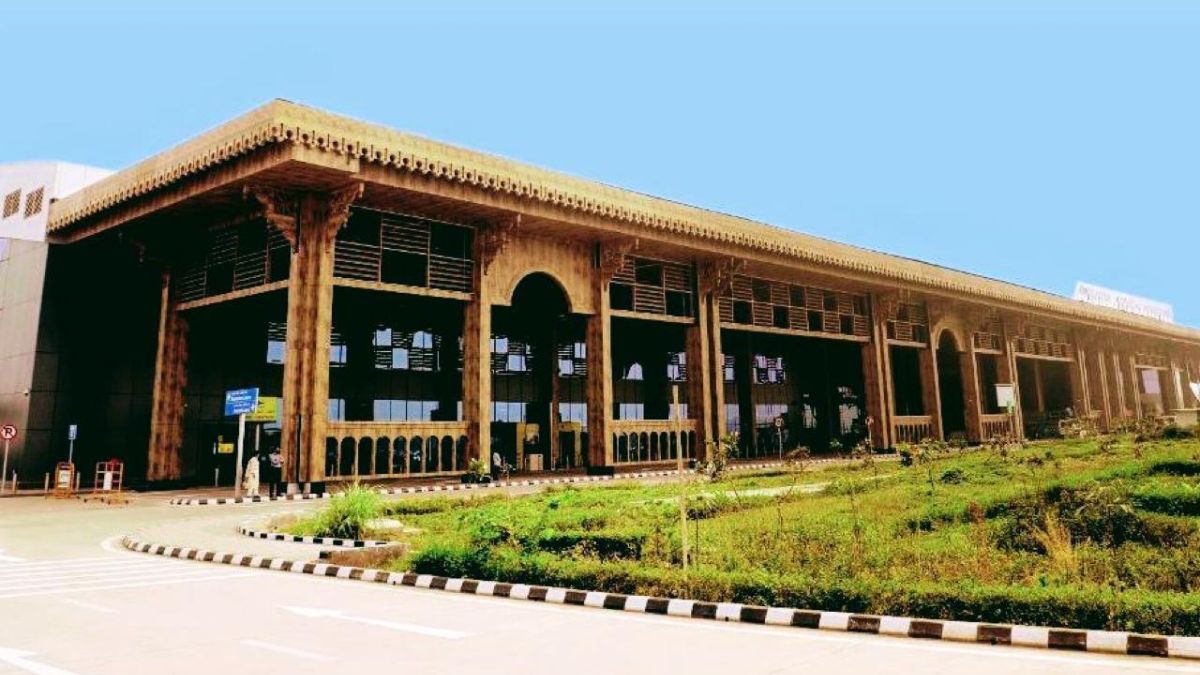
Surat Airport Expansion Suspended as AAI Withdraws Land Acquisition Plans Amid Safety Concerns
The Union Minister of State for Civil Aviation formally announced that the Airports Authority of India (AAI) has no requirement for additional land at Surat Airport. This statement, made in the Rajya Sabha this Monday, conclusively resolves years of ambiguity and conflict surrounding extensive land reservations that have significantly impacted local landowners and constrained urban development. The clarification marks a critical step towards re-evaluating city planning around Surat, promising potential relief for citizens and new opportunities for sustainable growth.
For nearly two decades, large parcels of agricultural land around Surat Airport have been held in limbo under various master plans, including the defunct SUDA Master Plan 2035 and the ongoing Draft Khajod Urban Development Authority (KUDA) Plan 2039. This reservation was based on unconfirmed assumptions of a need for a second parallel runway and an extension of the existing one to 3,810 metres. Consequently, hundreds of farmers and property owners faced severe restrictions on developing or selling their land, enduring economic hardship and mental distress without any concrete acquisition or compensation in sight. This parliamentary clarification definitively ends the contradictory narratives between AAI and the state government, restoring clarity and land rights.
The National Civil Aviation Policy, 2016, stipulates that the responsibility of providing land, free of cost and encumbrances, rests solely with the respective state government. While AAI develops master plans based on projected growth, the recent statement confirms that no formal request for additional land has been made for Surat Airport’s development. This dispels the notion that the state government’s unilateral land reservations were driven by AAI’s immediate expansion needs, highlighting a critical disconnect in urban planning and communication that had significant human impact.
The ramifications of this parliamentary pronouncement extend beyond land rights. Historically, AAI had been granting building height permissions in Surat based on the now-invalid assumptions of a two-runway system and a 3,810-metre primary runway. These height restrictions, implemented through the No Objection Certificate Application System (NOCAS), have limited vertical development in extensive areas of the city. With the official confirmation that AAI does not require additional land, the very foundation of these restrictions is undermined, potentially paving the way for revised building codes and increased permissible heights, a welcome development for the city’s construction and real estate sectors.
This development is a significant stride towards fostering a more transparent, equitable, and sustainably planned urban environment in Surat. It underscores the importance of clear communication between central and state authorities, ensuring that infrastructure planning genuinely aligns with actual requirements and does not inadvertently penalise citizens or impede organic urban growth. The expected removal of these land reservations from the Draft KUDA Plan 2039 will not only alleviate the long-standing burden on landowners but also unlock new avenues for responsible development, contributing to a more balanced and accessible city for all its inhabitants.