


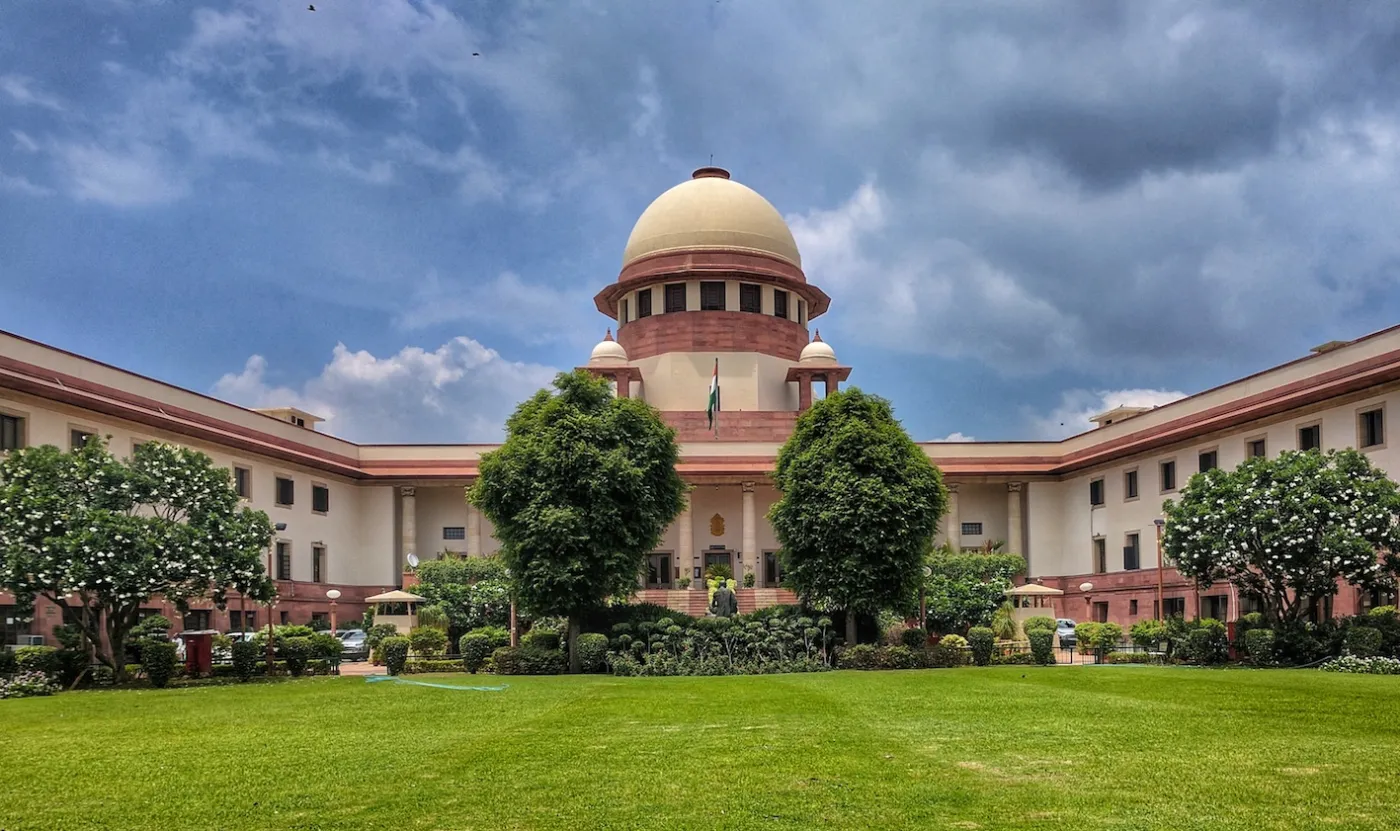
The Supreme Court on Tuesday likened the reservation system in India to a railway compartment, where “those who have entered don’t want others to come in.”
A bench comprising Justices Surya Kant and N Kotiswar Singh made the remark while hearing a petition challenging the 27 per cent reservation granted to Other Backward Classes (OBCs) in the state’s local body elections. The plea, filed by petitioner Mangesh Shankar Sasane, contended that the state’s Banthia Commission awarded the quota without adequately establishing political backwardness among the OBC communities. Senior advocate Gopal Sankaranarayanan, appearing for the petitioner, argued that the commission’s approach was flawed. “Political backwardness must be assessed separately from social and educational backwardness,” he submitted, adding that all OBCs cannot automatically be presumed to be politically backward. Responding to the submission, Justice Surya Kant remarked, “The reservation business has become like a railway. Those who have entered the compartment don’t want anyone else to enter. That is precisely the game of the petitioner also.”
Sankaranarayanan maintained that even as compartments were metaphorically added at the back, proper classification remained essential. Justice Kant replied that the state was constitutionally bound to identify all deserving groups under the principles of inclusivity. “There will be social backward classes, politically backward classes, and economically backward classes. Why should the benefits be confined to one group or family?” he asked. The court issued notice to the Maharashtra government on the plea and tagged it with other pending petitions challenging the same issue. Separately, in a related matter, the bench directed the Maharashtra State Election Commission (SEC) to notify local body elections within four weeks, based on the electoral framework that existed prior to the Banthia Commission’s August 2022 report. The SEC has been instructed to conclude the polls within four months, though it retains the liberty to seek extensions in appropriate cases.
The Supreme Court clarified that the outcome of the elections will remain subject to its final decision in the pending matters. The court had earlier directed a status quo on the local body elections in the state, citing concerns over the procedural integrity of the OBC quota framework. The case touches on wider questions around the classification of backwardness in Indian politics, particularly when quotas intersect with governance and electoral fairness.
Also Read: Mumbai Locals Get Real Time Display Panels
Supreme Court Questions OBC Quota in Maharashtra
