


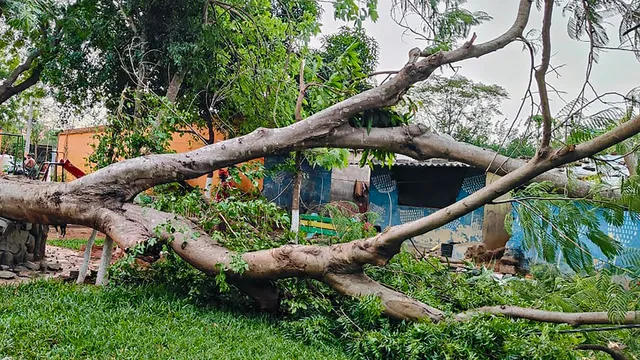
The Supreme Court of India has intensified scrutiny on the Delhi Development Authority (DDA) amidst allegations of a cover-up regarding tree felling in the Ridge area of the capital. The court, led by Justices A S Oka and Ujjal Bhuyan, expressed dismay over ongoing efforts to withhold information despite its prior notice on contempt proceedings against the DDA.
The controversy revolves around accusations that Lieutenant Governor V K Saxena may have directed the felling of trees to widen access roads for an upcoming hospital catering to Central paramilitary forces. Despite the court’s directive, the DDA has purportedly failed to provide conclusive evidence from an Enquiry Committee suggesting the Lt Governor’s involvement during his visit to the site on February 3, 2024. Justice Oka rebuked the DDA for what he termed as a “cover-up,” emphasizing the court’s commitment to uncovering the truth to facilitate remedial measures for the environmental damage caused by the tree felling.
“While our intent is not punitive, transparency is paramount. The Vice Chairman of DDA must clarify whether the highest authority issued directives for tree felling. This transparency would serve both the environment and our judicial system,” Justice Oka remarked.
Senior Advocate Maninder Singh, representing the DDA Vice Chairman, cited ongoing efforts to locate relevant records but faced skepticism from the bench regarding the genuineness of the request for more time.
The court also directed DDA’s Member Engineering, Ashik Kumar Gupta, to submit a detailed affidavit detailing the events of the Lt Governor’s visit and any directives issued during that time. This affidavit is expected to clarify the role of the Lt Governor and dispel any doubts regarding the legitimacy of the tree felling.
In a related development, the bench issued a contempt notice to the Delhi government’s Principal Secretary of Forest and Environment for allegedly permitting the felling of 422 trees without the authority of the designated Tree Officer under the Delhi Preservation of Trees Act, 1994. The court condemned this action as illegal and mandated immediate action to seize and account for the felled trees.
The legal proceedings underscore the critical importance of adhering to environmental laws and ensuring accountability in public administration, particularly concerning sensitive ecological areas like Delhi’s Ridge. As the case progresses, stakeholders await further clarity and corrective actions from both the DDA and the Delhi government to address the repercussions of the alleged regulatory breaches.
This unfolding legal saga serves as a stark reminder of the judiciary’s role in upholding environmental protection laws and holding authorities accountable for their actions affecting natural resources.
