


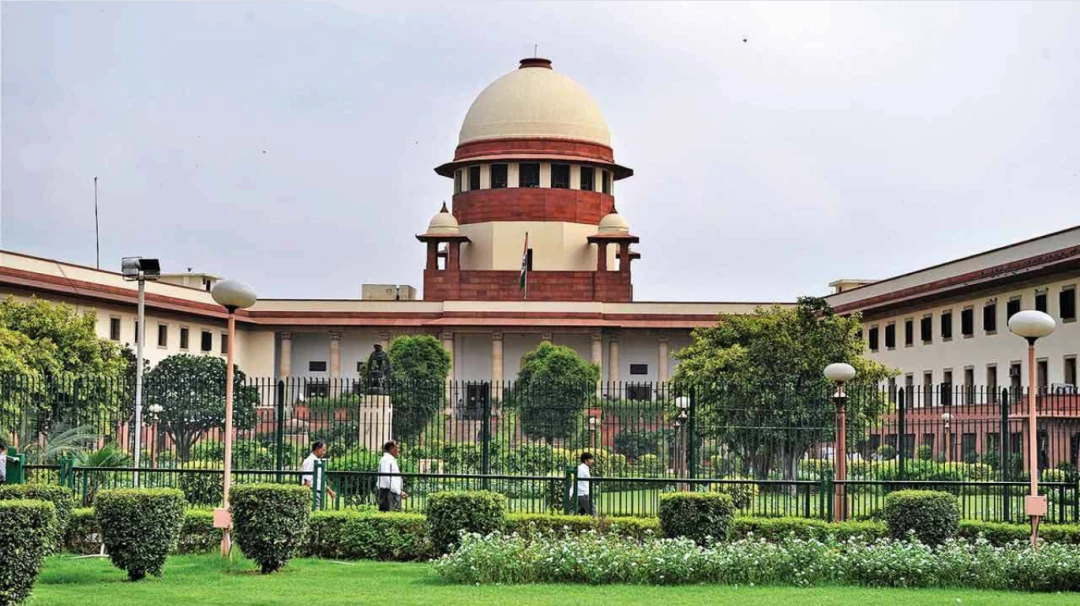
The Supreme Court has allowed the civic administration in Mumbai to seek fresh permission for removing additional trees linked to the Goregaon–Mulund Link Road (GMLR), signalling conditional support for a major cross-city infrastructure project long delayed by environmental concerns. The move comes with firm instructions that compensatory afforestation must be executed effectively, reflecting the judiciary’s increasing scrutiny of how urban development affects ecological resilience in India’s largest metros.
The court’s direction follows earlier approval for cutting nearly one hundred trees within the Film City area to enable tunnelling and related works for the project. However, the bench had previously raised concerns about the slow pace and inadequate survival rate of compensatory plantations carried out by public agencies. In its latest hearing, the court reiterated that permissions for further tree felling would depend on measurable, verifiable progress in restoring lost green cover. A senior official said the civic body’s new proposal includes detailed plans for planting and maintaining replacement trees across multiple sites, along with monitoring mechanisms to track growth for several years. The official added that the GMLR remains a critical mobility link aimed at reducing east–west congestion, yet the administration recognises the need to balance this with long-term environmental safeguards.
The court has also directed the state’s top bureaucrat to convene a joint meeting with civic representatives, forest officers, and project engineers to outline a cohesive roadmap for compensatory afforestation. Urban planners note that this step is crucial, given the city’s fragile ecological baseline and the growing public expectation that infrastructure upgrades must integrate climate-resilient practices. Environmental experts say Mumbai’s transport expansion has historically clashed with tree protection norms, often due to ambiguous processes rather than deliberate neglect. They argue that transparent reporting, community participation, and independent audits can help rebuild trust, particularly for projects involving large-scale vegetation loss. In this case, experts believe that the court’s conditional approval will compel agencies to design more robust green restoration strategies instead of treating tree replantation as a procedural formality.
Residents in the affected western suburbs have expressed mixed reactions. Many welcome the progress on the GMLR, describing it as essential for reducing daily travel times between the eastern and western corridors. Others remain concerned about the cumulative impact of tree cutting, given the city’s repeated heat stress episodes and shrinking natural buffers. Community groups have urged the authorities to prioritise native species, ensure water access for saplings, and maintain transparency about survival rates. The court is expected to review the matter again after the state submits its detailed afforestation plan. For Mumbai, the ruling underscores a broader shift: major infrastructure will increasingly be judged not only by mobility gains but also by its contribution to greener, more climate-resilient urban development.
Also Read: Mumbai Sends Request To Centre For Possible Fare Change On Metro Lines 2A & 7
