


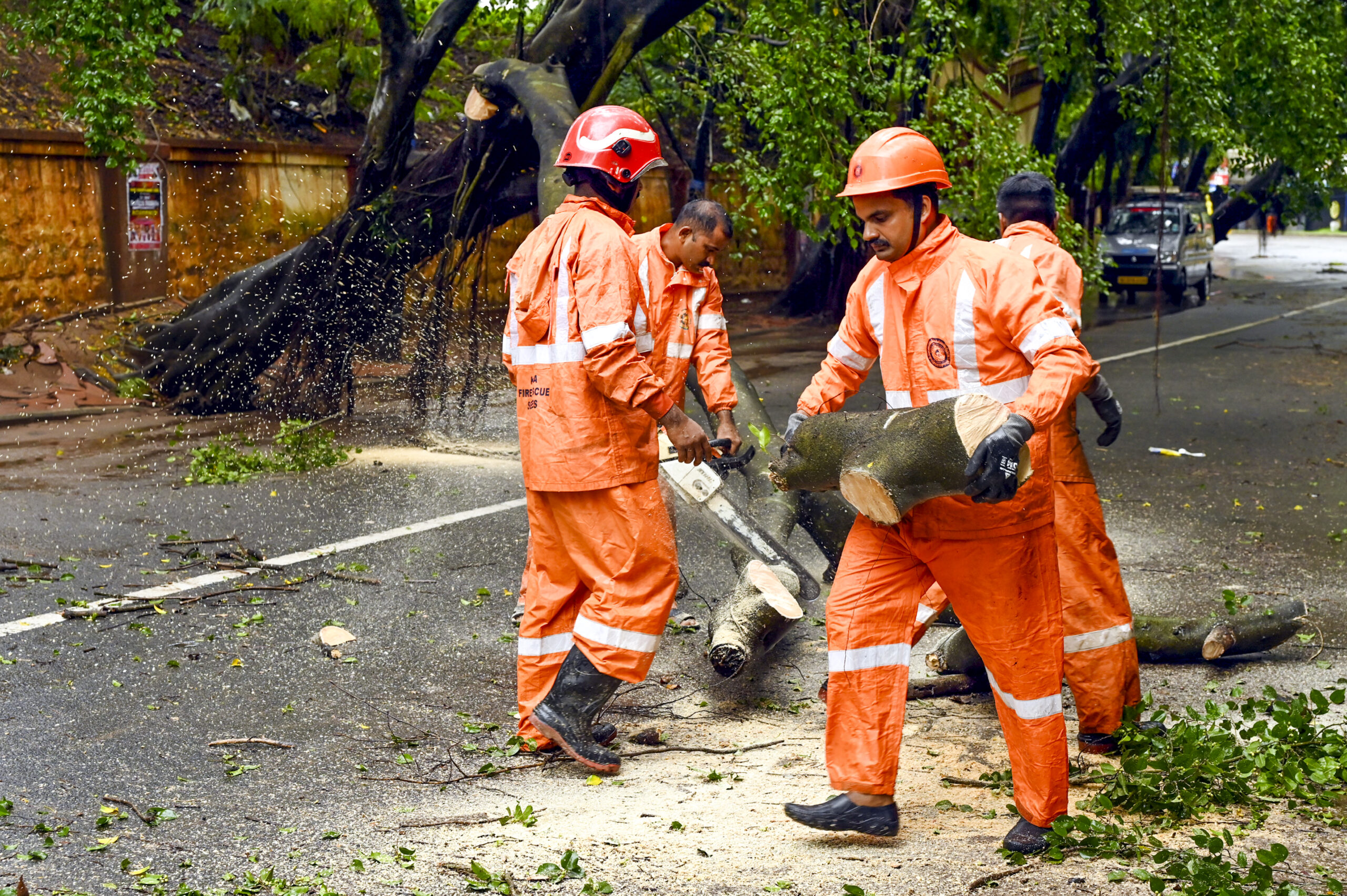
In yet another wake-up call to Kerala’s rapidly urbanising centres, Kochi witnessed extensive tree fall and foliage loss as heavy rains and strong winds swept across Ernakulam district on Monday.
More than 127 trees were uprooted in a single day, triggering serious concerns about the city’s fragile green cover and its growing vulnerability to extreme weather events. From Friday through Sunday, emergency response teams handled over 150 distress calls—mostly relating to fallen or broken trees that blocked major roads or damaged public infrastructure. The frequency and scale of tree collapses, including in rural parts like Perumbavoor, reflect the deepening environmental vulnerability of a city grappling with the consequences of erratic weather and poor ecological planning. Environmental experts warn that the continued erosion of green cover could accelerate Kochi’s transformation into a full-scale urban heat island. With fewer trees to provide shade and cooling, summers have grown increasingly harsh, especially in areas once rich with canopy cover.
What’s more, the inability of trees to withstand moderate gusts reveals a systemic flaw in urban plantation practices—most notably the shallow pit planting technique that leaves root systems underdeveloped and vulnerable. Tree planting in the city, say conservationists, has often prioritised numbers over quality. Without deep enough pits or the right soil structure, many saplings grow into unstable trees, unable to anchor themselves against rain or wind. Simultaneously, reckless and unscientific pruning, often done without assessing a tree’s structural integrity, further weakens the trees, leaving them prone to collapse during storms.
In places like Fort Kochi—one of the few areas where long shaded stretches once offered natural pedestrian comfort—the damage has been particularly painful. Residents have initiated efforts to engage with civic authorities to replace lost canopy with shade-giving indigenous trees, but progress has been slow. Civil society is now demanding an urgent reforestation drive that not only focuses on the number of trees but ensures correct planting techniques using species native to Kerala’s coastal ecology. However, there appears to be a vacuum in immediate governmental response. While community pressure is building, the absence of a structured plan from agencies like social forestry to replace lost trees with native saplings is glaring.
In a city already fighting air pollution, water stress, and rising surface temperatures, the unchecked collapse of green infrastructure threatens long-term ecological resilience. The recent devastation should ideally serve as a turning point not just for Kochi, but for all urban centres in India struggling to balance growth with sustainability. The urgency is not merely aesthetic or symbolic. Green cover is infrastructure, essential for climate moderation, air purification, and public well-being. Restoring it is no longer a matter of policy ambition but of survival.
Also Read :Delhis air cleanses capital finds relief from heat pollution
