


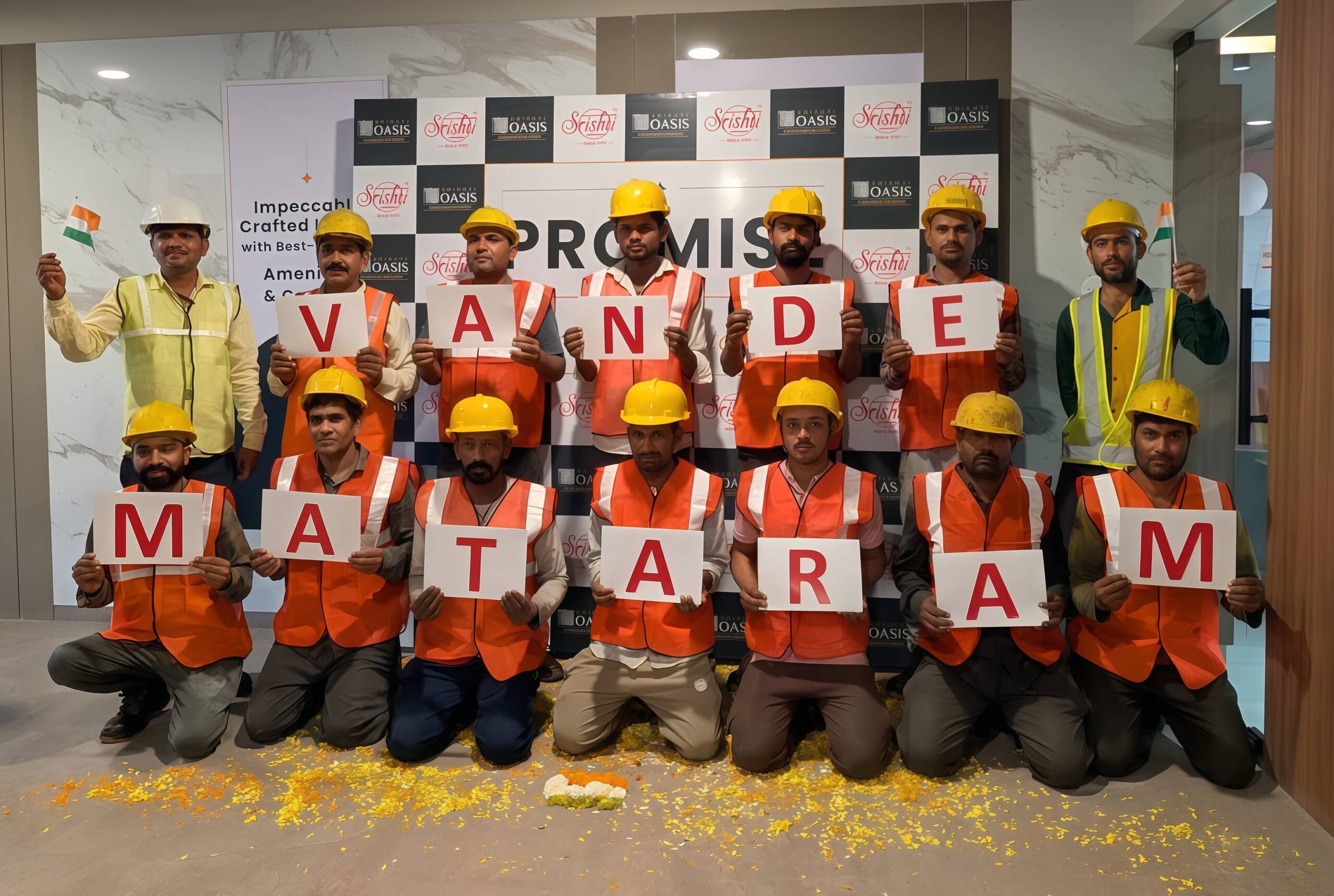
A Republic Day observance at a northern Mumbai infrastructure-linked housing site has drawn attention to a frequently overlooked group in India’s urban story construction workers who physically shape the country’s expanding cities. The initiative, held at an active development along the Goregaon-Mulund Link Road corridor, reframed the national celebration through the lens of labour dignity and inclusive city-making.
The event formed part of a workforce recognition programme organised at a residential project under construction, where on-site workers were acknowledged as central contributors to urban growth rather than background participants in the development process. The observance coincided with India’s Republic Day theme, using symbolism and collective participation to connect constitutional values with everyday city-building. Urban planners and labour experts note that such initiatives, while symbolic, are increasingly relevant in a construction sector that employs millions but often remains disconnected from public recognition. India’s urbanisation drive spanning housing, transport corridors, and industrial infrastructure relies heavily on migrant and semi-skilled labour, yet worker visibility and welfare continue to lag behind the pace of development. During the event, construction workers participated in a coordinated visual display using safety helmets and placards, blending themes of national identity with workplace safety and respect for labour. Industry observers say the emphasis on safety equipment as a visual element is significant, particularly in a sector where occupational risk remains high and compliance uneven.
Beyond symbolism, the gathering also included on-site welfare measures such as food distribution and small appreciation kits, gestures that reflect a broader shift within parts of the real estate industry towards workforce engagement. While these measures do not substitute for systemic reforms such as housing security, healthcare access, or skill certification, they signal growing awareness around the human dimension of urban construction. The location of the initiative is also notable. The Goregaon-Mulund Link Road corridor is emerging as a critical east-west connector within Mumbai’s metropolitan fabric, supporting new residential and commercial clusters. Developments in such corridors depend on sustained construction activity, making labour stability and morale increasingly important for timely and responsible project delivery. Urban development specialists argue that recognising construction workers publicly helps reframe how cities value labour not merely as an input cost, but as a stakeholder in urban outcomes. As Indian cities confront challenges around affordability, climate resilience, and infrastructure quality, workforce well-being is likely to play a more prominent role in determining project sustainability.
Looking ahead, experts suggest that labour-focused initiatives will need to move beyond annual observances toward embedded practices, including safer worksites, access to social security schemes, and integration of worker housing within urban plans. As India’s cities continue to expand vertically and horizontally, the visibility and dignity of those who build them may become a key measure of inclusive urban progress.
Also Read: Retail Leasing Surge Reshapes City Commercial Hubs
Srishti Group Event Brings Focus to Urban Workforce
