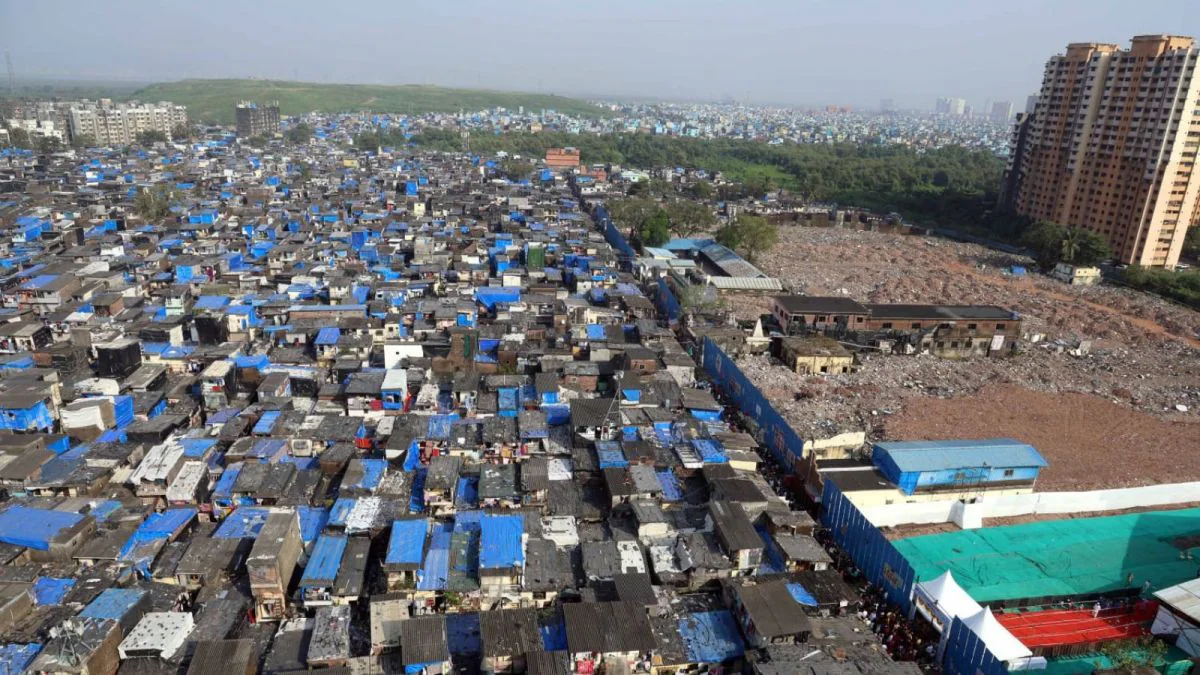
Mumbai’s Slum Rehabilitation Authority (SRA) has completed surveys of more than 8.8 lakh homes across 2,599 slum clusters, marking a significant step in the city’s long-term slum redevelopment strategy. Of these, biometric data—including fingerprints and supporting documents—have been collected from approximately 6.1 lakh households, helping authorities establish a comprehensive database of residents eligible for housing rehabilitation.
The survey, originally slated for completion by the end of 2025, is set to continue into 2026 as officials aim to cover remaining slum pockets. Urban planners estimate that the total number of slum households in Mumbai may approach 13 lakh, reflecting the scale and complexity of the city’s informal settlements. A senior official highlighted that the exercise is critical for assessing housing volumes, identifying eligible occupants, and initiating redevelopment projects in line with sustainable urban planning principles. While surveyed homes are assigned unique identification numbers, officials note that gaps persist in biometric submissions due to reluctance among some residents to provide documentation. This discrepancy underscores the challenges of large-scale civic data collection in informal settlements, where trust-building and citizen engagement remain essential. Survey teams are also expanding coverage to partially documented areas and new slum clusters, with the aim of enhancing data reliability for future housing initiatives.
Since 2016, the SRA has employed a combination of on-ground and technological methods. Earlier surveys focused on cluster-level biometric collection and GIS mapping. In 2021, drone-assisted citywide mapping identified nearly 13 lakh slum homes, providing a visual and geospatial framework for prioritising redevelopment efforts. Experts note that such integrated approaches are increasingly necessary for effective planning in dense urban environments. The survey covers slums on state and private land, with data submitted to the respective deputy collector for eligibility verification. Slums under central government, railway, defence, and forest jurisdictions, as well as the Dharavi area, are excluded due to separate administrative frameworks. Among the homes surveyed post-2021, the majority—over 4.26 lakh—are on state or private land, with smaller numbers located on MHADA and municipal plots.
A senior urban affairs expert observed that the SRA survey represents a foundational step toward evidence-based, people-first redevelopment. By combining biometric, geospatial, and administrative data, authorities can better plan rehabilitation projects, allocate resources, and improve service delivery in Mumbai’s high-density settlements. The exercise also highlights the importance of stakeholder coordination, including government agencies, private contractors, and resident communities, in achieving scalable urban outcomes. As Mumbai continues to pursue slum-free neighbourhoods, completion of the survey will enable targeted redevelopment, enhance living conditions, and support more equitable, climate-resilient urban growth. Observers note that bridging the remaining gaps in data and participation remains crucial for translating survey findings into actionable housing and infrastructure projects.
SRA Collects Biometrics From Over Six Lakh Slums