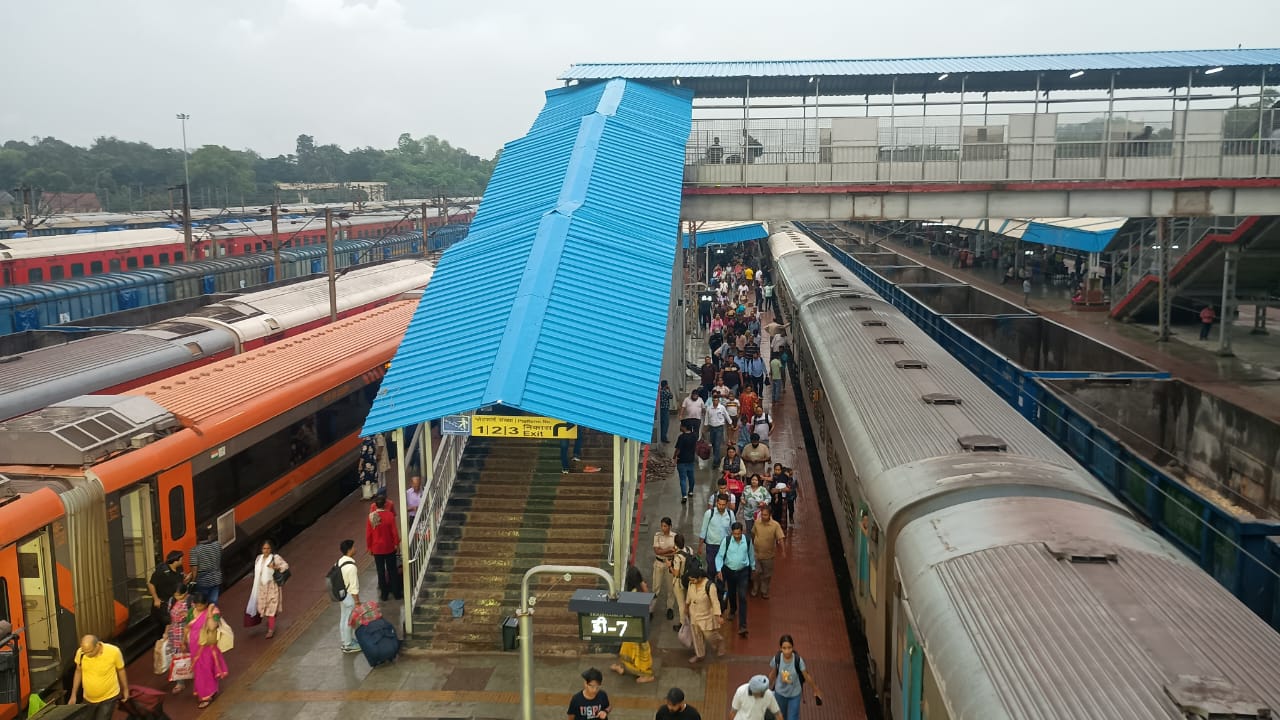
Southern Railway Reworks Festival Train Operations
Rail operations across Tamil Nadu have been recalibrated ahead of the Pongal holidays as Southern Railway adjusts capacity to reflect shifting travel patterns from Chennai and other urban centres. The regional rail zone has introduced selective special services on high-demand routes while withdrawing underutilised trains, highlighting a data-driven approach to managing festive mobility in one of India’s busiest rail corridors.
The changes come amid a significant seasonal exodus from Chennai, with railway authorities estimating that nearly two lakh passengers used long-distance and suburban rail services to travel out of the city during the festival window. For a metropolitan region where trains remain the most affordable and low-carbon mode of intercity transport, managing this surge is critical to both commuter safety and network efficiency. To address peak demand from southern districts, a one-way express service has been scheduled between Tirunelveli and Tambaram. Officials say the additional train is designed to clear waiting lists and ease pressure on overnight services connecting southern Tamil Nadu with the Chennai suburban rail hub. The train configuration prioritises high-capacity sleeper and general class coaches, reflecting the continued reliance of middle- and lower-income households on rail travel during festivals.
At the same time, several special trains planned earlier in the season have been withdrawn following low occupancy levels. Rail planners note that real-time booking data increasingly influences operational decisions, reducing the need to run near-empty trains that add to energy use and maintenance costs without meaningful public benefit. Transport economists say such recalibration is essential for building a more financially and environmentally sustainable railway system. Beyond rolling stock adjustments, Southern Railway has stepped up on-ground management at Chennai’s busiest terminals. High-footfall stations including Central, Egmore and Beach have seen increased deployment of security and operational staff to manage crowd flows, platform safety, and punctual departures. A round-the-clock control room is monitoring both express and suburban services, while temporary ticket counters, automated ticket vending support, and passenger assistance desks have been activated to reduce congestion inside station buildings.
Urban mobility experts view these measures as part of a broader challenge facing Indian cities: synchronising festival travel demand with ageing rail infrastructure and dense station precincts. “Every festive season becomes a stress test for last-mile access, station design, and crowd management,” said a transport planner familiar with Chennai’s rail network. “Incremental operational fixes help, but long-term solutions lie in station redevelopment and multimodal integration.” For commuters, the immediate impact is a mixed one improved availability on select routes, alongside last-minute cancellations on others. Railway officials have advised passengers to check updated schedules before travel, underscoring the need for better digital communication as service patterns become more dynamic.
As Chennai continues to grow as a regional economic anchor, the way Southern Railway Pongal trains are planned and executed offers insights into how India’s railways are balancing efficiency, affordability, and sustainability during periods of intense travel demand.