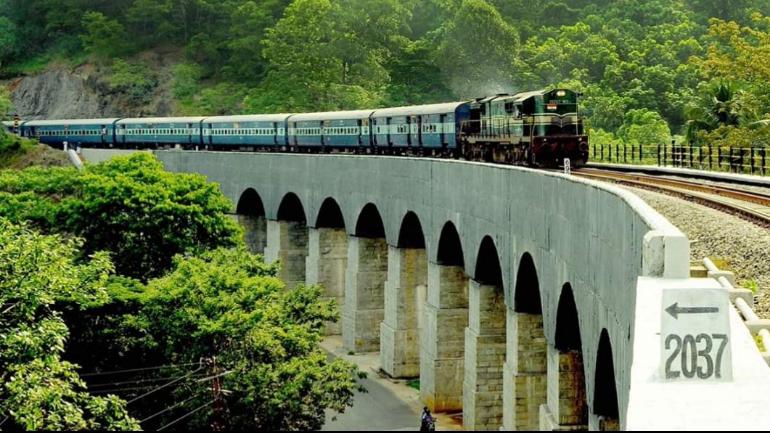
Indian Railways has recalibrated schedules on one of South India’s key long‑distance services, sharply reducing travel time on the Kollam–Chennai Express, a train that connects Kerala’s southern districts with Tamil Nadu’s metropolitan corridor. The move not only trims nearly 85 minutes off the journey but also reflects broader infrastructure and service‑efficiency priorities that could reshape regional mobility patterns in the years ahead.
Under the revised timetable effective from early January, the train now pulls into Tambaram station at around 06:05 am instead of its previous 07:30 am arrival. While it currently terminates at Tambaram due to ongoing redevelopment at Chennai’s Egmore station, the reduced transit duration makes this route the fastest rail connection to the city from Kerala’s southern end. Transport analysts say such time savings can catalyse commuter and business travel, especially among professionals, students, and small businesses who depend on reliable long‑distance rail links for access to economic hubs. Faster rail connectivity also complements broader connectivity goals that aim to balance urban growth with sustainable mobility alternatives—particularly important in dense South Indian corridors where road congestion and rising fuel costs frustrate drivers.
The Kollam–Chennai Express runs via the Punalur–Sengottai–Tenkasi corridor, serving passengers in towns that have historically been at the periphery of high‑speed rail benefits. Despite its reach, the service has often been perceived as time‑inefficient relative to road alternatives. Changing its schedule — alongside other adjustments such as shifting its departure from Kollam to late afternoon — was a long‑standing request from regional passenger groups, who argued slow timings impeded connectivity with workplace and early‑morning engagements in Chennai’s urban markets. The service adjustment was not isolated. Southern Railway has rolled out a revised timetable affecting dozens of services, with estimates suggesting up to 65 trains, including the Kollam–Chennai Express, will benefit from infrastructure upgrades such as track doubling and enhanced electrification, allowing higher average speeds and shorter travel intervals.
Passenger advocacy groups in Kerala welcomed the change as a tangible example of rail responsiveness, yet they also noted areas for further improvement. These include better station amenities, tighter punctuality controls, and enhanced crowd management at key junctions such as Thiruvananthapuram Central — a city station that has faced criticism over congestion and delayed announcements in recent months. Urban mobility experts believe that more efficient inter‑city rail connections can also support sustainable tourism and commuter flows without aggravating carbon emissions. Rail transit’s lower per‑passenger footprint makes such service optimisations relevant not only for convenience but also for regional climate and transport goals.
As rail operations evolve into 2026, authorities and planners will closely observe usage patterns and passenger feedback to determine whether these schedule enhancements translate into sustained ridership growth and better integration with wider multimodal mobility frameworks across Kerala and Tamil Nadu.