


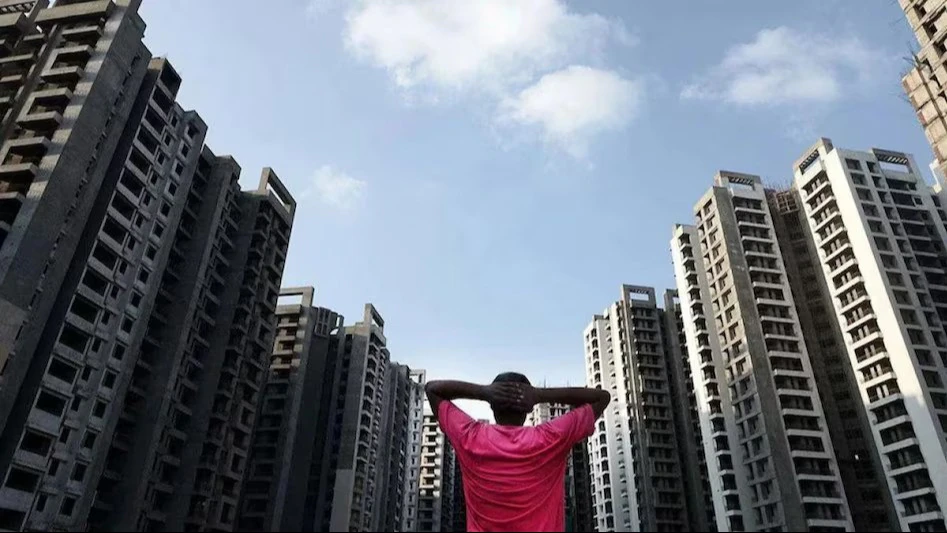
South India’s residential property market generated an estimated Rs 20,000 crore in home sales during 2025, signalling a decisive post-pandemic rebound and a structural shift in where urban housing demand is being created. The momentum, observed across multiple states, is increasingly being driven not by traditional metros alone but by Tier-2 and Tier-3 cities that are absorbing new households, jobs and infrastructure investment.
Industry data discussed at a regional real estate conclave in Bengaluru indicates that southern markets, while smaller in absolute size than their northern and western counterparts, are undergoing a broad-based expansion. Cities such as Coimbatore, Kochi, Thiruvananthapuram and Visakhapatnam are emerging as stable residential markets, supported by manufacturing clusters, services employment and expanding social infrastructure. Urban planners note that these cities are benefiting from more compact growth patterns, lower congestion and comparatively better access to housing. Beyond homes, commercial real estate activity in South India outperformed earlier projections in 2025. Office absorption was estimated in the range of 2-4 million square feet, while organised retail, warehousing and hospitality also recorded steady uptake. Warehousing alone accounted for up to 12 million square feet of new absorption, reflecting the region’s growing role in logistics, e-commerce fulfilment and industrial supply chains. Data centres, a newer but fast-growing asset class, added between 10 and 30 megawatts of capacity during the year. Experts attribute this diversification to large-scale public infrastructure investments reshaping regional connectivity. National highway expansions, new rail corridors and airport development under central schemes have reduced travel times and widened labour markets, making secondary cities more viable for both residents and employers.
The steady expansion of regional airports, in particular, has allowed cities outside the traditional metro orbit to integrate into national and global economic networks. Looking ahead, projections suggest that South India could see the addition of up to 60,000 new housing units in Tier-2 and Tier-3 cities by the early 2030s. Retail space demand is expected to multiply several times over, while warehousing and data infrastructure are likely to scale rapidly alongside digital and manufacturing growth. This trajectory positions South India housing sales as a critical indicator of how India’s urban future may decentralise over the next decade. However, the outlook is not without challenges. Rising construction costs, higher land prices and tightening affordability are beginning to test demand, particularly for first-time buyers. Developers and policymakers acknowledge that sustaining growth will require careful alignment of housing supply with transport, water, energy efficiency and climate resilience measures.
As South India housing sales continue to expand beyond metropolitan cores, the region’s next phase of urbanisation will depend on whether these emerging cities can balance growth with inclusivity, infrastructure capacity and long-term environmental sustainability.
Also Read: Kowori Group Enters South Delhi Market
South India Housing Sales Reshape Regional Cities
