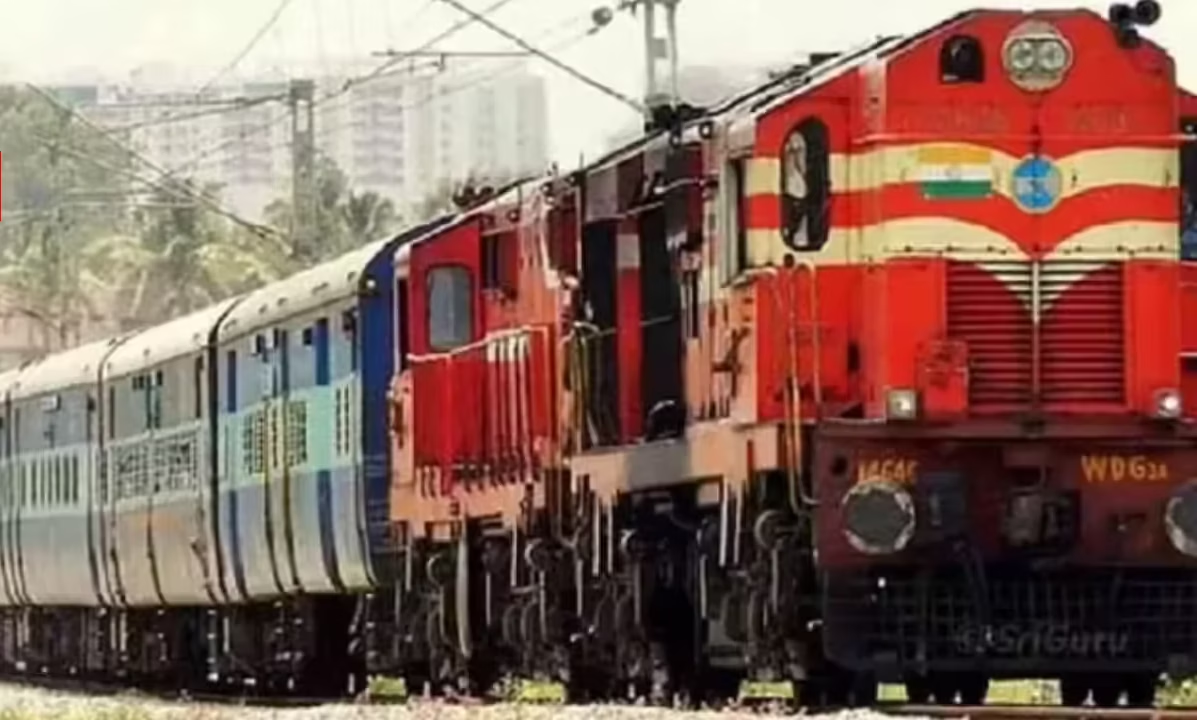
Rail travel across central and southern India is set for temporary disruption as South Central Railway undertakes critical signalling and track integration works on one of its busiest freight and passenger corridors. The operational changes, scheduled through late January and February, are linked to infrastructure upgrades at Mandamari station, a key node on the Kazipet–Balharshah section that connects industrial regions across Telangana and Maharashtra.
Railway officials indicate that the works form part of a broader tripling project aimed at increasing line capacity and improving reliability on a corridor that carries both long-distance passenger trains and heavy freight traffic. While the upgrades are expected to deliver long-term benefits, including higher throughput and reduced congestion, they will require extended traffic blocks that affect multiple express and special services in the short term. As a result, several long-haul trains connecting northern, southern, and eastern India will not operate on select dates, while others will be diverted via longer routes. Passengers travelling between major urban centres such as Bengaluru, Thiruvananthapuram, Chandigarh, Gorakhpur, Madurai, and Danapur are among those likely to be impacted. In addition to outright cancellations, certain premium services will run with revised timings or face brief en-route regulation.
Transport analysts note that South Central Railway train disruptions of this scale highlight the balancing act facing India’s rail network: modernising legacy infrastructure while continuing to serve one of the world’s largest daily passenger bases. The Kazipet–Balharshah stretch, in particular, is a strategic artery for mineral movement, agricultural freight, and intercity travel, making capacity expansion unavoidable as demand grows. From an urban and regional development perspective, temporary service changes can have knock-on effects beyond the railway system. Business travel schedules, tourism flows, and labour mobility are often closely tied to predictable rail connectivity. Urban economists point out that cities dependent on rail-linked supply chains may experience short-term logistical adjustments, especially where diverted routes increase transit times.
Railway planners argue that the long-term gains outweigh the inconvenience.
Tripling projects typically enable better segregation of passenger and freight traffic, improve punctuality, and reduce energy consumption through smoother operations an important consideration as Indian Railways works towards lower-carbon transport outcomes. Passengers are being encouraged to actively track updates through official enquiry platforms, as train patterns may vary by date and route during the block period.
Officials also advise factoring in buffer time for journeys involving diverted or rescheduled services. As South Central Railway pushes ahead with capacity upgrades, the coming weeks will test communication and coordination with passengers. If executed as planned, the works are expected to strengthen one of the network’s most critical corridors, supporting more resilient, efficient, and sustainable rail connectivity across multiple states once normal operations resume.
South Central Railway upgrades disrupt long routes