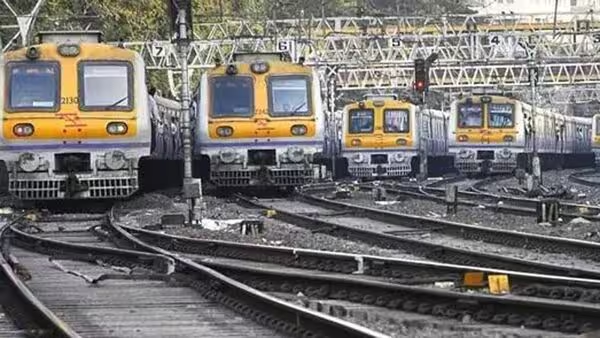
SMVT Bengaluru Infrastructure Works Disrupt Regional Trains
Rail operations through SMVT Bengaluru are set to experience temporary disruptions as the station undergoes yard infrastructure upgrades aimed at improving operational flexibility. The Solapur Division of Central Railway has announced that several long-distance services will face short-terminations and short-originations during early January, reflecting the broader challenge of maintaining service reliability while modernising urban transport nodes.
Train No. 06540, the Bidar–SMVT Bengaluru Express Special, scheduled to depart on January 3, will terminate at Yelahanka instead of SMVT Bengaluru. Similarly, the Vande Bharat Express from Kalaburagi, Train No. 22231, commencing January 4, will also terminate at Yelahanka. Return services, including Train No. 22232 SMVT Bengaluru–Kalaburagi Vande Bharat Express and Train No. 06539 SMVT Bengaluru–Bidar Express Special, will originate from Yelahanka on specified dates, necessitating adjustments for regular commuters and long-distance travelers.Railway authorities have advised passengers to plan their journeys accordingly and consider alternative options where possible. The temporary schedule changes, though brief, highlight the operational complexities faced by urban rail hubs, particularly those integrating high-speed Vande Bharat services alongside conventional express trains.
Infrastructure analysts note that yard upgrades at SMVT Bengaluru are critical to enhancing train-handling capacity, minimising turnaround delays, and supporting long-term network expansion. Improvements at key metropolitan terminals like SMVT Bengaluru not only streamline daily operations but also increase resilience against disruptions, an essential consideration in rapidly growing urban corridors that serve both regional and inter-state passengers.Short-term service adjustments, however, underscore the interplay between maintenance requirements and urban mobility. Bengaluru, a city already grappling with dense traffic and commuter demand, relies heavily on reliable rail services to connect satellite towns and peri-urban regions. Temporary originations and terminations at Yelahanka will likely shift passenger flow patterns, putting additional pressure on feeder transport systems such as buses, taxis, and metro connections.Experts suggest that managing urban rail upgrades requires proactive passenger communication, coordinated multimodal planning, and flexible service scheduling to minimise inconvenience. The SMVT Bengaluru works provide a case study in balancing infrastructure modernization with service continuity, an increasingly common challenge in Indian cities striving to expand rail-based mobility options.
Once completed, the yard enhancements are expected to improve train punctuality, increase platform availability, and enable smoother integration of high-capacity services in one of South India’s busiest rail corridors. Urban planners and transport authorities are monitoring the project closely, recognising that modernised rail infrastructure contributes to both economic efficiency and sustainable urban mobility, reducing reliance on road-based travel and associated congestion.Passengers and stakeholders are encouraged to stay informed through railway advisories to mitigate travel disruptions, while authorities aim to complete the infrastructure improvements swiftly to restore full operations at SMVT Bengaluru.