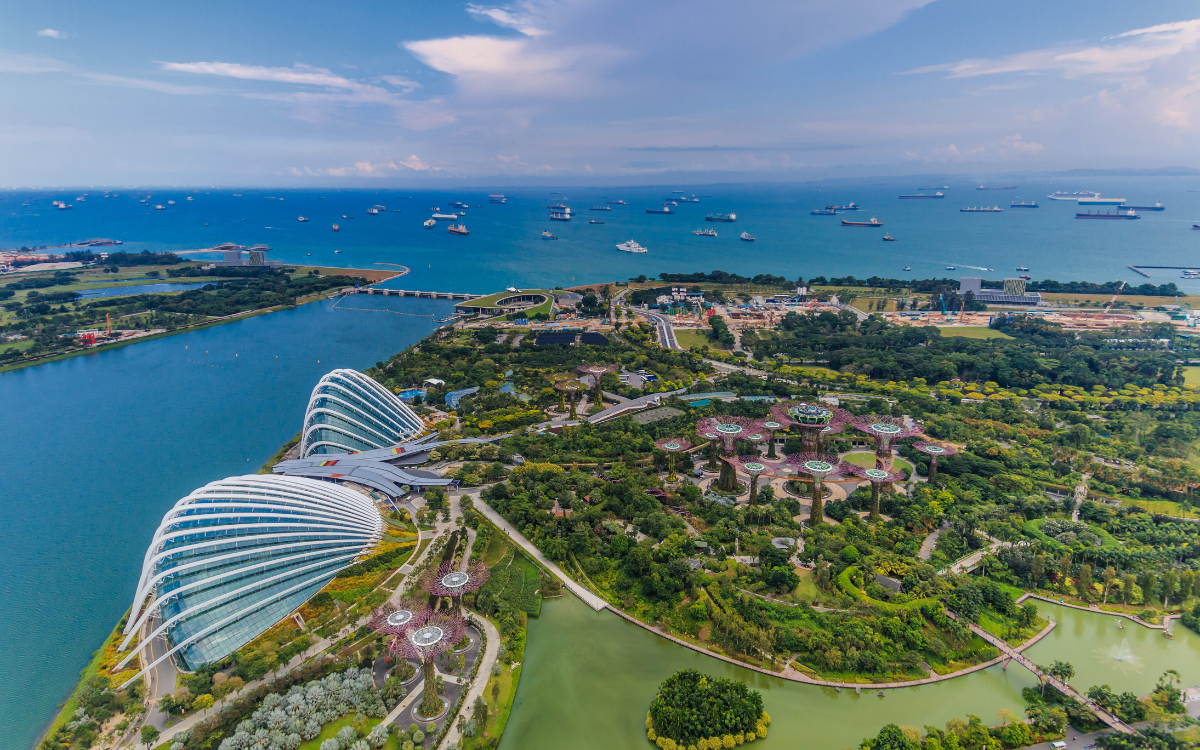
Singapore Balances Urban Growth and Green Conservation Efforts
Singapore is struggling to preserve its remaining green spaces and biodiversity as urban development accelerates across the densely populated island nation.
With a land area of just 730 square kilometres — 16% of which is rainforest — the city-state faces growing challenges in balancing ecological preservation with housing and economic expansion. The country’s population climbed by 2% last year, driven largely by foreign workers and students, as Singapore targets 5% annual GDP growth. Around 80% of residents live in high-rise government housing, while reclaimed land and forested zones are increasingly earmarked for development. Despite losing most of its primary rainforest since the 1800s, Singapore has committed to environmental sustainability as part of its national identity. Government initiatives such as the ‘City in Nature’ strategy promote urban greening to reduce heat, support mental well-being and manage rainfall. The 62-hectare Bishan-Ang Mo Kio Park, for instance, is up to 3°C cooler than surrounding built-up areas.
But conservationists remain concerned. The survival of Johora singaporensis, an endangered freshwater crab native to Singapore, triggered a rare government-led conservation effort in 2008 after the species disappeared from one of its last known habitats. A working group led by the National Parks Board (NParks) launched a captive-breeding and reintroduction programme, helping stabilise crab populations. Yet, other forest species may not receive the same protection. Critics say forest clearing continues without adequate transparency. Woodland areas like Pang Sua and Clementi Forest are slated for construction, and nearly 100,000 new homes are expected by 2025. “By the time you know that a patch of forest is going to be developed, they’re going to do it, no matter what,” said Kalai Vanan Balakrishnan, chief of the Animal Concerns Research and Education Society. Civil society groups argue that limited access to environmental data leads to poor consultation. In response, NParks says it collaborates across sectors but withholds some species data to prevent poaching. Singapore’s sustainability pledges include planting one million trees and transplanting 100,000 corals by 2030. But environmentalists question the net gain, given ongoing tree losses and ambitious marine targets. “Nobody is tracking how many trees we are cutting down while we are planting a million,” said Andie Ang of the Jane Goodall Institute Singapore.
With tight land constraints and increasing development pressure, Singapore’s green future hinges on whether conservation efforts can match the pace and transparency of its urban ambitions.