


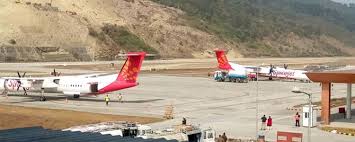
Sikkim’s strategically important Pakyong Airport has remained devoid of scheduled commercial flights since June 2024, a concerning revelation from the Ministry of Civil Aviation in response to a parliamentary query. This prolonged operational pause, despite the airport retaining its licensed status, underscores the inherent challenges of air connectivity in the sensitive Himalayan region and raises critical questions about its impact on the state’s economic vitality and sustainable development trajectory.
The confirmation came from Minister of State for Civil Aviation, Murlidhar Mohol, during the ongoing Monsoon Session of Parliament, in a written reply to Sikkim’s Rajya Sabha MP, Dorjee Tshering Lepcha. While Pakyong Airport is officially designated as a Visual Flight Rules (VFR) aerodrome and remains under the Airports Authority of India (AAI) purview, its operational dormancy is attributed to the commercial decisions of airline operators. The Ministry reiterated that India’s domestic aviation sector operates under a deregulated framework, where airlines are at liberty to determine routes based on their commercial and operational viability. Crucially, no airline has submitted a request for flight slots, nor are there any pending applications with the AAI for resuming scheduled services.
Also Watch: “Mumbai will rock, shine and always be India’s best city to live.” In an exclusive, MHADA CEO Sanjeev Jaiswal (IAS) talks about Mumbai’s enduring charm, livability, and the government’s focus on making it affordable for all
Pakyong Airport, inaugurated with considerable fanfare in 2018, has historically grappled with intermittent disruptions largely due to the challenging weather conditions characteristic of its high-altitude, tabletop location. These operational hurdles, which often lead to low visibility, have frequently hampered consistent flight schedules since its inception. While a Required Navigation Performance (RNP) approach was introduced in 2021 to mitigate some of these issues by reducing visibility criteria, the airport’s susceptibility to adverse weather, especially during the monsoon season, continues to pose a significant challenge. The absence of an Instrument Landing System (ILS), primarily due to geographical constraints, further exacerbates these limitations.
The prolonged suspension of flights casts a long shadow over Sikkim’s tourism-dependent economy. Air connectivity is vital for a state like Sikkim, promoting not only tourism but also facilitating faster movement of high-value goods, supporting local businesses, and providing critical access during emergencies. The current situation forces travellers and goods to rely heavily on the Bagdogra airport in West Bengal, followed by a lengthy and often arduous road journey, which increases travel time, fuel consumption, and carbon footprint – running counter to the imperatives of eco-friendly and sustainable development in the fragile Himalayan ecosystem.
As Sikkim’s representatives continue to press for clarity and solutions, the onus remains on airline operators and the Civil Aviation Ministry to find sustainable pathways to restore consistent air services. Ensuring reliable connectivity is not merely a matter of commercial interest; it is a fundamental pillar for regional growth, social equity, and the overall well-being of the people of Sikkim. A robust and reliable air link is indispensable for fostering a resilient economy and ensuring that the benefits of progress reach this beautiful, yet geographically challenged, Himalayan state.
Also Read: Air India Flight AI 2744 Skids Off Mumbai Runway Amid Rain Today
