


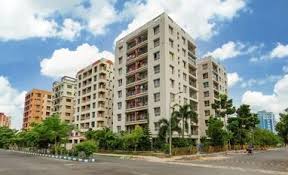
Shriram Properties Ltd has secured a four-acre land parcel along Sarjapur Main Road in south-east Bengaluru, marking a fresh investment in one of the city’s fastest-growing housing corridors. The proposed project, with an estimated gross development value of Rs 550-600 crore, is expected to add nearly five lakh square feet of saleable residential space and is slated for launch in late 2026.
The acquisition strengthens the company’s pipeline in a micro-market shaped by technology-led employment growth and expanding transport links. Sarjapur’s residential profile has evolved rapidly over the past decade, supported by proximity to Whitefield, Varthur and the Outer Ring Road all key office clusters driving housing demand from mid- to senior-level professionals. Company disclosures indicate that the upcoming development will take the form of a premium high-rise scheme. Market observers say vertical housing formats are increasingly preferred in land-constrained urban zones, enabling higher density while preserving open areas for amenities and community infrastructure. Connectivity remains central to the investment thesis. The site lies near the planned Dommasandra Metro Station, part of the city’s expanding metro network. Urban planners note that metro-linked residential growth can reduce car dependency and lower transport emissions, provided projects integrate pedestrian access and last-mile connectivity.
The Bengaluru residential development pipeline has shown resilience even as price growth moderates in select pockets. Analysts attribute sustained demand to steady hiring across technology, global capability centres and start-ups, alongside improving civic infrastructure in the city’s eastern and south-eastern zones. However, experts caution that future growth must be aligned with water security, waste management and traffic mitigation. Sarjapur has historically faced pressure on road capacity and groundwater resources. Integrating rainwater harvesting, decentralised sewage treatment and energy-efficient design will be critical if new projects are to meet evolving regulatory and environmental standards. The transaction also reflects a broader strategy among listed developers to secure well-located land parcels ahead of anticipated infrastructure upgrades. By locking in sites early, firms aim to manage input costs and phase launches in line with market absorption trends. On the bourses, shares of Shriram Properties were trading lower intraday following the announcement, though analysts describe such movements as typical short-term volatility rather than a reflection of project fundamentals.
For Bengaluru, each new residential addition carries wider urban implications. As the city continues to densify along metro corridors, the success of this Bengaluru residential development will depend not only on sales velocity but on how effectively it integrates with transport, social infrastructure and climate-resilient design. With the launch planned for 2026, attention will now turn to regulatory approvals and design disclosures that reveal how the project addresses these urban priorities.
Also Read: India office real estate market sees reset
Shriram Properties Bengaluru residential development push
