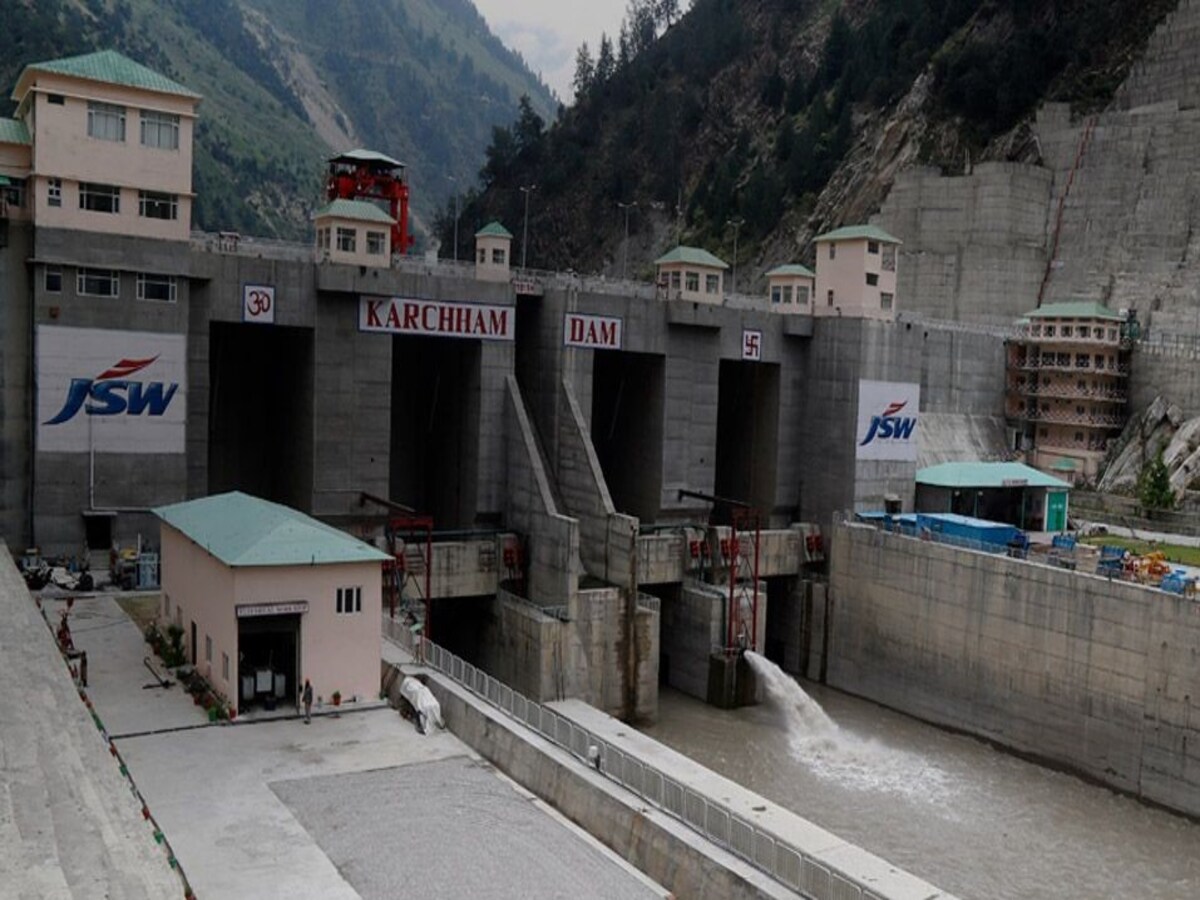
Shimla witnessed a landmark legal development this week as the Supreme Court upheld Himachal Pradesh’s contractual right to receive 18 percent of free electricity from a major hydroelectric project within the state. The judgment restores the terms of the original agreement with JSW Hydro Energy’s 1,045 MW Karcham Wangtoo plant, overriding a previous High Court order that had capped free power at 13 percent. The apex court emphasised that regulatory guidelines cannot override freely negotiated contracts unless explicitly stated, marking a crucial affirmation of state entitlements and the integrity of clean energy agreements.
The ruling comes amid growing tensions between private developers and state governments over power-sharing frameworks in India’s hydro sector. In this case, the Central Electricity Regulatory Commission’s (CERC) 2019 tariff guidelines had been interpreted to limit free power to 13 percent, prompting JSW to reduce its obligation. However, the state government argued that the original implementation agreement guaranteed 18 percent free supply for a 28-year period following the initial 12 years of commercial operations, which began in 2011. The court ruled in favour of the state, reinforcing the primacy of contractual obligations over evolving regulatory interpretations. Legal experts are interpreting the verdict as a significant precedent for energy governance. It affirms that while regulatory commissions possess expertise in setting tariffs and overseeing industry conduct, they cannot retroactively nullify the economic terms of valid agreements unless regulations explicitly require such action.
The court further noted that companies cannot selectively invoke regulations to escape their obligations, calling out such behaviour as legally inconsistent and detrimental to regulatory stability. This decision protects not only Himachal Pradesh’s revenue interest but also future public-private partnerships where clean energy transitions rely on durable, enforceable contracts. From a sustainability perspective, the judgment strengthens the role of states in managing their natural resources and securing community benefits from large infrastructure projects. Free electricity allocations are often reinvested by states into local development, public services, and greener infrastructure. Experts point out that maintaining these revenue streams is essential for making hydropower more socially inclusive and politically sustainable.
As hydropower remains central to India’s low-carbon ambitions, especially in Himalayan regions, ensuring clarity and fairness in energy-sharing mechanisms will be vital to avoiding investor-state friction and promoting equitable energy transitions. The Supreme Court’s decision reinforces the legal sanctity of negotiated agreements in India’s renewable and hydropower sectors. As cities and states increasingly serve as key actors in climate adaptation and energy access, such verdicts lend clarity and confidence to public-private energy partnerships. With regulatory consistency and judicial oversight, India can advance toward a just and balanced energy future—where legal integrity, clean energy goals, and community equity walk hand in hand.