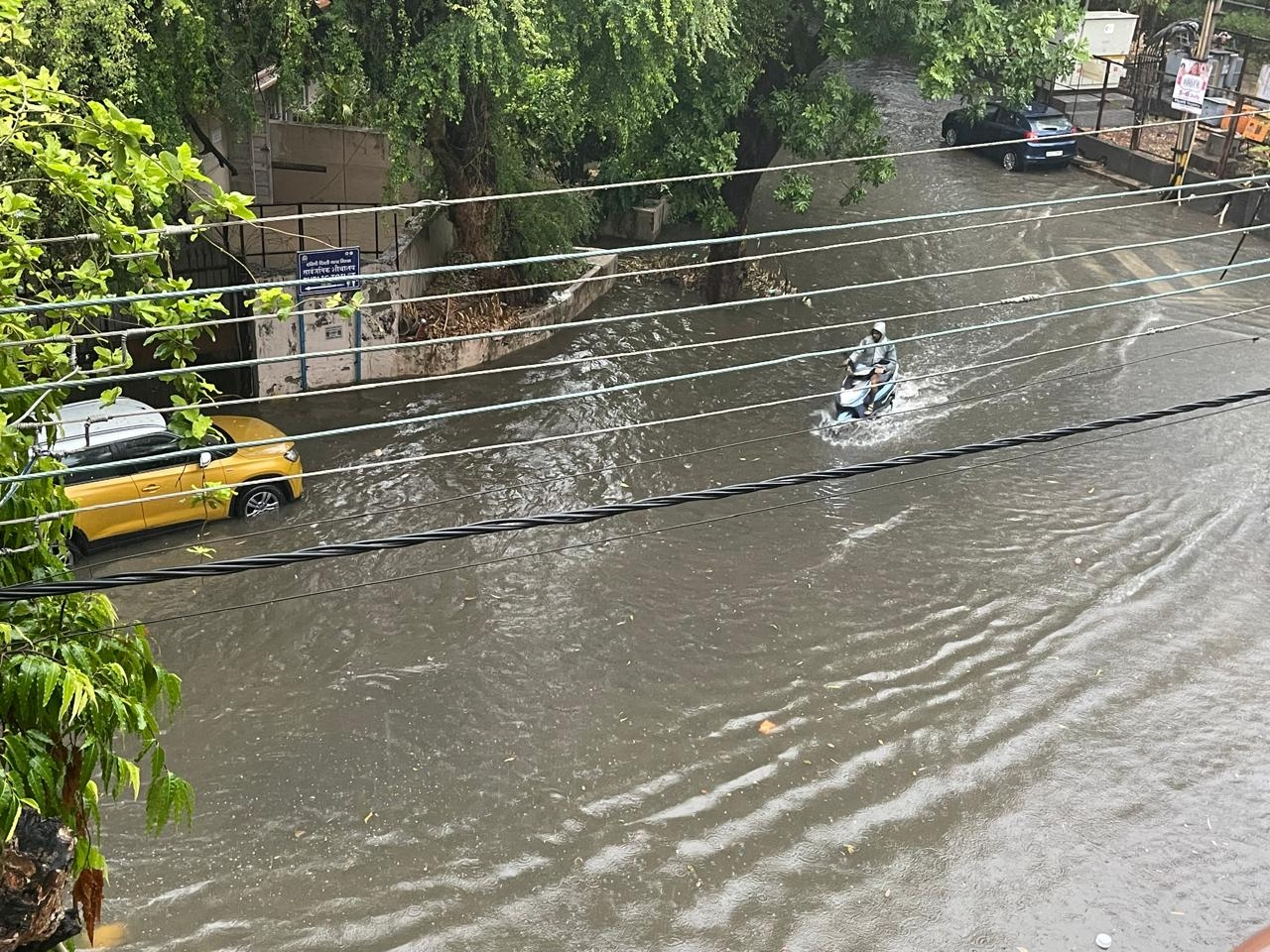
Repeated monsoon flooding has left shopkeepers at Shimla Market in Sector 12, Noida, grappling with damaged goods, deteriorating infrastructure, and growing frustration over official apathy. With rainwater seeping into shops and ruining inventories worth lakhs, traders are demanding urgent intervention and equitable redevelopment on par with other commercial zones. The market, built over three decades ago, continues to operate under outdated civic conditions, with blocked drains, leaking roofs, and no structural safety measures. The crisis has reignited debate over Noida’s uneven urban planning and failure to climate-proof older markets amid rising rainfall intensity.
After heavy showers earlier this week, nearly two feet of water entered over 20 shops in the Shimla Market, disrupting daily operations and causing significant financial losses. Traders allege that the lack of pre-monsoon drain cleaning has turned their workplace into a floodplain. With rainwater stagnating for hours due to choked outlets and absence of a gradient, vendors were left to scoop out water manually. Many shops dealing in perishable and moisture-sensitive goods such as fruits, dry items, and paper products reported irreversible damage. Their frustration stems not only from repeated losses but from the neglect by local authorities who, traders say, have failed to provide even basic civic upkeep. “All we ask is a fair chance to survive the monsoon,” said a vendor, echoing a collective sentiment.
The traders’ demands go beyond temporary relief; they are asking for a comprehensive market overhaul. According to the vendors, neighbouring commercial zones like Brahmaputra Market and Ganga Shopping Complex have undergone structured redevelopment, including roof repairs, covered drains, adequate lighting, signage uniformity, and seating areas—all of which are missing in Shimla Market. Many feel that their market, though established by the Noida Authority, is being ignored simply because it lacks the visibility and status of more central commercial hubs. This disparity, they argue, undermines inclusive development and threatens the livelihood of hundreds dependent on the market ecosystem.
Structural decay is also raising safety alarms. Shopkeepers report that several roofs have begun to leak, while portions of ceiling plaster hang dangerously loose, posing injury risks. With heavy rainfall becoming more frequent due to shifting climate patterns, the urgency to climate-proof older commercial structures is no longer optional. Residents’ groups supporting the traders have submitted formal appeals demanding that Noida Authority prioritise this long-overlooked commercial zone. They argue that addressing these issues would not only secure livelihoods but also encourage a culture of equitable urban regeneration that doesn’t leave legacy infrastructure behind.
While traders wait for action, civic indifference continues to erode both trust and economic stability in the area. Their calls for equality in infrastructure support underscore a broader concern across Indian cities: the growing gap between newly beautified urban pockets and neglected older zones. If the Noida Authority fails to respond, it risks deepening that divide and allowing more such markets to crumble under monsoon pressure. Equipping older markets with climate-resilient infrastructure isn’t merely about repairs—it’s about fair urban inclusion and disaster preparedness in a rapidly changing environment.