


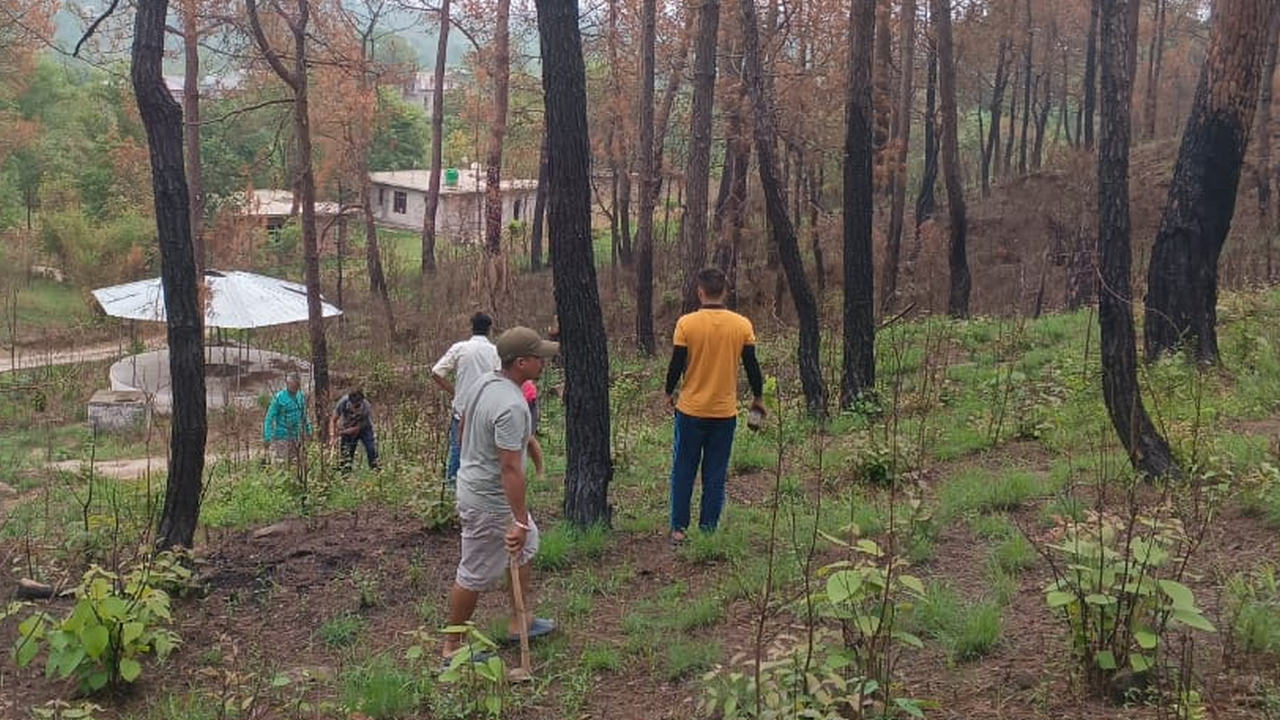
Shimla has set an ambitious course to reclaim its receding green canopy, as the city’s civic body accelerates a large-scale tree plantation campaign amid ongoing rainfall.
In a decisive move under the ‘Clean Himachal, Green Himachal’ initiative, the Municipal Corporation has rolled out a phased plantation drive, roping in local communities, non-profits, and the Forest Department. The effort, which aims to plant 5,000 saplings in the 2025–26 financial year, marks a crucial step in reversing the long-term degradation of Shimla’s natural cover. The decision to prepone the campaign originally scheduled for the upcoming monsoon was strategically aligned with the current wet spell. According to officials, the pre-monsoon showers have created optimal soil conditions for sapling survival, prompting the launch of the first phase across Jakhu and Chamiana. These localities, often vulnerable to soil erosion and tree loss during monsoons, have been prioritised for immediate green intervention.
Once known for its dense deodar forests, Shimla has witnessed a steady depletion of green zones due to urban sprawl, landslides, and tree fall during storms. Hundreds of trees are reportedly uprooted every year, disrupting the region’s ecological balance. With concrete taking over hill slopes, the loss of native vegetation has further exacerbated issues like water runoff, microclimate imbalance, and air quality degradation. The current plantation campaign backed by state government funding attempts to mitigate these urban pressures by reintroducing native flora and restoring ecological buffers.
What sets this initiative apart is its robust accountability framework. Each sapling planted will be geo-tagged, and survival data will be recorded at one-month and six-month intervals. This data-driven approach is designed to ensure not just quantity but quality and sustainability of afforestation efforts. By involving local self-help groups and NGOs, the city is attempting to decentralise responsibility, build ownership at the community level, and generate employment in environmental maintenance a convergence of ecology and economy. While the long-term success of this campaign will depend on continuous nurturing and protection of the saplings, Shimla’s approach presents a replicable model for other hill towns grappling with environmental stress. In an era where carbon neutrality is no longer a choice but a necessity, cities like Shimla stepping up their climate resilience game is a sign of much-needed climate consciousness.
For residents, this is more than a government programme it is a chance to reclaim the natural heritage of the city. If implemented with care and continuity, the initiative may well breathe new life into Shimla’s fading green lungs and serve as a green print for other urban centres in India seeking eco-centric growth.
Also Read : Redevelopment in Bengaluru Cantonment Area Endangers 100 Year Old Trees in
