


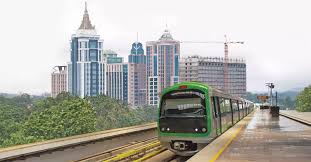
Hyderabad’s southern periphery is poised for a structural shift as Shamshabad emerges as a proposed node in India’s expanding high-speed rail ambitions, a move that could redraw the city’s long-term urban and real estate geography. Recent budget signals from the Union government have placed high-speed rail connectivity at the centre of national infrastructure planning, with Shamshabad identified as a strategic interchange point linking multiple metropolitan corridors.
If implemented, the plan would integrate Shamshabad into a proposed network connecting Hyderabad with Bengaluru, Chennai, Pune and Mumbai. Urban transport experts say the significance of this proposal lies not only in reduced travel times, but in the way high-speed rail tends to reorganise land use, employment clusters and housing demand around terminal zones. Unlike traditional railway stations embedded within dense city cores, the proposed Shamshabad hub aligns with a new planning logic placing large-scale mobility infrastructure alongside airports, orbital road networks and emerging logistics corridors. With the international airport and Outer Ring Road already anchoring the region, the addition of a high-speed rail terminal could consolidate the area as a multi-modal transport gateway for southern India. Such connectivity typically triggers a second-order economic impact. Commercial developers often follow transport investments, bringing offices, business parks, hospitality assets and warehousing closer to high-capacity transit nodes. Urban planners caution, however, that without phased zoning and infrastructure sequencing, rapid commercialisation can strain water resources, road capacity and civic services.
Residential markets are already responding to the infrastructure narrative. Peripheral micro-markets around Shamshabad including Mamidipally, Adibatla, Kandukur and Maheshwaram have seen increased enquiry for plotted developments and gated housing. Analysts note that buyers are increasingly prioritising long-term accessibility over proximity to central business districts, particularly in cities where hybrid work and decentralised employment are reshaping commuting patterns. The proposal also includes elevated rail corridors, a design approach intended to limit land acquisition and reduce disruption to existing settlements. While elevated infrastructure often preserves ground-level continuity, it also tends to intensify land values in adjacent zones, necessitating proactive planning for affordable housing and public amenities to prevent exclusionary growth. According to officials familiar with early-stage discussions, construction timelines are likely to extend into the latter half of the decade, with funding models still under evaluation. Large transport projects of this scale typically unfold in phases, meaning market expectations may evolve well before physical construction begins.
For Hyderabad, the Shamshabad proposal represents more than a transport upgrade. It signals a gradual southward expansion of the city’s economic core, reinforcing the need for integrated planning that balances growth with climate resilience, resource efficiency and inclusive access to housing. As infrastructure ambitions move from policy to execution, the challenge will be ensuring that connectivity-led development strengthens the city as a whole, rather than creating isolated pockets of speculative growth.
Also Read: Ganesh Housing Reports Sharp Q3 Earnings Drop
Shamshabad Transport Proposal Sparks Real Estate Shift
