


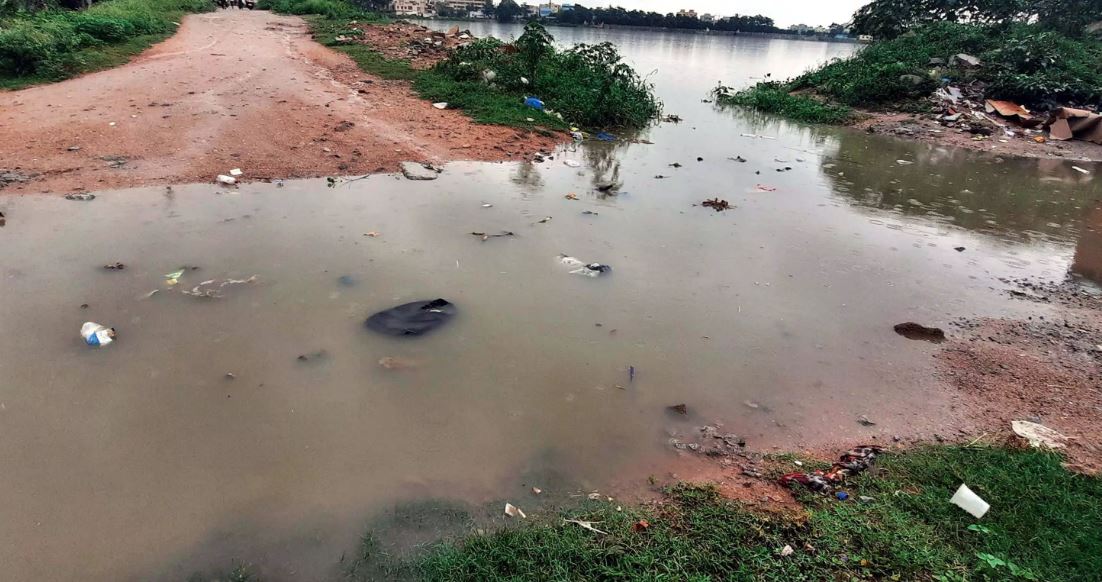
Residents of Shahbazguda in Secunderabad’s Warsiguda neighbourhood have raised alarm over contaminated municipal water supply, reporting foul odour, discolouration and a spike in stomach-related illnesses over the past several weeks. The situation has drawn uneasy comparisons with the recent water contamination incident in Indore, where sewage infiltration into drinking pipelines earlier this year triggered a public health emergency.
In Shahbazguda, water is supplied during early morning hours, with families storing it for daily use. Locals say the stored water often appears muddy and emits an unpleasant smell. Parents in the area report rising cases of vomiting, fever and gastrointestinal infections, particularly among children and elderly residents.Repeated complaints have been lodged with civic authorities, residents claim, including requests for inspection of underground pipelines and public disclosure of water quality testing reports. Community members are demanding flushing of supply lines and urgent technical intervention to prevent further health risks.
Officials from the Hyderabad water utility confirmed that inspection teams have been dispatched to identify the source of contamination. Preliminary assessments are expected to determine whether pipeline leakages, cross-connections with sewage lines or pressure imbalances are contributing factors. Experts note that such issues often emerge in older neighbourhoods where ageing infrastructure intersects with expanding urban density.The episode has reignited debate around water network maintenance within the Greater Hyderabad Municipal Corporation limits and adjoining Secunderabad areas. Urban infrastructure analysts point out that while Hyderabad has expanded rapidly in recent years, underground utilities — including water and sewer lines — require systematic audits and phased replacement to prevent cross-contamination.
The reference to Indore stems from a January incident in which sewage entered drinking water pipelines in a residential locality, leading to multiple fatalities and hospitalisations. Public health experts warn that contamination events can escalate quickly if not addressed through rapid testing, chlorination and isolation of affected lines.Water safety is a foundational pillar of urban resilience. Beyond immediate health risks, repeated contamination episodes erode public trust in municipal systems and increase household expenditure on bottled water or private filtration systems — costs that disproportionately affect low-income families.
Urban planners argue that preventive strategies, including pressure monitoring sensors, GIS-based pipeline mapping and regular water quality audits, are essential as cities densify. Transparent communication from civic agencies, they add, can help reduce panic and ensure timely community cooperation.As inspection results are awaited in Warsiguda, residents say their primary concern is safe, potable water. For Hyderabad, the episode underscores a broader lesson: infrastructure expansion must be matched by vigilant maintenance if growing cities are to safeguard public health and sustain equitable urban living standards.
Secunderabad water contamination sparks health fears
