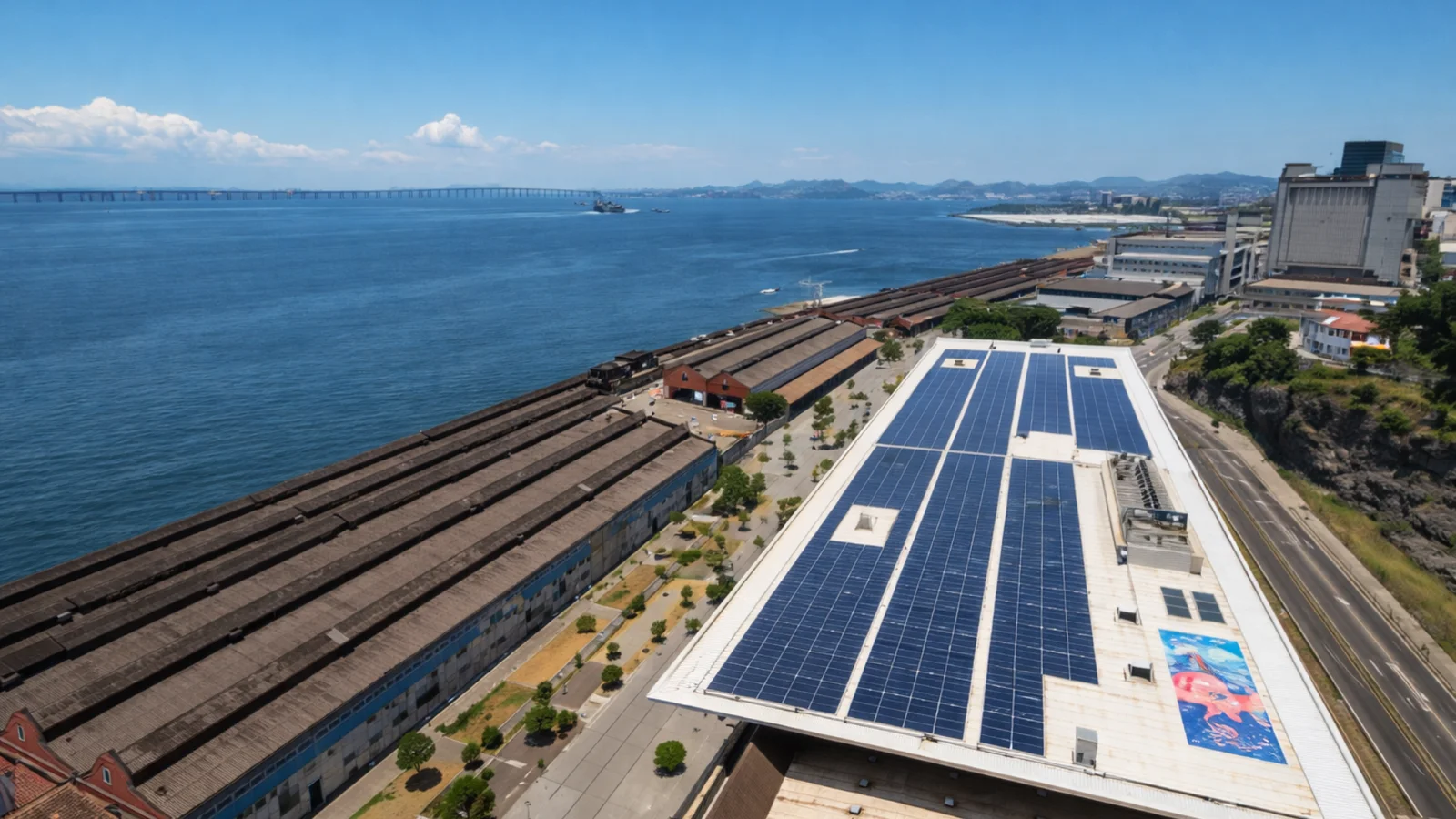
A new clean-energy collaboration is set to reshape how one of India’s busiest maritime gateways consumes power. Solar Energy Corporation of India has entered into a formal cooperation framework with Mumbai Port Authority to integrate solar power systems across port infrastructure in Mumbai. The initiative reflects a growing shift among urban infrastructure custodians to decarbonise large public assets while maintaining operational efficiency.
The agreement focuses on deploying rooftop and ground-mounted solar installations within port premises, targeting administrative buildings, warehouses, and operational facilities. Industry observers note that ports are among the most energy-intensive urban assets, relying heavily on conventional grid power for lighting, cargo handling, refrigeration, and security systems. Introducing on-site renewable energy is expected to reduce long-term operating costs while improving energy resilience. From an urban governance perspective, the collaboration underscores how legacy infrastructure in dense cities like Mumbai is being retrofitted rather than replaced. Urban planners say ports, rail yards, and industrial estates offer significant untapped potential for decentralised renewable generation without competing for scarce urban land. Solarising port infrastructure also reduces indirect emissions associated with logistics and trade, sectors that are increasingly under pressure to demonstrate climate accountability.
Officials familiar with the agreement indicated that the role of the renewable energy agency will include technical assessment, project structuring, and facilitation of implementation models suited to complex public assets. For the port authority, the move aligns with broader efforts to modernise infrastructure, improve environmental performance, and meet evolving national sustainability benchmarks without disrupting daily operations. The timing is significant. India’s coastal cities are grappling with rising energy demand, climate risks, and ageing infrastructure. Mumbai’s port area, located along a vulnerable coastline, faces mounting pressure to balance economic throughput with resilience planning. Integrating solar energy into port operations contributes not only to emissions reduction but also to improved energy security during grid disruptions, which are becoming more frequent during extreme weather events.
Energy economists point out that such collaborations also send market signals. When large public institutions commit to renewable integration, it creates confidence for private suppliers, technology providers, and financiers. Over time, this can help drive down costs and accelerate adoption across other logistics hubs and industrial clusters. While the agreement itself does not specify generation capacity targets, experts say its real value lies in institutional precedent. As ports across India explore electrification of equipment and cleaner fuel alternatives, renewable power will be a foundational requirement. The Mumbai project could serve as a reference point for similar transitions at other major ports.
For the city, the implications extend beyond the port boundary. Cleaner port operations mean lower indirect pollution loads and a step closer to aligning economic infrastructure with Mumbai’s broader low-carbon urban trajectory. As cities reassess how essential services consume energy, initiatives like this signal a gradual but meaningful shift toward more sustainable, people-first urban systems.
SECI Expands Renewable Footprint At Mumbai Port