


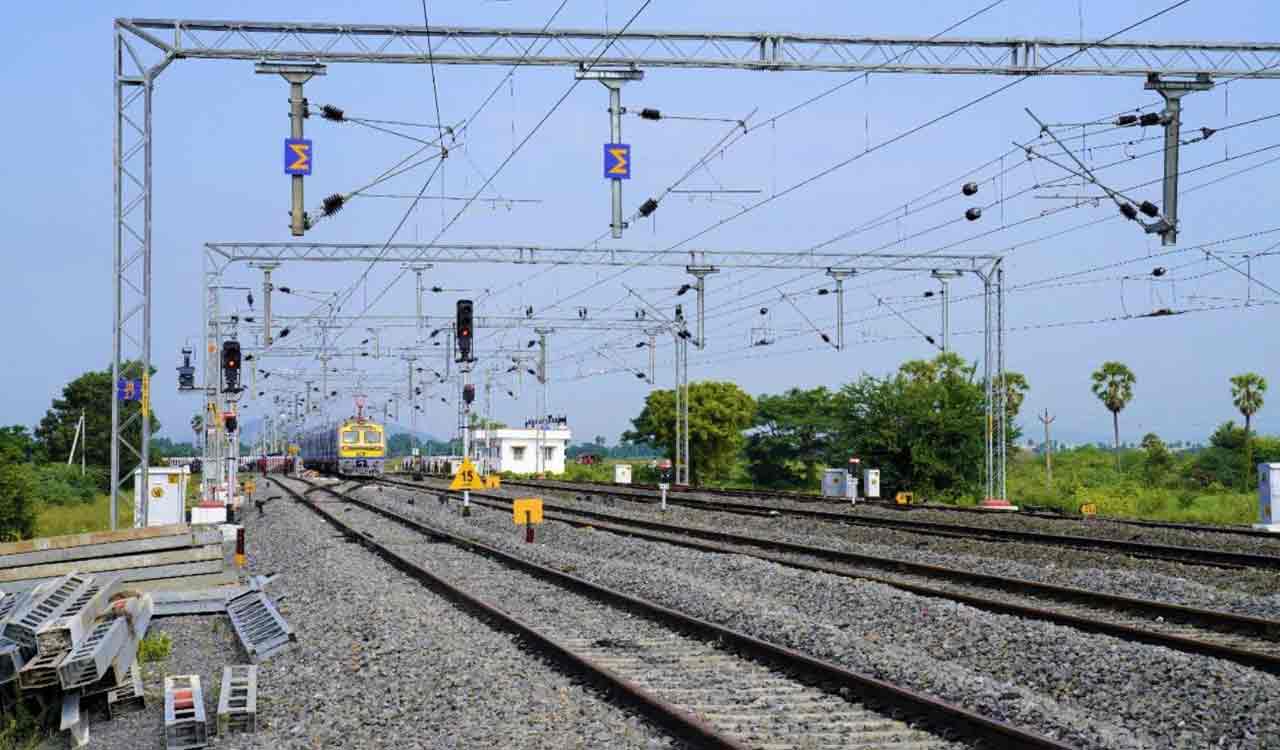
SCR Extends Experimental Stoppages, Boosting Regional Rail Connectivity
In a move to improve passenger convenience and strengthen regional connectivity, South Central Railway (SCR) has announced the continuation of experimental stoppages for select express trains for another six months. The decision, aimed at catering to the growing demand for better accessibility at smaller stations, will benefit passengers travelling on key routes. The extended stoppages apply to trains such as the Secunderabad–Hisar Express (22737) and the Hyderabad–Raxaul Express (17005), which will continue halting at Peddapalli starting 4 and 6 February, respectively. Similarly, the Secunderabad–Guntur Express (12706) will maintain its experimental stoppage at Nekkonda, effective from 4 February, while the Secunderabad–Visakhapatnam Express (20834) will continue its halt at Samalkot from 3 February onwards.
The move reflects SCR’s commitment to addressing passenger needs by improving rail accessibility, particularly for smaller towns that previously lacked frequent train halts. Experimental stoppages allow railway authorities to assess footfall and demand at specific locations before making permanent schedule changes. Indian Railways has been actively testing such measures across various zones, and data suggests that well-placed halts can lead to increased passenger traffic. In the past, successful trials have resulted in permanent stoppages, easing travel for thousands of commuters. With India witnessing a consistent rise in rail traffic, such initiatives play a crucial role in shaping future transport strategies.
From a sustainability perspective, optimising train stoppages aligns with broader efforts to create an efficient and eco-friendly railway network. Enhancing accessibility at intermediate stations reduces dependence on road transport, subsequently lowering carbon emissions. Studies indicate that a well-planned rail network can help cut vehicle congestion, fuel consumption, and air pollution in growing urban regions. By strategically placing train halts where demand exists, SCR is promoting a more sustainable transport model, ensuring rail travel remains a viable and environmentally friendly alternative. Moreover, integrating these measures with ongoing electrification projects will further reduce the carbon footprint of railway operations.
The civic and urban mobility impact of these stoppages is equally significant. Many passengers residing in tier-2 and tier-3 cities rely heavily on railway networks for daily commutes, business travel, and long-distance journeys. Providing additional stoppages at key transit points eases the burden on major railway hubs, ensuring smoother travel experiences for passengers. With increasing urban expansion in areas surrounding major railway corridors, SCR’s decision to extend these experimental halts highlights the evolving nature of rail transport planning. If deemed successful, similar measures could be extended to other routes, reinforcing the role of railways in supporting regional development and mobility.
