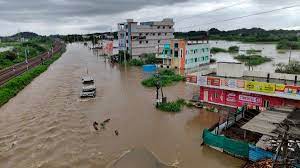
Sawai Madhopur Floods Signal Urgent Need for Climate-Resilient Infrastructure
The recent bout of heavy rainfall in Sawai Madhopur, Rajasthan, has brought daily life to a standstill, halting train services and forcing the closure of schools. While such downpours might once have been viewed as a cyclical monsoon event, experts now frame them as clear indicators of a shifting climate. This disruption to essential services highlights a critical vulnerability in urban and regional infrastructure—a lack of resilience in the face of increasingly frequent and intense weather events. The event serves as a stark reminder that building truly eco-friendly and sustainable communities requires a fundamental rethinking of how we design and fortify our cities and transport networks against climate change.
The profound impact of the downpour on public transport, particularly the railway network, is a significant concern. The railway system, a vital artery for both passengers and goods, is meant to be a reliable, low-carbon alternative to other modes of transport. However, when tracks are submerged and signals fail, its efficiency is compromised. This disruption not only affects the local economy but also creates widespread inconvenience and stress for a diverse group of travellers, from daily commuters to long-distance passengers. The incident makes a compelling case for urgent investment in climate-resilient railway infrastructure, including enhanced drainage systems and elevated tracks in flood-prone areas, to ensure the network remains operational regardless of the weather.
The closure of schools further underscores the cascading effects of such an event on a city’s social fabric. This decision, while necessary for safety, disproportionately affects families and students, disrupting education and requiring parents—particularly women, who often bear the primary responsibility for childcare—to adjust their schedules at short notice. The impact on children’s education and the wider community highlights the need for a gender-neutral and equitable disaster response strategy that accounts for the unique challenges faced by different demographics during a crisis.
From an urban planning perspective, the waterlogging in low-lying areas and the inundation of homes expose a critical flaw in current drainage and municipal infrastructure. This extreme weather event underscores the importance of integrating green infrastructure—such as urban forests, permeable pavements, and rain gardens—into city design. Such measures absorb excess rainwater, reduce runoff, and recharge groundwater, offering a sustainable alternative to traditional concrete-heavy drainage systems. By embracing these zero-net carbon solutions, cities can transform flood-prone zones into resilient, vibrant, and more livable spaces.
Ultimately, the events in Sawai Madhopur are a microcosm of a larger global challenge. They demonstrate that climate change is not a distant threat but a tangible force already impacting our daily lives. The true measure of a city’s sustainability and equity will be its ability to withstand these shocks and ensure its most vulnerable citizens are protected. Proactive investment in resilient infrastructure and forward-thinking urban policies is not merely an option—it is an urgent necessity for survival.