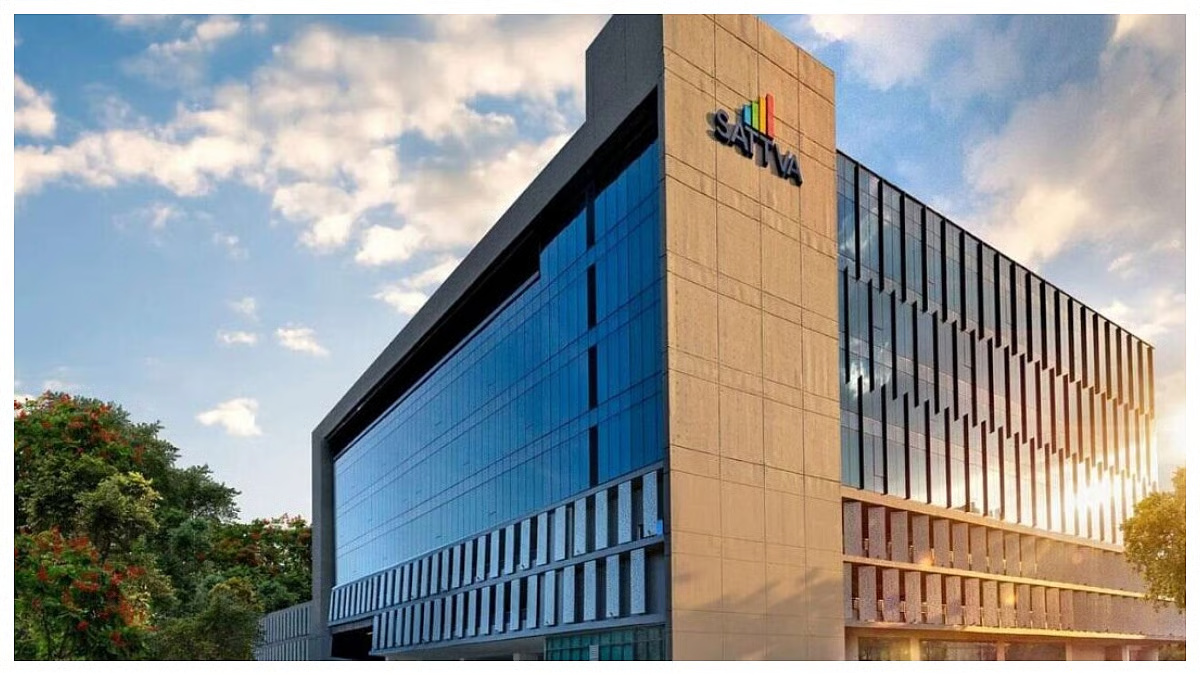
Bengaluru-based real estate developer Sattva Group has formally entered the Mumbai Metropolitan Region (MMR) redevelopment sector, unveiling six residential and commercial projects covering over 8 million sq ft. The initiative represents the company’s strategic expansion into one of India’s most competitive property markets, with a total gross development value (GDV) projected at approximately ₹11,000 crore.
The projects are located across key micro-markets, including Parel, Prabhadevi, Goregaon East, Vile Parle West, Powai, and near the Bandra Kurla Complex (BKC). Industry analysts note that these areas are central to Mumbai’s urban fabric, combining residential demand with high commercial activity. The developer plans to deliver over 2,500 rehabilitation homes for existing occupants alongside 2,000 new residential units, following a rehabilitation-led model that emphasises upgraded housing, improved safety infrastructure, and enhanced community amenities. Construction is scheduled to begin in 2026, with phased execution extending through 2032. The first project is expected to be completed by 2028. Urban planners highlight that redevelopment in Mumbai addresses critical structural and safety gaps, as more than 16,000 ageing buildings require reconstruction to comply with modern building codes, fire safety, and sustainability standards. Regulatory reforms under the upcoming Development Control and Promotion Regulation (DCPR) 2034 are expected to facilitate project approvals across the Slum Rehabilitation Authority (SRA), Maharashtra Housing and Area Development Authority (MHADA), and society-led models, improving financial viability for large developers.
Sattva employed a multi-parameter evaluation framework to select projects, factoring regulatory clarity, engineering feasibility, environmental sustainability, lifecycle asset performance, and stakeholder engagement. Officials note that extensive local market intelligence was built over the past year to align project phasing with both regulatory processes and community requirements, reflecting a long-term, disciplined approach to urban redevelopment. Experts highlight that redevelopment has emerged as a key strategy in Mumbai due to constrained land availability and sustained housing demand in central locations. By focusing on rehabilitation-led projects, developers like Sattva not only address urban safety and housing shortages but also contribute to densification, mixed-use urbanism, and climate-resilient infrastructure in high-demand neighbourhoods. Dedicated stakeholder engagement teams are expected to manage resident transition processes and maintain execution timelines, mitigating social disruption during construction.
Sattva’s national footprint already spans Bengaluru, Hyderabad, and multiple other cities, with over 71 million sq ft under construction and a completed portfolio of approximately 78 million sq ft. The group is also a co-sponsor of Knowledge Realty Trust (KRT), India’s largest commercial REIT, which manages 46 million sq ft of Grade A office space across six cities. Analysts view Sattva’s Mumbai entry as part of a broader trend of national developers consolidating long-term residential and commercial assets in high-value urban corridors. The firm’s move into Mumbai’s redevelopment market underscores both the city’s urgent need for urban renewal and the increasing role of financially robust developers in shaping sustainable, inclusive, and future-ready housing solutions. Execution of these projects will be closely watched for integration of safety, climate-resilience, and community-oriented design.
Sattva Group Launches Mumbai Redevelopment Portfolio Worth 11000 Crore