Samsung India Festive Push Expands AI Appliance Access
Samsung India has rolled out a series of festive campaigns offering incentives on its Bespoke AI appliances and televisions, aiming to accelerate the adoption of connected home technologies across urban households.Timed around regional festivals such as Gudi Padwa, Ugadi and Eid, the initiative brings together cashback schemes, financing options, and bundled services to make AI-enabled home upgrades more accessible. The move reflects a broader shift in India’s consumer electronics market, where affordability and financing are becoming key drivers of technology adoption.
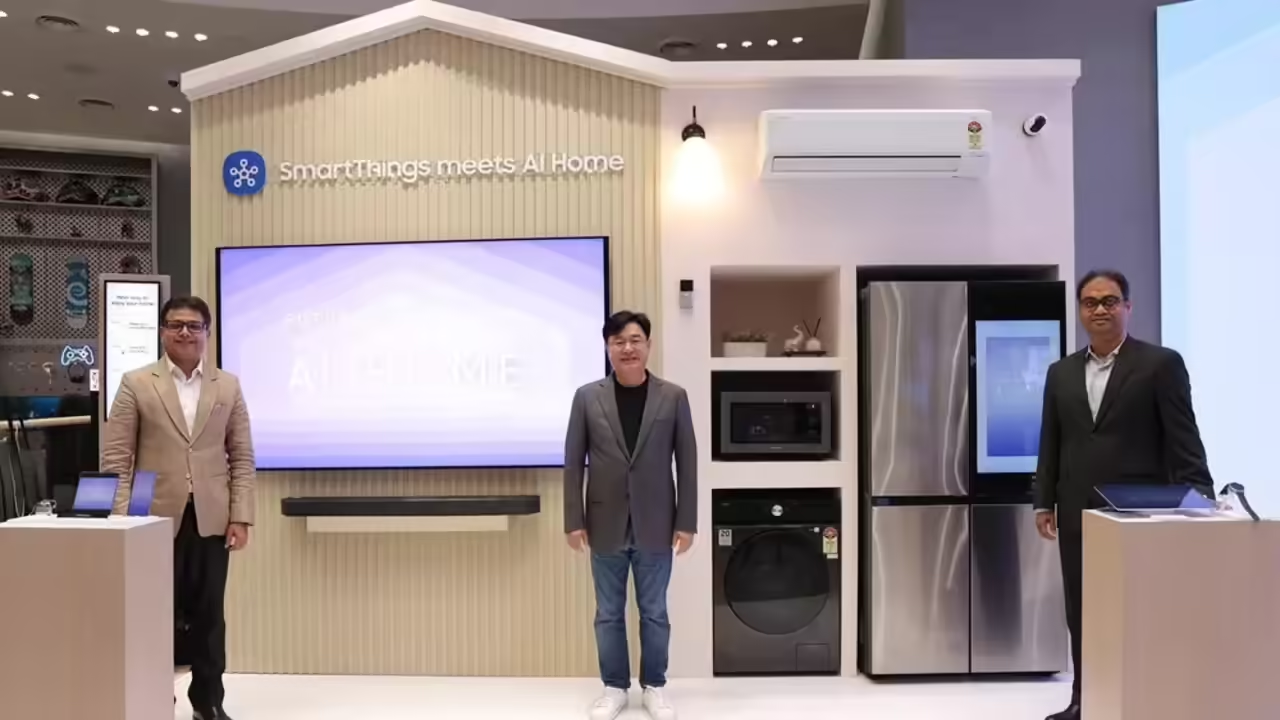
At the centre of the rollout is the Samsung Bespoke AI India offers programme, which includes cashback of up to ₹20,000 on a range of appliances such as refrigerators, washing machines, air conditioners, and microwave ovens. Additional incentives include zero down payment financing and extended warranties, particularly on air conditioning units, alongside free installation services. The campaign also extends to televisions, where bundled offerings such as complimentary soundbars are being used to increase value perception for consumers considering upgrades. These incentives are available across both online and offline retail channels, signalling an integrated omnichannel approach to reach a wider consumer base. Beyond short-term sales, the initiative highlights a deeper transformation in India’s residential ecosystem. AI-powered appliances—integrated through platforms such as SmartThings—are increasingly positioned as tools for energy efficiency, predictive maintenance, and personalised usage. Features such as automated cooling, load-based washing optimisation, and food management systems reflect a shift towards data-driven domestic environments.
For urban planners and sustainability experts, the growing uptake of such technologies has wider implications. Smart appliances can contribute to reduced household energy consumption, improved resource management, and more resilient urban infrastructure systems. As cities face rising energy demand and climate pressures, the integration of intelligent home systems is emerging as a complementary solution to large-scale infrastructure interventions.Industry observers note that festive-led consumption cycles remain a defining feature of India’s retail landscape. By aligning product accessibility with these periods, companies are not only boosting demand but also accelerating the diffusion of advanced technologies into middle-income households.The Samsung Bespoke AI India offers initiative also underscores the role of pricing innovation in expanding the smart home market. Flexible financing and bundled services lower the barrier to entry for consumers who may otherwise delay upgrading to AI-enabled products.
At the same time, the expansion of connected appliances raises questions around data usage, lifecycle sustainability, and long-term affordability. As adoption grows, stakeholders across industry and policy will need to address issues such as energy standards, e-waste management, and digital infrastructure readiness.Looking ahead, campaigns like these are likely to play a pivotal role in shaping India’s transition towards smarter, more energy-efficient homes. The pace at which such technologies scale will influence not only consumer behaviour but also the sustainability trajectory of rapidly urbanising regions.