


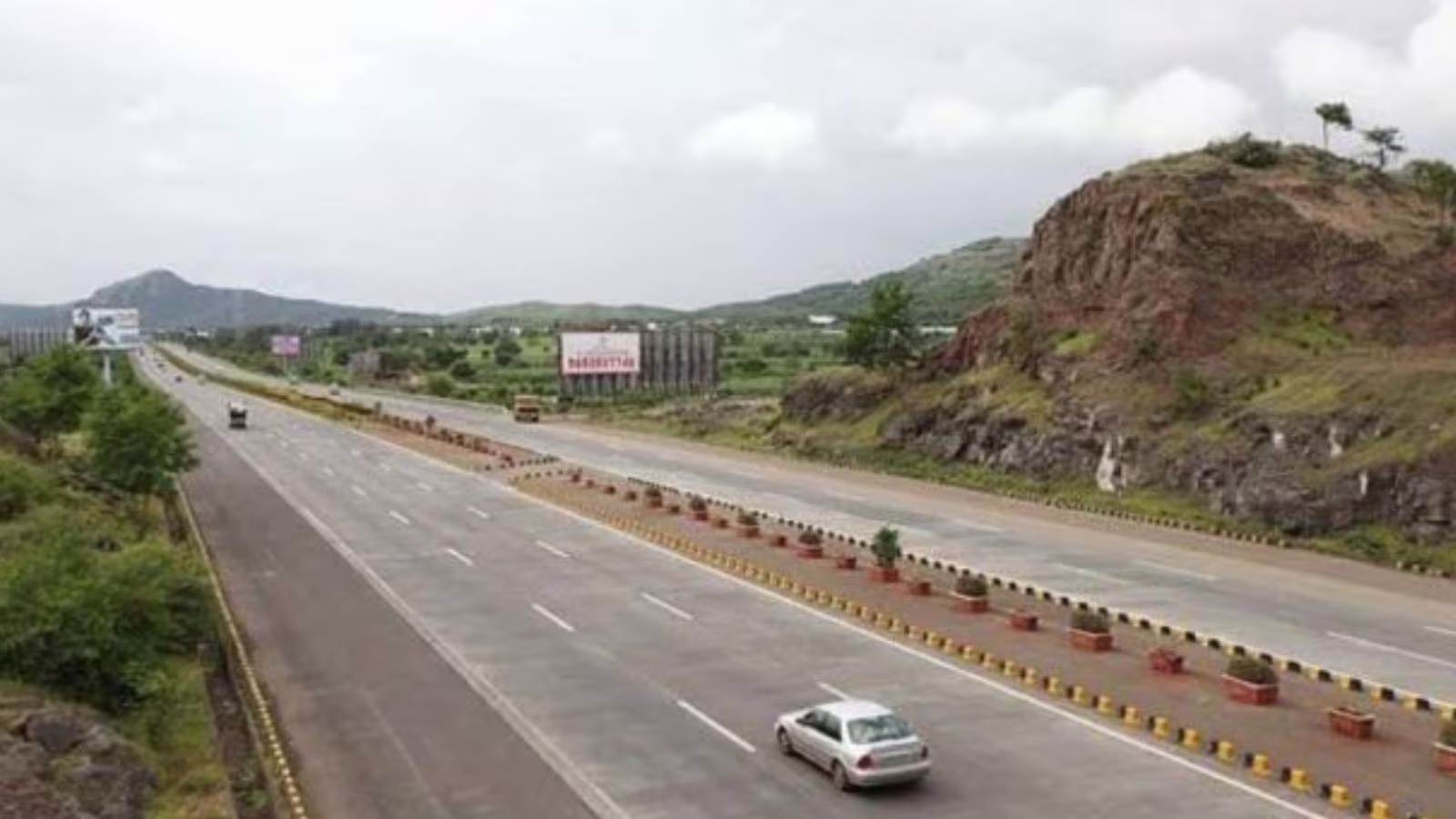
Maharashtra’s Samruddhi Expressway, a flagship infrastructure corridor linking key urban and industrial hubs, is undergoing targeted safety and traffic management interventions after recurring congestion and minor accidents highlighted operational vulnerabilities. Authorities are focusing on redesigning critical junctions, improving road signage, and adding structural reinforcements to enhance commuter safety, reflecting the growing need for resilient and climate-conscious transport infrastructure in rapidly urbanising regions.
Stretching over hundreds of kilometres, the expressway serves as a vital economic artery connecting Mumbai with interior regions and supporting freight, logistics, and tourism flows. Urban planners note that high-speed corridors like Samruddhi have significant social and environmental implications: traffic slowdowns not only affect productivity but increase vehicular emissions and strain adjoining towns and settlements. Addressing bottlenecks, therefore, contributes both to safer mobility and to reducing the corridor’s carbon footprint. A senior transport official explained that while the expressway was constructed with modern engineering standards, higher-than-anticipated traffic volumes, coupled with incomplete signage and certain structural bottlenecks, have prompted upgrades. Engineers are introducing reinforced median barriers, realigning curves prone to accidents, and optimising entry-exit points to reduce congestion during peak periods. Such measures aim to balance high-speed travel with inclusive, people-first urban safety. Industry experts emphasise that the economic impact of these improvements is significant. The expressway facilitates the movement of goods between Maharashtra’s industrial centres and the Mumbai port region. Delays or traffic incidents can ripple across supply chains, increasing transportation costs and affecting competitiveness. By improving corridor reliability, authorities are indirectly supporting equitable regional growth and enabling more predictable logistics, which is crucial for both large-scale enterprises and small businesses.
Environmental analysts highlight that operational efficiency in high-capacity highways also has sustainability implications. Reduced stop-and-go traffic lowers fuel consumption and emissions, contributing to broader climate-resilient urban planning objectives. Incorporating landscaping, eco-friendly lighting, and water drainage systems along expressways can further minimise the infrastructure’s ecological footprint, aligning economic and environmental priorities. Looking ahead, the Samruddhi Expressway interventions may serve as a model for balancing high-speed mobility with safety, environmental stewardship, and equitable urban access. Stakeholders across infrastructure, transport, and urban development sectors will be observing how these upgrades improve travel reliability, commuter wellbeing, and the corridor’s overall contribution to Maharashtra’s growth trajectory.
Also Read: India Highway Construction Pace Set For Rebound
Samruddhi Expressway Safety Upgrades Reduce Traffic Risks
