


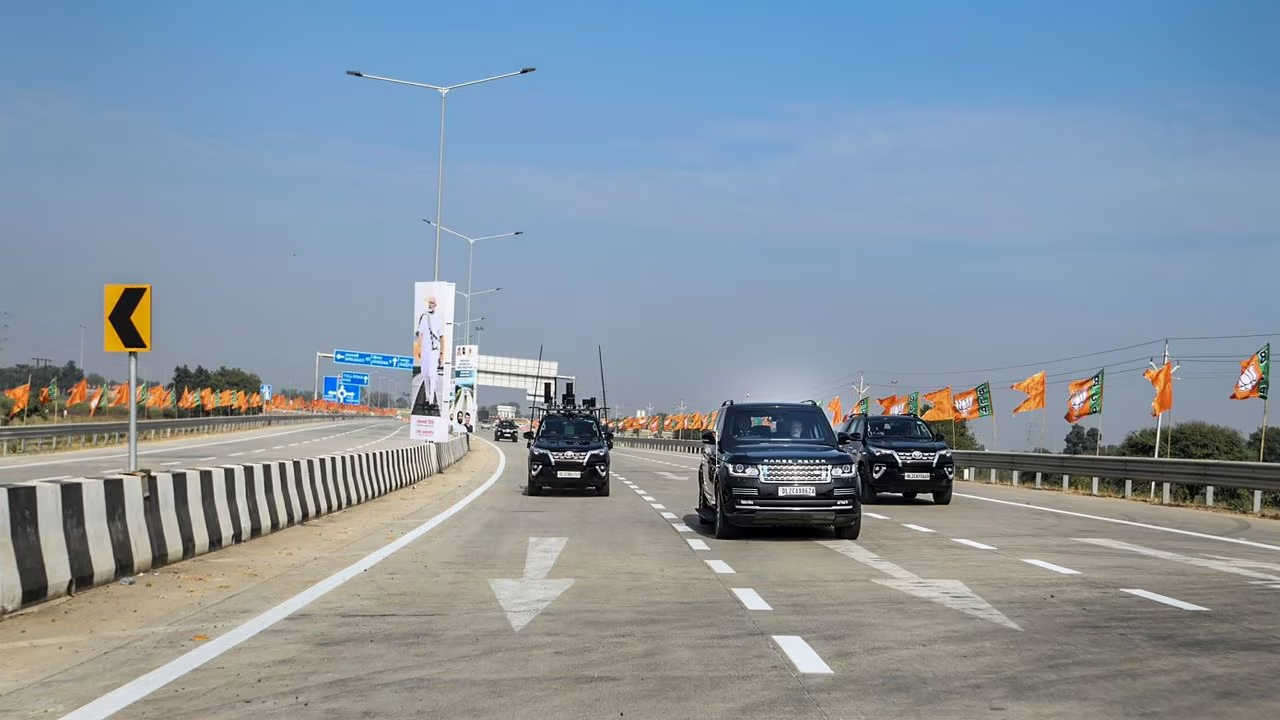
The much-publicised Hindu Hriday Samrat Balasaheb Thackeray Samruddhi Mahamarg, often hailed as Maharashtra’s expressway revolution, has once again stumbled at the final hurdle.
The last 76-kilometre stretch between Igatpuri and Amne remains unopened, despite expectations that it would be launched on May 1. This indefinite postponement has left thousands of regular commuters, particularly in Nashik and adjoining areas, grappling with extended travel times, higher fuel costs, and deepening discontent. Conceived as a high-speed corridor reducing the Mumbai–Nagpur commute to just eight hours, the 701-kilometre expressway has seen multiple inaugurations in phases. The first segment was launched in December 2022. However, the final phase—cutting through difficult mountainous terrain—has experienced persistent delays attributed first to engineering hurdles and now reportedly to heightened national security alerts following a terrorist strike in Jammu and Kashmir.
While the state infrastructure body, MSRDC, maintains that civil works are nearly complete and final touches are being given to safety and surveillance systems, public trust is wearing thin. Commuters, particularly those from Nashik and beyond, continue to rely on the older Mumbai–Nashik highway, which is longer, congested, and environmentally taxing. The expected fuel savings and carbon reductions offered by the expressway remain unrealised, frustrating those who had pinned hopes on smoother, more sustainable mobility. “This delay doesn’t just affect travel time, it affects livelihoods,” said a logistics operator from Nashik who regularly dispatches goods to Vidarbha. “We planned operations around a promised timeline, but the silence is disturbing.” In an era where timely infrastructure delivery is increasingly seen as essential to economic resilience, this vacuum of clarity adds to the anxiety of small businesses, farmers, and urban professionals alike.
The lack of a new opening date has also led to political murmurs in the region, with local authorities appearing caught between logistical concerns and broader national security protocols. Despite being envisioned as a green corridor capable of reducing fuel consumption and vehicular emissions through streamlined logistics and decongested travel, the delay undermines the sustainability potential of the project. At a time when cities across India are transitioning toward net-zero ambitions and smarter mobility solutions, such postponements are more than inconveniences—they are setbacks in the state’s journey toward equitable urban growth.
While officials remain tight-lipped, the call for transparency and accountability is growing louder from civil society groups, environmental planners, and urban mobility advocates. For now, the final segment of the Samruddhi Expressway remains a glaring gap in an otherwise transformative infrastructure initiative—one that urgently demands closure for the people and the planet.
Samruddhi Expressway incomplete again causing longer travel for Nashik to Nagpur
