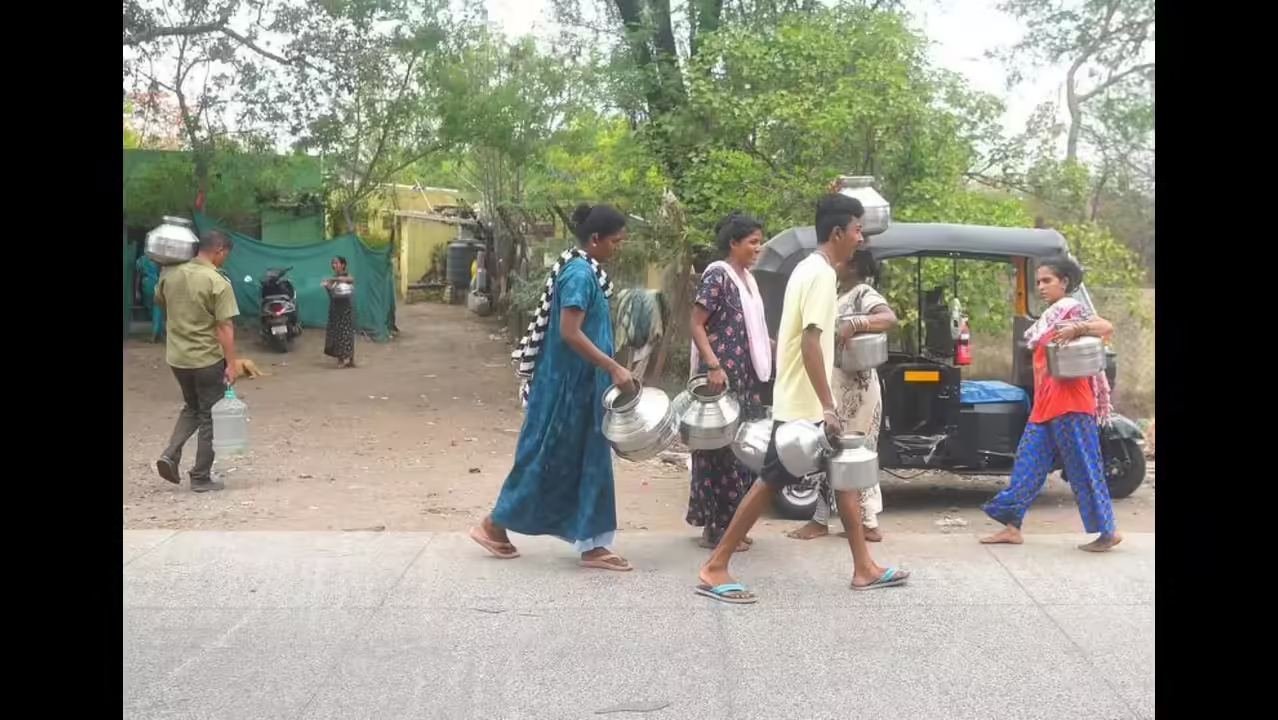
Three months after the launch of an auxiliary water supply scheme in Chhatrapati Sambhajinagar, residents continue to receive tap water only once a week. Despite being inaugurated with much fanfare in August, the scheme has offered little respite to a city that has long struggled with erratic and inadequate water distribution.
The ₹900 mm pipeline and its 26 MLD treatment plant, inaugurated as a temporary measure to bridge supply gaps until the completion of the main 2,500 mm pipeline, were intended to stabilise access to water. However, residents across several localities say there has been no noticeable improvement. Many claim that political publicity around the project overshadowed its limited scope. Officials from the city’s water supply department confirmed that the auxiliary scheme was conceived as an interim solution. “The project has marginally improved water frequency in some zones, but it cannot meet citywide demand,” an official said. “The permanent solution lies in the completion of the main pipeline, which will be commissioned in the coming months.”
The city’s primary water supply infrastructure has faced chronic delays due to funding and coordination issues. To address this, the Chhatrapati Sambhajinagar Municipal Corporation (CSMC) recently signed an agreement with the Maharashtra Urban Infrastructure Development Company for a ₹822-crore loan. This financial support is intended to complete the larger, long-term project that aims to provide regular and equitable water distribution across all wards. Urban infrastructure experts note that the persistent water scarcity underscores deeper planning and governance challenges. “Interim projects may provide short-term relief, but without sustainable water management and integrated resource planning, these efforts will always fall short,” said a senior urban planner.
Many residents, especially in densely populated neighbourhoods like Satara-Deolai, continue to rely on private tankers or borewells. The city’s limited water supply has also sparked debates around environmental sustainability, with some experts urging authorities to integrate rainwater harvesting, reuse systems, and decentralised treatment into future plans. For Sambhajinagar, the path to water security lies not just in completing delayed infrastructure but in adopting a sustainable urban water policy that balances supply augmentation with conservation. Until then, the once-a-week supply remains a reminder of how infrastructure promises often evaporate faster than the water itself.
Sambhajinagar Water Supply Crisis Persists As Auxiliary Scheme Fails Three Months After Launch