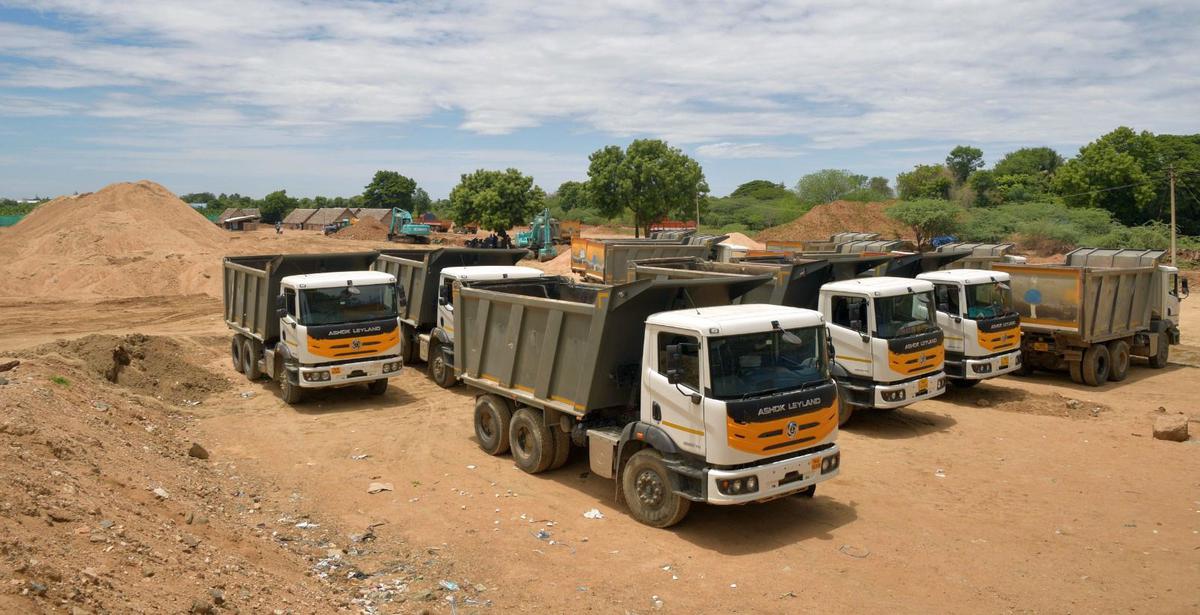
Sambhajinagar Firm Fined Rs 56 Crore In Sand Scam, Government Officials Suspended
Sambhajinagar has witnessed decisive action by the Maharashtra government, imposing a substantial penalty exceeding ₹56 crore on a company implicated in a major sand mining scam. This stringent measure, coupled with the suspension of culpable government officials, underscores a firm commitment to combating illicit resource exploitation. Such decisive intervention is critical for upholding environmental integrity, ensuring equitable resource distribution, and fostering sustainable urban development practices within the region.
The illicit activities came to light following a legislative motion, revealing significant irregularities in a pipeline connection project at Rithighat. While the company held legal excavation permits, investigations uncovered the illegal extraction of an additional 18,489 brass of sand. More alarmingly, the excavation depth far exceeded the permitted one metre, plunging to an alarming 15 to 18 feet. This egregious violation not only points to a blatant disregard for environmental regulations but also highlights the potential for severe ecological damage, including riverbed degradation and altered water flow, which directly impacts the natural environment and contributes to a non-sustainable ecosystem.
In a robust response to these violations, the state government levied a hefty penalty of ₹56.68 crore on the offending company on July 15, 2025. Concurrently, legal proceedings have been initiated through law enforcement agencies to ensure full accountability. This dual approach of financial penalty and legal action sends a clear message that environmental crimes will not be tolerated, reinforcing the state’s resolve to protect its natural assets. The swiftness and scale of the penalty reflect the gravity with which the administration views such illicit operations.
Further scrutiny revealed that government officials were aware of these illegal activities but failed to intervene, leading to their immediate suspension. This decisive action against public servants underscores the administration’s commitment to transparency and integrity within its ranks, crucial for building public trust and ensuring a gender-neutral and equitable governance framework. Moreover, financial irregularities surfaced concerning project costs; the company had quoted an inflated rate of ₹4,180 per brass for sand, significantly higher than the approved rate of ₹600. Consequently, a substantial sum of ₹1 crore has been withheld from the project estimate, with the full penalty amount slated for recovery from the contractor, thereby safeguarding public funds.
Beyond the sand mining exposé, broader governance challenges impacting urban equity were also highlighted, including irregularities in a cooperative housing project in Vile Parle. This instance involved alleged land and slum mafias, with a developer defaulting on rent payments and failing to complete construction despite receiving project extensions. The government has assured prompt and appropriate action in this matter as well. These incidents collectively underscore the imperative for robust regulatory oversight and unwavering enforcement to ensure that development projects contribute genuinely to creating sustainable, equitable, and zero net carbon cities, rather than becoming avenues for illicit gain at the expense of the environment and public welfare.