


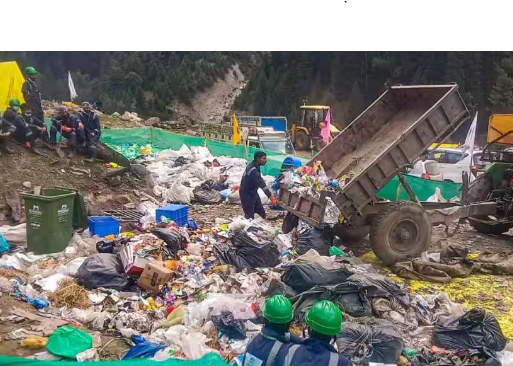
To address the mounting waste crisis in Greater Noida, a Pune-based company has been tasked with clearing a staggering 6 lakh tonnes of legacy waste that has accumulated over 22 acres near Lakhanawali village. This project, which has faced delays for nearly four years, is now set to be completed within the next 18 months. The Greater Noida Industrial Development Authority (GNIDA) has allocated a budget of Rs 29 crore for this endeavour, marking a critical step towards resolving the waste management challenges that have plagued the region.
The removal of this massive waste mound is expected to bring much-needed relief to the residents of Lakhanawali, Malakpur, and surrounding villages. For years, these communities have been living with the adverse effects of unregulated waste disposal, which has led to the formation of this towering pile of garbage. The issue has been a source of persistent complaints from local residents, who have long demanded action from the authorities. Bhumi Green Energy, the company awarded the contract, is expected to begin operations shortly by installing the necessary machinery at the site. The company has been given a tight deadline of one and a half years to complete the task. The project’s delay has been attributed to the lack of a permanent dumping site, which led to the continued accumulation of waste at the Lakhanawali site.
To manage the disposal of the waste removed from the site, the waste will be processed and converted into refuse-derived fuel (RDF), in accordance with the Biomining (Legacy Waste) Guidelines of 2019. This approach not only addresses the immediate need to clear the waste but also aligns with sustainable waste management practices. In addition to the waste removal, GNIDA has identified a long-term solution for waste management in the district. The authority has allocated 134 acres in Astauli, which will serve as a permanent landfill site for both Noida and Greater Noida. This new facility is designed to process and treat waste on the same day it is collected, ensuring that waste does not accumulate at the site.
Greater Noida generates approximately 800 tonnes of waste daily, necessitating robust waste management infrastructure. To this end, GNIDA has issued requests for proposals from private companies to establish waste processing plants in Astauli. Two plants are planned, with capacities of 300 tonnes and 50 tonnes respectively. The land for these plants will be allocated under the Uttar Pradesh Solid Waste Management Policy at a nominal rate of Re 1 per square metre per year for 25 years. The selected companies will be responsible for all costs associated with setting up and operating the plants.
This comprehensive plan represents a crucial step forward in addressing the waste management challenges in Greater Noida. By combining immediate action with long-term solutions, GNIDA aims to improve the quality of life for residents while promoting sustainable waste management practices in the region. The successful implementation of this project could serve as a model for other urban areas grappling with similar waste management issues.
