


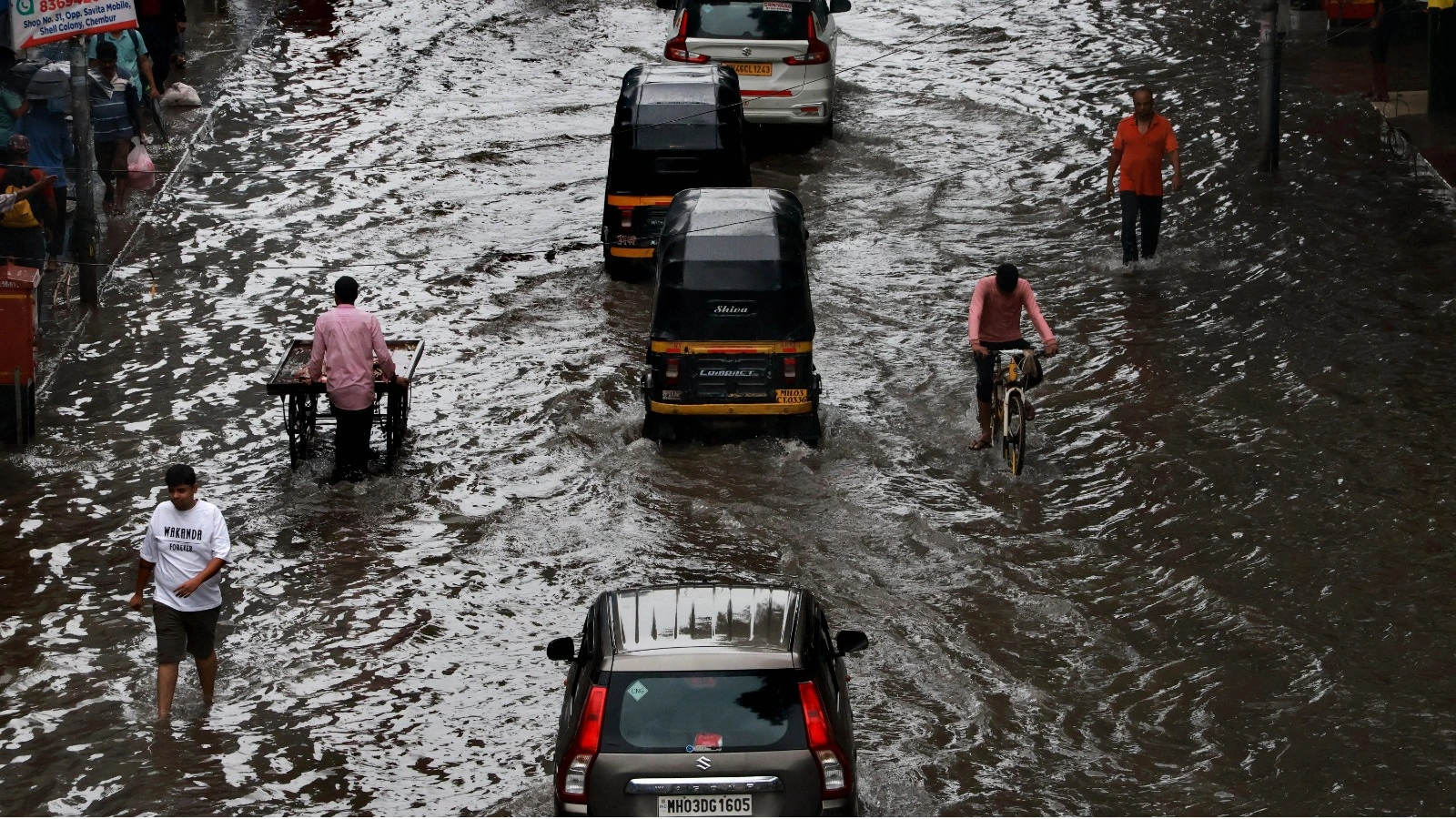
A section of a key arterial road in South Mumbai caved in early Monday morning, throwing traffic into disarray and renewing urgent questions about the city’s preparedness for extreme weather events.
The collapse, located near the Warden Collection on Kemps Corner Road, occurred amid relentless rainfall triggered by the earliest southwest monsoon onset Maharashtra has experienced in over three decades. Officials confirmed that no casualties were reported in the incident, but access between Kemps Corner and Mukesh Chowk has been entirely cut off, forcing vehicles to backtrack towards the Kemps Corner flyover. Access from Kemps Corner towards Nepean Sea Road has also been barred until further notice, as ground assessments and safety inspections continue.
The area around Kemps Corner—an affluent residential and commercial hub connecting Breach Candy, Warden Road, Pedder Road, and Nepean Sea Road—is now a focal point of civic concern. Authorities on the ground have urged commuters to avoid the area and take alternate routes. According to civic engineers present at the site, the collapse appears to have been caused by soil loosening due to water seepage, a common but dangerous phenomenon during intense rainfall events. Officials from the municipal infrastructure department are conducting a structural review and studying whether outdated stormwater drains or underlying cavities may have exacerbated the damage.
The incident follows Sunday night’s dramatic turn in weather when the southwest monsoon made landfall over Maharashtra—a full 12 days earlier than usual, according to the India Meteorological Department (IMD). This marks the earliest monsoon onset over the state in 35 years. Experts say this unusual advancement is tied to evolving climate patterns, warming Arabian Sea temperatures, and increasing unpredictability in regional wind flows. As Mumbai woke up to grey skies and a steady downpour, multiple localities reported moderate to heavy rainfall within a span of hours. Nariman Point recorded 40 mm of rainfall in just one hour between 6 and 7 am. Other areas, including Grant Road (36 mm), Colaba (31 mm), and Byculla (21 mm), also witnessed significant precipitation. Eastern and western suburbs reported comparatively lighter but persistent showers throughout the morning.
The collapse at Kemps Corner is emblematic of a much broader infrastructure challenge facing Mumbai—a megacity that has long struggled to harmonise its rapid urbanisation with sustainable planning. Despite hundreds of crores in annual budget allocations for pre-monsoon readiness, incidents like road cave-ins, waterlogging, and transport paralysis recur every monsoon, highlighting structural and systemic vulnerabilities. Public transport and aviation have not been spared either. Heavy rain and reduced visibility forced delays and rescheduling of multiple flights at Mumbai’s Chhatrapati Shivaji Maharaj International Airport. Airlines including Air India and Spice Jet issued travel advisories, requesting passengers to verify their flight status before arriving at the terminal. Railway services on some suburban routes also experienced disruptions, as low-lying tracks were submerged briefly during the morning rush hour.
High tides have further complicated the situation. According to local disaster management officials, the sea witnessed an abnormally high tide of 4.75 metres on Monday morning, significantly above the safe threshold. This prompted temporary evacuations of coastal attractions such as Marine Drive, the Gateway of India, and Girgaon Chowpatty. Officials said the risk of tidal flooding is especially acute in areas with clogged drainage systems or where construction has altered the city’s natural flow of rainwater into the sea. Urban planners and environmentalists have repeatedly warned of the consequences of filling up wetlands, ignoring ecological buffers, and constructing on reclaimed land. “Mumbai has not just lost its green cover, it has also lost its breathing space. Every year, we are firefighting during monsoons when we should be investing in long-term climate-resilient infrastructure,” said an environmental expert working with a civic think tank in Mumbai.
The road collapse has reignited debates around the sustainability of Mumbai’s stormwater drainage network, which was originally built over a century ago during the colonial era. While the Brihanmumbai Municipal Corporation (BMC) has undertaken several upgradation projects in recent years, progress remains uneven, and critics argue that climate adaptation has not been adequately mainstreamed into infrastructure planning. Even as emergency response teams are deployed to restore access and prevent further erosion at the Kemps Corner site, questions are mounting around accountability, maintenance protocols, and early warning systems. Calls for sustainable drainage solutions—such as permeable pavements, blue-green infrastructure, and decentralised rainwater harvesting—are gaining traction among civic activists.
Monday’s events serve as a stark reminder that monsoon in Mumbai is not just a weather phenomenon but an annual stress test of the city’s preparedness, resilience, and commitment to equitable urban development. In areas like Kemps Corner, where luxury apartments overlook weakened road foundations, the collapse blurs the lines between privilege and vulnerability. While authorities have assured the public of swift restoration, experts stress that the city must go beyond reactive fixes. Mumbai’s future lies not in concrete band-aids, but in reimagining its civic blueprint through the lens of climate sustainability and urban justice.
As rainfall continues along the western coast over the next few days, officials warn of further disruptions. For now, Mumbai remains on alert—not just for rain, but for the cracks it reveals beneath its shimmering skyline.
Also Read : Mumbai Metro Stations Flooded in Early Monsoon
