


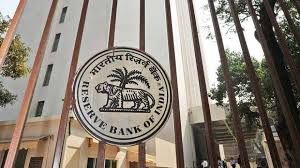
India’s housing market is entering a phase of renewed confidence as stable interest rates provide clarity to both homebuyers and developers navigating a cautious global economic environment. The Reserve Bank of India’s decision to hold benchmark lending rates steady has been widely interpreted across the real estate ecosystem as a signal of policy continuity rather than short-term intervention.
For housing markets, where purchase decisions are typically linked to long-term financial commitments, predictability in borrowing costs plays a critical role. Industry bodies and market observers point out that stable home loan rates allow households to plan purchases with greater certainty, particularly in urban centres where affordability remains closely tied to monthly repayment outflows. Developers, too, benefit from this stability. Construction timelines, land acquisitions, and project financing depend heavily on access to predictable capital. With interest costs remaining steady, developers are better positioned to manage cash flows, sequence new launches responsibly, and avoid aggressive pricing cycles that can distort local markets. This is especially relevant as many cities transition from post-pandemic demand spikes to more balanced, end-user-driven growth. Urban economists note that the current rate environment supports what they describe as “measured absorption” rather than speculative buying. Buyers are increasingly prioritising location quality, infrastructure access, and long-term liveability over short-term price appreciation. Stable rates reinforce this shift by reducing urgency-driven decisions and encouraging more deliberate asset allocation into housing.
The impact is expected to be uneven across regions. Large metropolitan areas with diversified employment bases and strong infrastructure pipelines are likely to see steady demand, particularly in mid-income and premium segments. Emerging cities, where affordability ratios remain more favourable, could benefit from first-time buyers gaining confidence that borrowing costs will not fluctuate sharply in the near term. From a broader urban development perspective, rate stability also complements public investment in infrastructure and housing-linked growth corridors. When private capital in real estate aligns with public spending on transport, utilities, and social infrastructure, cities tend to experience more sustainable expansion rather than fragmented sprawl. Market participants caution, however, that interest rate stability alone cannot address structural challenges such as land supply constraints, approval delays, or rising construction costs. Long-term housing affordability will continue to depend on regulatory reforms, faster project clearances, and greater adoption of efficient building practices. At the macro level, a steady monetary stance reinforces India’s positioning as a relatively stable investment destination amid global volatility. For domestic households, it reduces uncertainty around one of their largest lifetime investments.
For institutional capital, it supports confidence in residential real estate as a long-duration asset class tied to urbanisation and demographic growth. As cities expand and housing demand evolves, the current policy environment offers a window for more responsible real estate growth one anchored in financial discipline, realistic pricing, and alignment with long-term urban needs rather than cyclical excess.
Also Read: IHG Expansion Redefines India Hospitality Real Estate
RBI Decision Strengthens Residential Real Estate Sentiment
