


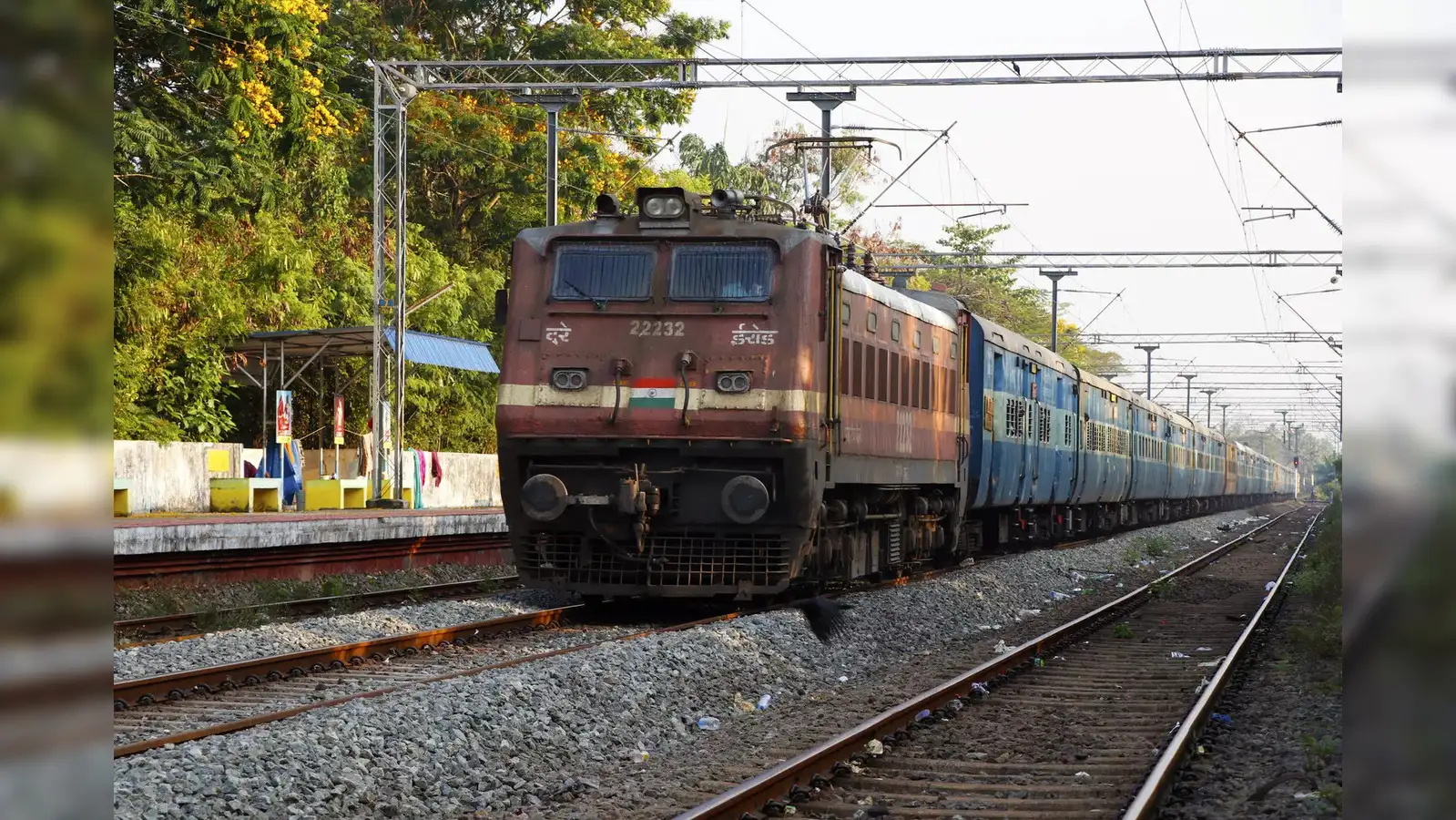
New Delhi, Rajasthan: Indian Railways is set to transform railway operations with the adoption of Artificial Intelligence (AI) and Machine Learning (ML), bringing semi-high-speed trains on the Delhi-Mumbai route into a new era of smart monitoring and predictive maintenance. Trains will now automatically detect mechanical issues such as worn wheels or loose components without halting, promising higher safety standards and operational efficiency.
Pilot trials of wayside machine vision-based inspection systems have commenced at four locations: Tughlakabad in Kota, Maudha in Nagpur, the Visakhapatnam–Vijayanagaram section, and Toranagallu in Hubballi. These systems monitor moving trains in real-time, identifying hanging parts or missing equipment, enabling preventive maintenance and reducing downtime.In a complementary move, Indian Railways and Delhi Metro have deployed automated wheel profile measurement systems at four critical sites, including Lokmanya Tilak Terminus, Anand Vihar Terminal, Tughlakabad Goods Wagon Depot, and Pandit Deen Dayal Upadhyaya Goods Wagon Depot. These contactless systems measure wheel shape and wear, ensuring precise maintenance and enhanced safety for passengers and freight.
AI integration extends beyond technical monitoring. Passenger services have benefited from AI-driven enhancements, including Rail Madad helpline support, dynamic reservation system management, and accurate prediction of freight train arrivals and cargo loadings. Partnerships with Digital India Bhashini now enable passenger complaint resolution in 13 regional languages, reflecting a commitment to accessibility and inclusivity.To further strengthen AI adoption, the Centre for Railway Information Systems has signed agreements with IIT Delhi and IIT Mumbai, implementing generative AI in railway operations, scheduling, and predictive analytics. Collaborations with Dedicated Freight Corridor Corporation of India Limited (DFCCIL) are advancing the deployment of Machine Vision-based Inspection Systems (MVIS) for monitoring rolling stock condition.
Safety innovations also extend to wildlife protection. An AI-based intrusion detection system has been installed on a 141-kilometre section of Northeast Frontier Railway to detect elephants near railway tracks, sending real-time alerts to loco pilots and station managers. This initiative not only protects wildlife but also safeguards passengers and infrastructure.Railway officials describe these technological integrations as a critical step towards sustainable, eco-friendly, and intelligent railway networks. The combination of AI, ML, and machine vision ensures a reduction in human error, improved maintenance efficiency, and a greener operational footprint aligned with India’s vision of smart and sustainable transport corridors.
