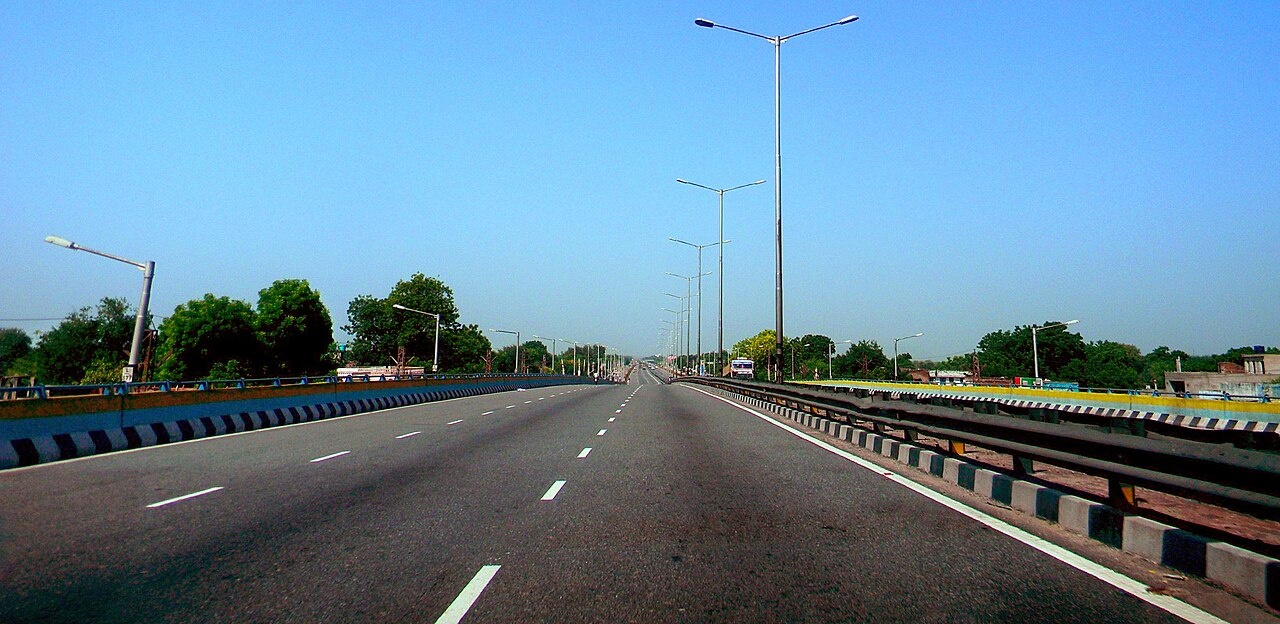
The planned NH48 Jaipur Kishangarh highway upgrade in Rajasthan has attracted strong interest from infrastructure developers, with multiple firms submitting bids for the project to widen the busy corridor to six lanes. The proposed expansion of the nearly 90-kilometre stretch is part of the national highway authority’s strategy to strengthen transport efficiency along one of northern India’s key freight and passenger routes. Officials involved in the tendering process say the project will be implemented under the engineering procurement and construction model, where contractors undertake the design and building responsibilities while the government finances the work. The NH48 Jaipur Kishangarh highway upgrade is expected to be awarded within the current financial year following evaluation of the submitted proposals.
The corridor forms a crucial link in the larger highway network connecting the National Capital Region with western India. As traffic volumes have increased over the past decade due to tourism, freight movement and regional economic growth, the existing road capacity has struggled to keep pace with demand. Transport planners say the NH48 Jaipur Kishangarh highway upgrade aims to convert the corridor into a semi-access-controlled highway. This design approach allows vehicles to travel at higher, consistent speeds while maintaining regulated entry and exit points to reduce traffic conflicts. The upgraded road will include grade-separated structures such as flyovers and vehicular underpasses at major intersections. Continuous service roads will also be constructed along the corridor. These parallel lanes are intended to separate local traffic—including two-wheelers, agricultural vehicles and neighbourhood access—from high-speed through traffic. Infrastructure specialists note that this separation improves safety while ensuring that nearby communities continue to access the highway without disrupting long-distance travel. Once the expansion is completed, authorities expect travel time between Jaipur and Kishangarh to reduce significantly. Shorter travel times could improve connectivity for commuters, tourists and freight operators moving between Rajasthan’s urban centres and industrial clusters. The project is also expected to support regional logistics networks.
Jaipur functions as an important economic hub with strong tourism, handicraft and trade sectors, while Kishangarh serves as a gateway to major transport corridors linking Rajasthan to neighbouring states. Faster highway connectivity could enhance supply chains, especially for industries dependent on road freight. A notable aspect of the NH48 Jaipur Kishangarh highway upgrade is that the work will be carried out largely within the existing right-of-way, meaning additional land acquisition is not anticipated. Infrastructure experts say avoiding land acquisition can significantly reduce delays and cost escalation in highway projects, allowing faster implementation. Road safety improvements are another key component of the design. By introducing grade-separated intersections and reducing direct cross-traffic, planners aim to minimise accident risks along the corridor. Dedicated service roads will further enhance safety for pedestrians, cyclists and local vehicles that currently share the highway with heavy traffic. Urban development analysts say highway modernisation plays an important role in shaping regional economic geography. Improved road connectivity often encourages industrial investment, tourism flows and real estate development along transport corridors.
As India continues expanding its national highway network, projects such as the NH48 Jaipur Kishangarh highway upgrade illustrate how infrastructure upgrades are being designed to balance mobility efficiency with safety and local accessibility. Once construction begins, the corridor could emerge as a faster and more resilient transport link supporting both regional trade and everyday travel across Rajasthan.