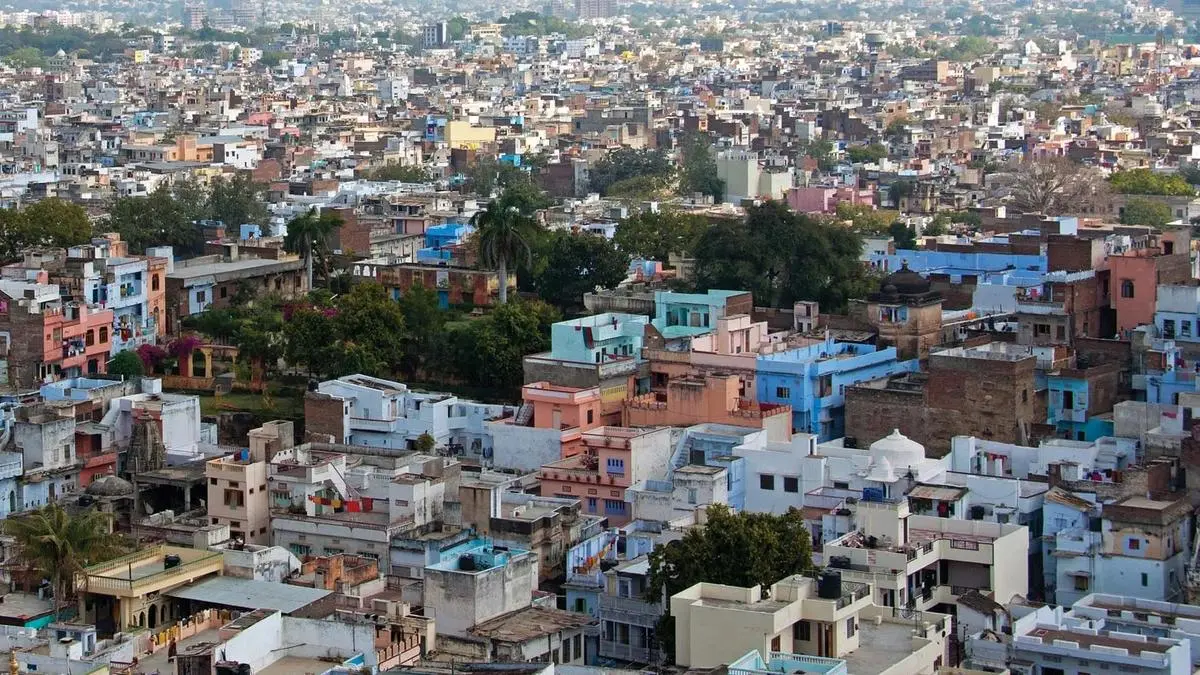
A large-scale demolition drive ordered by the Rajasthan High Court is set to reshape the urban landscape in parts of the state, with thousands of residential structures reportedly facing action as authorities begin implementing stricter enforcement of land-use rules and master-plan compliance.
The proposed action follows a series of judicial interventions in recent months directing local development authorities and municipal bodies to remove encroachments from public land, roads, and environmentally sensitive zones. Court orders issued in 2025 made it clear that unauthorised constructions on roads, footpaths, water bodies, and government land must be cleared within defined timelines, with officials also instructed to disconnect utilities where structures violate planning norms. Urban-development experts say the scale of the current action highlights a long-standing planning crisis rather than a sudden enforcement effort. Over the past two decades, many cities in Rajasthan have witnessed rapid population growth without adequate affordable housing supply. As a result, informal and unapproved colonies expanded on the fringes of cities such as Jodhpur and Jaipur, often without drainage networks, formal roads, or legal property titles. At the same time, authorities periodically attempted to regularise such colonies, reflecting the tension between planned urban development and housing demand.
The High Court’s recent stance signals a shift toward stricter compliance with master plans. In multiple rulings, the court has emphasised that urban planning frameworks cannot be altered simply to accommodate illegal construction. One judgment specifically allowed authorities to proceed with demolitions in environmentally sensitive areas such as water-body catchments, reinforcing the idea that long-term environmental protection must take precedence over unauthorised urban expansion. For residents, the issue is far more complex than a legal dispute. Many of the houses facing demolition have been occupied for years, with families having invested savings in basic housing even without formal titles. Urban policy specialists note that such situations are common across rapidly expanding tier-two cities in India, where migration and rising land prices push low-income households toward informal settlements on peripheral land.
The impact of the demolition drive is also likely to extend beyond individual neighbourhoods. Removing thousands of structures could significantly affect real-estate patterns, land availability, and infrastructure planning in cities such as Jodhpur. In the long term, however, planners argue that stricter enforcement may help prevent future unplanned growth and reduce pressure on water bodies, road corridors, and public land. At the same time, experts caution that demolition alone cannot solve the urban housing problem. Without parallel policies to expand affordable housing and regularise genuinely habitable settlements, enforcement-driven planning risks creating new social and economic challenges.
The coming months will therefore be crucial. If the authorities combine the demolition drive with rehabilitation measures and improved housing policy, the action could become a turning point in how Rajasthan manages urban growth. If not, it may simply highlight the widening gap between rapid urban expansion and the capacity of cities to provide planned, affordable housing for all residents.