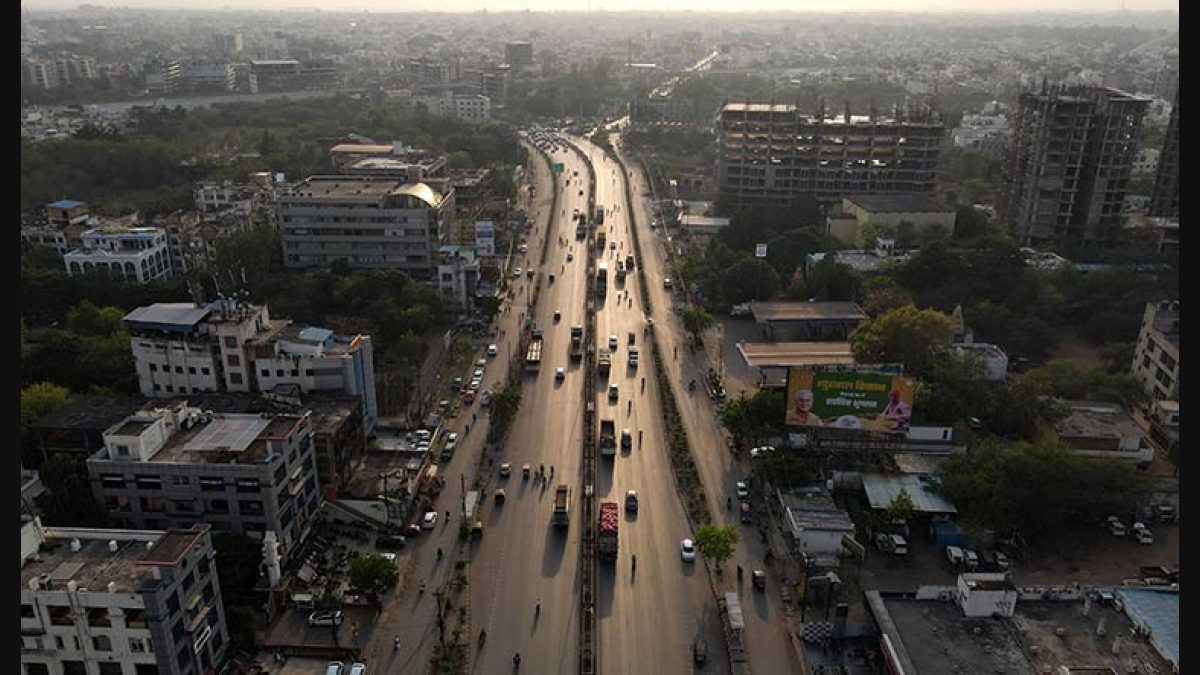
Raipur has taken a major step toward coordinated metropolitan planning after the state government convened its first high-level meeting to operationalise a State Capital Region framework that will integrate the capital with surrounding cities. The initiative aims to guide future infrastructure investment, manage rapid urbanisation and build a unified economic region linking Raipur with neighbouring urban centres across Chhattisgarh.
Officials confirmed that the newly proposed regional framework will connect Raipur with Bhilai, Durg and the planned administrative city of Naya Raipur, forming a consolidated metropolitan cluster. Policymakers believe such integration could enable coordinated transport systems, shared urban services and balanced economic growth across the region rather than fragmented city-level expansion. Urban planners involved in early discussions say the Raipur State Capital Region could reshape the spatial development pattern of central Chhattisgarh. With industrial activity concentrated in Bhilai and administrative institutions located in the new capital district, linking these zones through unified planning may reduce infrastructure duplication and improve connectivity for residents and businesses. Government representatives reviewing the initiative noted that the region’s population growth has begun to strain housing availability, mobility networks and public services. A regional governance structure, they said, will allow long-term land-use planning that aligns residential development, industrial investment and public infrastructure such as healthcare, education and logistics corridors.
Transport connectivity is expected to form a major pillar of the Raipur State Capital Region blueprint. Officials indicated that integrated transit systems, potentially including high-capacity bus corridors and future metro-style mobility solutions, are being studied to support daily movement between the industrial belt, administrative districts and emerging residential hubs. Real estate analysts say the initiative could significantly influence land markets and investment patterns. As the capital expands beyond its municipal boundaries, peri-urban areas surrounding Raipur and Durg-Bhilai may attract new residential projects, logistics parks and commercial developments. However, experts caution that careful regulation will be needed to avoid speculative land inflation and unplanned sprawl. Environmental planning is also emerging as a key consideration. Urban researchers highlight that expanding metropolitan regions across India often face pressure on water resources, urban forests and agricultural land. Integrating climate-resilient infrastructure such as sustainable drainage systems, public transit and energy-efficient housing could determine whether the Raipur State Capital Region evolves into a sustainable growth model or replicates congestion challenges seen in older metros.
Industry observers note that similar regional planning authorities in cities like Mumbai, Bengaluru and the National Capital Region have helped coordinate infrastructure investments across multiple jurisdictions. Chhattisgarh’s capital cluster, they say, could follow a comparable trajectory if governance frameworks ensure coordination between municipal bodies, industrial authorities and regional planners. For residents and businesses, the success of the new planning approach will depend on how quickly the proposed institutional framework translates into visible improvements in mobility, housing supply and public services. Over the coming years, the regional blueprint may determine how Raipur transitions from a growing state capital into a fully integrated metropolitan economy.