


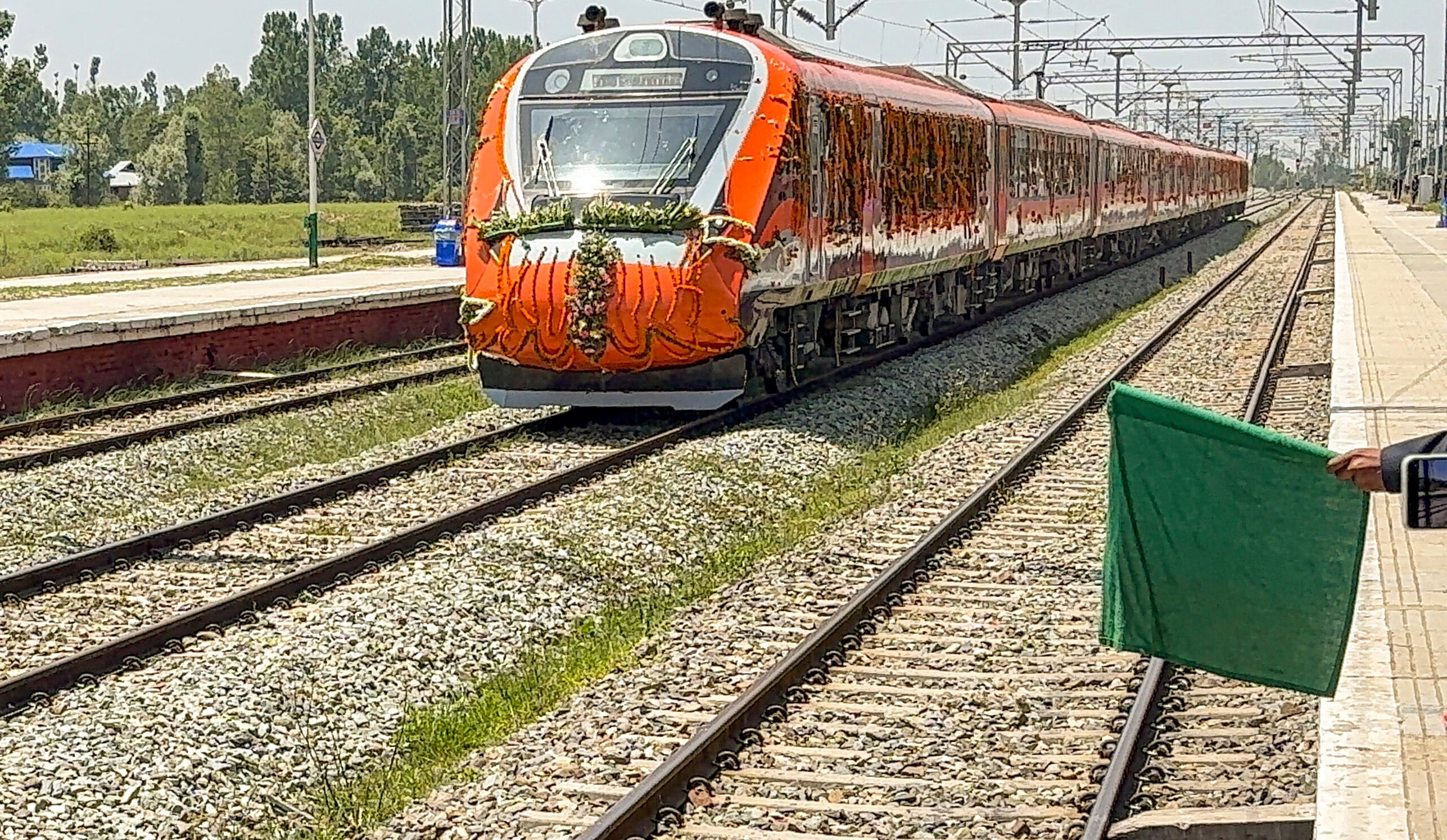
Indian Railways has announced a marginal increase in passenger train fares, effective July 1, 2025, as part of a strategic move to streamline fare structures and enhance the financial viability of its vast services. This adjustment, while impacting premier and long-distance travel, aims to bolster the railway’s capacity for sustained investment in modern infrastructure and green technologies. The initiative underscores a commitment to fostering eco-friendly, efficient, and equitable urban and inter-city connectivity across the nation.
The Ministry of Railways’ decision to revise passenger fares, in line with the updated passenger fare table issued by the Indian Railway Conference Association (IRCA), is rooted in the imperative to ensure the long-term financial health of the railway network. A financially robust railway system is crucial for continuous investment in critical areas such as electrification, advanced signalling systems, and the development of energy-efficient rolling stock. These investments are fundamental to reducing the carbon footprint of rail travel, aligning with India’s ambitious targets for achieving zero net carbon emissions and promoting sustainable transportation solutions across its rapidly urbanising landscape.
The fare revision specifically targets premier and special train services, including the popular Rajdhani, Shatabdi, Duronto, Vande Bharat, and Tejas Express trains, alongside other modern offerings like Humsafar, Amrit Bharat, and Gatimaan Express. For instance, travel on the Delhi-Howrah Rajdhani Express (12302) will see a modest increase: Third AC (3A) fares rise by ₹45 to ₹3,065, Second AC (2A) by ₹40 to ₹4,180, and First AC (1A) by ₹30 to ₹5,185. Similarly, the Delhi-Mumbai CSMT Rajdhani Express (22222) will experience adjustments, with Third AC (3A) increasing by ₹45 to ₹3,180. Notably, Second AC (2A) sees a sharper rise of ₹200 to ₹4,340, and First AC (1A) the highest increase of ₹235 to ₹5,390, reflecting a calibrated approach to pricing premium services.
For ordinary non-AC classes (non-suburban trains), the increase is set at half a paisa per kilometre, with specific slabs designed to mitigate the impact on short-distance commuters. There is no change in ticket prices for travel up to 500 kilometres, a crucial measure to protect daily commuters and lower-income groups, ensuring equitable access to essential transport services. For distances between 501 and 1,500 km, the increase is ₹5; for 1,501 to 2,500 km, it is ₹10; and for 2,501 to 3,000 km, it is ₹15. Sleeper Class and First Class fares also see a marginal increase of 0.5 paisa per kilometre. Mail/Express Non-AC trains will experience a 1 paisa per kilometre hike across Second Class, Sleeper Class, and First Class. For AC Classes in Mail/Express trains, including AC Chair Car, AC 3-Tier/3-Economy, AC 2-Tier, and AC First/Executive Class/Executive Anubhuti, the increase is 2 paisa per kilometre.
This calibrated fare adjustment is designed to support the continuous modernisation and expansion of the railway network, which is vital for fostering gender-neutral and equitable cities. A well-maintained and efficient railway system provides safe, reliable, and accessible transport for all citizens, including women, the elderly, and persons with disabilities, enabling greater participation in economic and social life. By ensuring financial viability, Indian Railways can invest in improved amenities, enhanced safety features, and expanded routes, thereby contributing to a more inclusive and connected society.
Crucially, ancillary charges such as reservation fees and superfast surcharges remain unchanged, providing some stability for passengers. Goods and Services Tax (GST) will continue to be levied as per applicable rules, and fare rounding principles will adhere to existing norms. This targeted approach aims to balance the need for increased revenue with the imperative of maintaining affordability for a significant segment of the travelling public. The long-term vision is to ensure that Indian Railways remains the backbone of the nation’s transport system, capable of supporting its economic growth while leading the charge towards a greener, more sustainable future for urban and inter-city mobility.
Also Read :Mumbai Ahmedabad Bullet Train Project Achieves Major Milestone Toward 2030 Launch
