


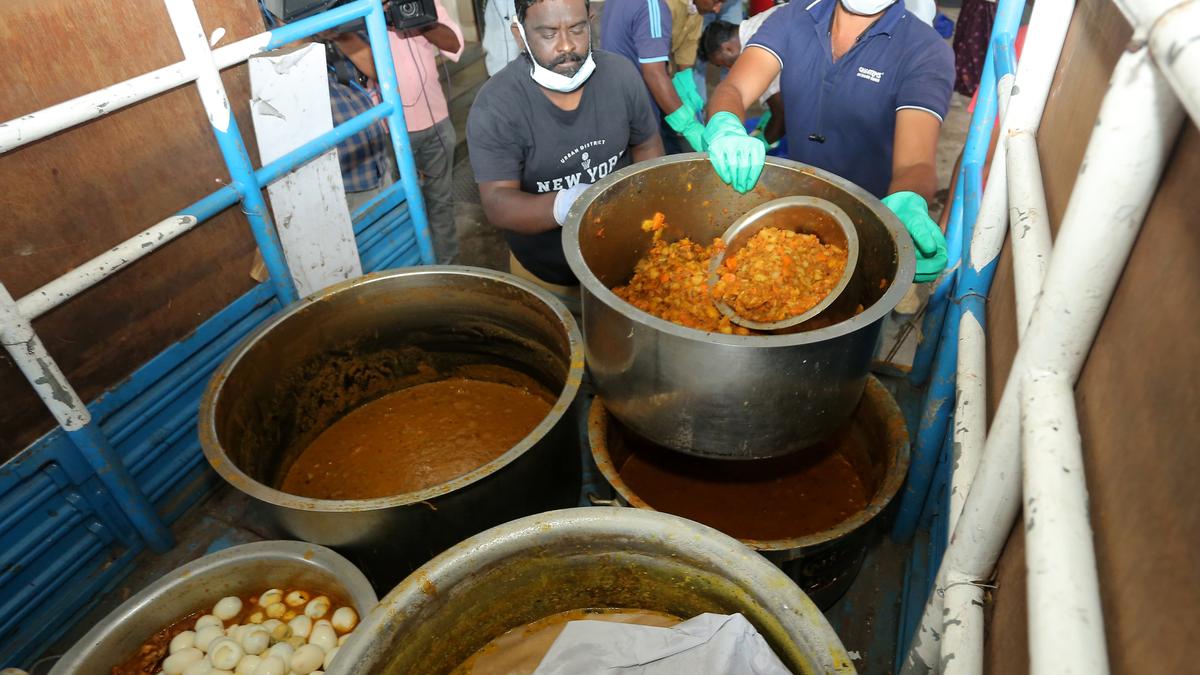
Indian Railways has imposed a ₹1 lakh penalty on a catering contractor operating out of a base kitchen in Kochi.
The action follows revelations of substandard hygiene conditions and the suspected distribution of expired food to passengers on long-distance Mail and Express trains originating from or passing through the Ernakulam junction. The issue came to light after civic health officials from the Kochi Municipal Corporation conducted a surprise inspection of the kitchen premises. Their findings, which included unsanitary conditions, the absence of a mandatory sewage treatment plant (STP), and the lack of a commercial operating licence, raised red flags on the safety of meals being prepared and dispatched from the facility.
Though the kitchen held a Food Safety and Standards Authority of India (FSSAI) licence, which is a central requirement for food service providers in the country, it was found to be in violation of local health and safety regulations. Officials from the municipal health department expressed concern over the firm’s non-compliance with waste management rules and its failure to ensure basic hygiene protocols. The catering unit, managed by a private contractor under Indian Railway Catering and Tourism Corporation (IRCTC) oversight, is now under a high-level scrutiny. The Divisional Commercial Manager of the Thiruvananthapuram Division, a Health Officer, and the regional IRCTC Area Manager have been assigned to a committee tasked with conducting a comprehensive audit of the incident and submitting recommendations for corrective measures.
The punitive action sends a clear message that the Railways and IRCTC are not willing to compromise on food safety, especially at a time when millions of passengers depend on on-board catering during long-distance travel. Officials confirmed that further disciplinary actions, including contract review and potential blacklisting of the vendor, are being actively considered. Industry experts have voiced concerns about the broader implications of such lapses. As Indian cities evolve into high-density transit hubs, the integration of sustainable and safe food supply chains within public transport infrastructure becomes critical. “Catering is not merely a hospitality function in transit environments—it is an essential public health service,” said a senior public health analyst working with a government advisory body. “Any break in this chain poses risks to both commuters and the ecosystem.”
Kochi, a city that is rapidly emerging as a logistics and tourism hub, finds itself at the heart of a conversation around sustainable urban services. With rising footfall in railway stations and increased reliance on public transport for inter-state connectivity, civic vigilance around facilities such as base kitchens becomes more than just a local governance issue—it is a national priority. In recent years, IRCTC has launched various initiatives to raise the bar on quality control. These include periodic third-party audits, the introduction of e-catering services offering meals from reputed restaurant brands, and passenger feedback mechanisms through mobile apps and helplines. Yet, ground-level enforcement and contractor accountability remain patchy, especially in Tier-2 and Tier-3 cities, where infrastructure constraints often take precedence over compliance.
Following the incident, IRCTC has reassured passengers that food safety will not be compromised and that the agency has mobilised contingency measures to ensure uninterrupted and hygienic meal services. Officials claim that temporary catering alternatives are being arranged from certified providers while the probe is underway. The incident also underlines the urgent need for decentralised and eco-conscious infrastructure. The absence of an STP at the kitchen is not just a regulatory lapse but an environmental hazard in a city already battling urban flooding and groundwater contamination. Experts have long advocated that all large-scale kitchens, especially those servicing transport systems, must integrate closed-loop waste management systems, including composting, greywater recycling, and energy-efficient cooking practices.
Sustainable catering solutions, powered by clean energy and rooted in local procurement, are increasingly being viewed as the way forward in the public transport ecosystem. Not only do they reduce the carbon footprint of food delivery networks, but they also align with India’s broader goal of building equitable, climate-resilient cities. While this incident has exposed a critical fault line in the current food safety infrastructure on trains, it also offers an opportunity for systemic reforms. Observers believe that periodic kitchen audits, compulsory third-party certification, and stricter enforcement of licensing norms can serve as deterrents against negligence.
For passengers, the stakes remain high. With more than 23 million people travelling daily on the Indian Railways network, a single compromised meal can have cascading effects—ranging from health emergencies to loss of confidence in public services. This is especially crucial in a post-pandemic landscape where hygiene and safety continue to dominate public sentiment. The Railways’ prompt action in Kochi is being seen as a positive step, but activists stress the need for consistency. “It’s not enough to act after media reports or inspections. There needs to be a culture of pre-emptive regulation, not just punitive reaction,” remarked an official from a Kochi-based passenger welfare organisation.
As the probe unfolds, the focus must remain on building transparent systems that balance commercial efficiency with citizen-centric values. The goal is not only to punish the guilty but to reinforce institutional mechanisms that prevent such lapses from recurring. Ultimately, the Kochi episode reinforces a core urban lesson: infrastructure without accountability is a liability. For cities aiming to be smart, inclusive, and sustainable, food safety—especially in public utilities—must be non-negotiable. The journey from plate to passenger needs better safeguards, and the time to act decisively is now.
Also Read : Railway takes charge of 55 Kerala bridges
